
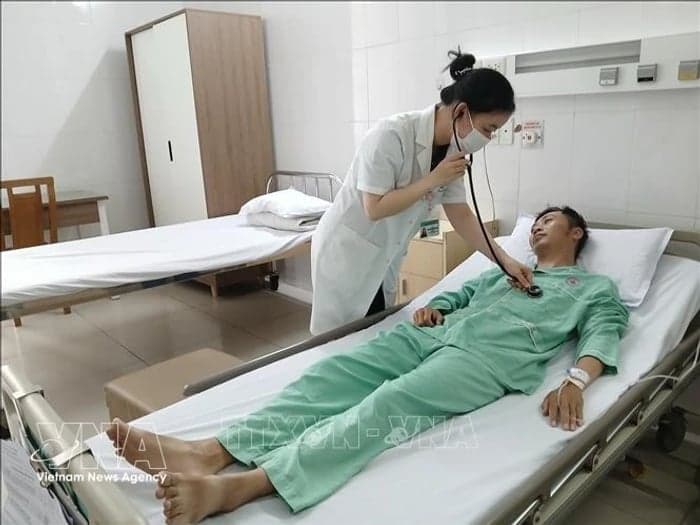
Medical tourism offers Vietnam a way to diversify tourism products, improve healthcare services and generate greater economic value. Reaching that potential requires an integrated and professional service ecosystem that ensures quality and safety.
Distinguishing medical tourism from wellness tourism
Demand for healthcare, a better quality of life, and physical and mental well-being has grown in recent years. Wellness tourism has consequently become an increasingly valuable market segment that can extend visitors' stays, increase spending and stimulate related sectors.
Deputy Director of the Vietnam National Authority of Tourism Ha Van Sieu said Vietnam has favourable conditions for developing wellness tourism because of its beaches, forests, mineral springs, mud baths, medicinal herbs, traditional medicine and diverse ethnic cultures.
He said wellness tourism should develop as an integrated value chain connecting tourism with healthcare, sports, culture, agriculture, science and technology, indigenous knowledge, businesses and local communities.
Although they are closely related, wellness tourism and medical tourism have different focuses. Wellness tourism centres on services that promote physical and mental well-being and relaxation, while medical tourism involves medical examinations and treatment combined with travel. Distinguishing between them is essential for developing appropriate policies and links between the two sectors.
The Ministry of Health has drafted a scheme on medical tourism development for 2026–2030. It aims to make the sector a key economic driver in line with Politburo Resolutions No. 72/NQ-TW and No. 26/NQ-TW, and Government Resolution No. 282/NQ-CP.
By 2030, Vietnam aims to establish a professional, safe and high-quality medical tourism service chain, develop competitive products and destinations in the region, and build its reputation in international markets. The initiative is also expected to improve healthcare services, attract investment and reduce the need for Vietnamese people to seek treatment abroad.
Favourable visa and entry procedures needed
A key target is for at least 20 hospitals to obtain international quality accreditation, including at least five public hospitals. This would help standardise medical services and build trust among international patients.
The draft identifies eight priority localities for developing medical tourism destinations: Hanoi, Ho Chi Minh City, Hai Phong, Quang Ninh, Da Nang, Hue, Khanh Hoa and An Giang, particularly Phu Quoc.
Destinations will be selected based on healthcare capacity, professional standards, facilities, tourism resources, transport connections, accommodation and market demand. Medical facilities must be linked with accommodation, transport and support services to ensure convenience for patients and their companions.
The draft outlines five core service groups: health screening and early disease detection; dentistry and assisted reproduction; specialised medical examination and treatment; traditional medicine and rehabilitation; and wellness, resort and elderly care services. The products are intended to meet needs ranging from preventive healthcare and specialised treatment to rehabilitation and long-term care, while connecting medical services with wellness and resort facilities.
The scheme proposes five groups of solutions. They focus on institutional and policy improvements, coordination mechanisms, legal reviews, preferential visa and accommodation arrangements for international patients and their companions, guidance on service pricing and international insurance payments, and incentives to attract private investment.
Facilitating visas, entry procedures, accommodation and travel for foreign patients and accompanying caregivers is considered essential to attracting international medical tourists.
The draft also calls for standardised services for international patients, covering consultation, appointment booking, reception, treatment, payment and post-treatment follow-up. Information on service quality and costs must be transparent and available in multiple languages.
The Ministry of Health said medical tourism must protect patient safety without compromising healthcare quality or domestic residents' access to medical services. The principle is intended to balance the sector's development and resource mobilisation with the protection of public health.
Sources: VietnamPlus / Vietnam News Agency

