
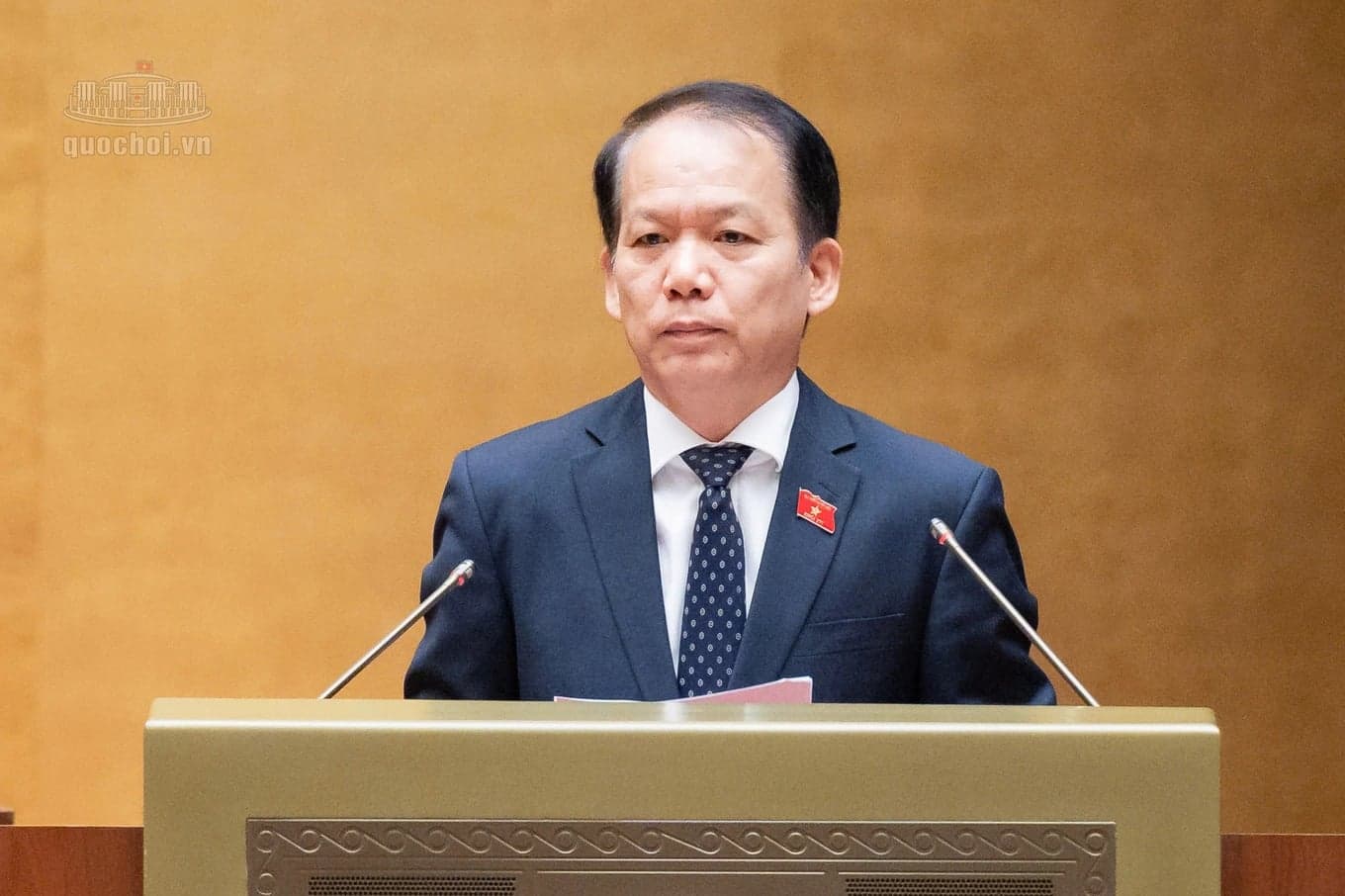
On October 24, Justice Minister Hoang Thanh Tung presented a bill amending the Law on Environmental Protection to the National Assembly on behalf of the government. One proposal concerns low-emission zones and transport management in those areas.
The bill adds provisions on pollution forecasting, emissions inventories, low-emission zones and local authorities' responsibility for regulating vehicles that use fossil fuels.
Vehicle controls would be introduced gradually
The bill defines a low-emission zone as an area where measures mainly reduce transport emissions, improve air quality and protect public health.
Article 65 would add principles for establishing and managing these zones, in line with air quality, public health, urban planning and traffic requirements.
The capacity of public transport must also be considered.
The bill prioritizes controls on high-emission vehicles and vehicles using fossil fuels, including gasoline and diesel cars.
Controls must follow an appropriate, feasible, public and transparent roadmap and limit effects on production, business, services and people's lives.
The proposal sets no implementation date, territorial scope or specific restrictions. The government would define zone criteria and emission-management measures.
Controls would be linked to support for switching vehicles
Low-emission zones must be linked to public transport, low-emission transport infrastructure, clean energy and policies supporting vehicle conversion.
The government would provide incentives and support for public transport and vehicles using renewable energy, less fuel, low emissions or no emissions.
It would also develop policies to convert fossil-fuel vehicles and polluting vehicles. Support amounts and eligible groups are not specified.
The government's submission says the amendments would improve pollution controls and environmental quality, strengthen prevention, forecasting, warnings and public information, and shift management toward data and risk levels.
The bill also adds continuous dust monitoring for urban construction sites. The government will define applicable projects and technical measures to limit dust from demolition and construction.
Responsibilities for pollution would be clarified
The National Assembly's Committee on Science, Technology and Environment supported amendments addressing development of a green, circular and low-carbon economy.
The chair of a provincial-level people's committee would be responsible for pollution within the scope of their management in the locality.
The committee called for a review to prevent overly broad responsibility and to ensure fair, individualized accountability. It said decentralization should include central oversight, alternative measures and stronger post-inspection capacity.
Sources: Dân Trí

