
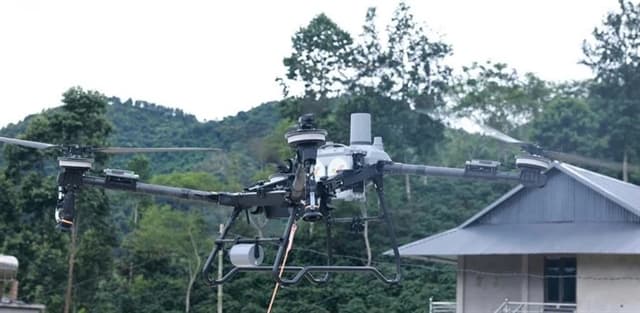
Low-altitude airspace is being treated as a new development resource for Vietnam. Politburo Conclusion 99-KL/TW, issued on September 28, aims to make the low-altitude economy an important sector by 2045, contributing about 1.5 per cent of national GDP.
By 2030, Vietnam aims to operate three national flight-testing zones for unmanned aerial vehicles in different terrain types and establish at least one national research and testing centre.
From drones to a technology chain
The sector covers drone production and operation as well as research, design, data and specialised services. Priority uses include logistics, agriculture, resource management, environmental protection, infrastructure monitoring, disaster response, search and rescue, emergency medical services and smart-city management.
Localisation of key UAV production lines is targeted at more than 30–40 per cent by 2030 and over 85 per cent by 2045. Vietnam will need domestic supply chains and greater self-reliance in infrastructure and strategic data.
Building a market through public procurement
The State will guide the market through public procurement, pilot projects and public-sector applications, while creating the legal framework, standards, technical rules and infrastructure. Businesses are expected to lead research, development, production and commercialisation with research institutes and universities.
Provinces and cities are expected to include low-altitude airspace in development plans. The national management system will cover operating areas, altitude, operation type, risk level, registration, identification, licensing, monitoring, inspections and violations. Controlled trials will use evaluation criteria and conditions for ending or expanding a project.
Low-altitude airspace use must account for sovereignty, defence, security, safety and citizens' lawful rights. The testing zones, research centre and commissioned projects are intended to help turn technological potential into production and viable businesses.
Sources: Viet Nam News

