
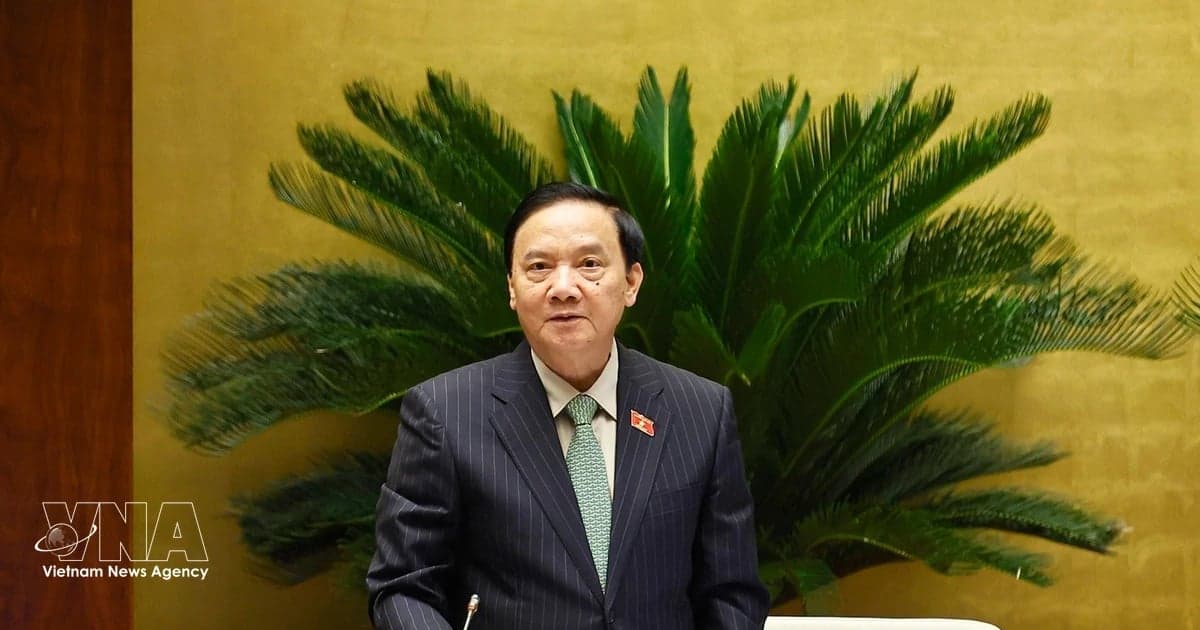
Vietnam's National Assembly on October 23 heard proposals and verification reports on draft revised laws on Compulsory Purchase and Requisition of Property and Legal Normative Documents during its ongoing second session. It also heard a report on the implementation of Resolution No. 206/2025/QH15 on special mechanisms for resolving legal obstacles.
The draft revised Law on Compulsory Purchase and Requisition of Property aims to enable the State to mobilise assets when necessary while protecting the legitimate rights and interests of organisations, households and individuals. It also seeks consistency across the legal system and compliance with Vietnam's international commitments.
The draft has four chapters and 32 articles. It sets out procedures for compulsory purchases and requisitions, the powers and responsibilities of State agencies, and the rights and obligations of property owners. It also covers the mobilisation of personnel to operate requisitioned assets.
The National Assembly's Committee on Legal and Judicial Affairs supported a comprehensive revision but urged the drafting agency to clarify the principles, conditions, scope and authority governing compulsory purchases and requisitions. It also called for clearer provisions on owners' rights, obligations and compensation for damage, as well as consistency with the Civil Code and other relevant laws.
Improving lawmaking procedures
The draft Law on Legal Normative Documents aims to address practical difficulties in drafting and promulgating legal documents, strengthen law enforcement and improve coordination between legislation development and implementation.
The draft has nine chapters and 68 articles. It proposes streamlining the system of legal normative documents, distinguishing policy formulation from legislative drafting, simplifying documentation requirements and improving procedures for appraising, considering, adopting and promulgating laws and ordinances.
The National Assembly's Committee on Legal and Judicial Affairs broadly endorsed the revision while calling for clarification of provisions allowing the NA Standing Committee and the Government to issue legal normative documents to adjust statutory provisions. It said their compatibility with Article 70 of the Constitution should be made clear.
Cutting compliance costs
Reporting on the implementation of Resolution No. 206, Minister of Justice Hoang Thanh Tung said the special mechanism had delivered positive results. It provided a flexible legal basis for promptly addressing institutional bottlenecks, simplifying administrative procedures, decentralising powers and unlocking resources for socio-economic development.
Ministries and ministerial-level agencies received 786 petitions and recommendations concerning legal obstacles. Of these, 556 have been resolved, including 44 through the special mechanism. The remaining 230 are under consideration.
Following legal reviews and practical assessments, the Government issued 26 resolutions to address regulatory barriers to socio-economic development.
Five resolutions adopted under the special mechanism in 2026 to cut and simplify administrative procedures and business investment conditions reduced processing time by 53% and compliance costs by 55%. They are estimated to generate annual savings of around 23 trillion VND, or about 890 million USD, for citizens and businesses.
Phan Chi Hieu, Chairman of the National Assembly's Committee on Legal and Judicial Affairs, called for clearer reporting on the results of handling petitions under the options provided by Resolution No. 206.
He urged the Government to direct ministries and ministerial-level agencies to set out solutions, deadlines and responsibilities for outstanding cases. Priority should go to issues affecting investment and business activities, the operation of the new administrative apparatus, and the legitimate rights and interests of citizens and enterprises.
Sources: VietnamPlus / Vietnam News Agency

