
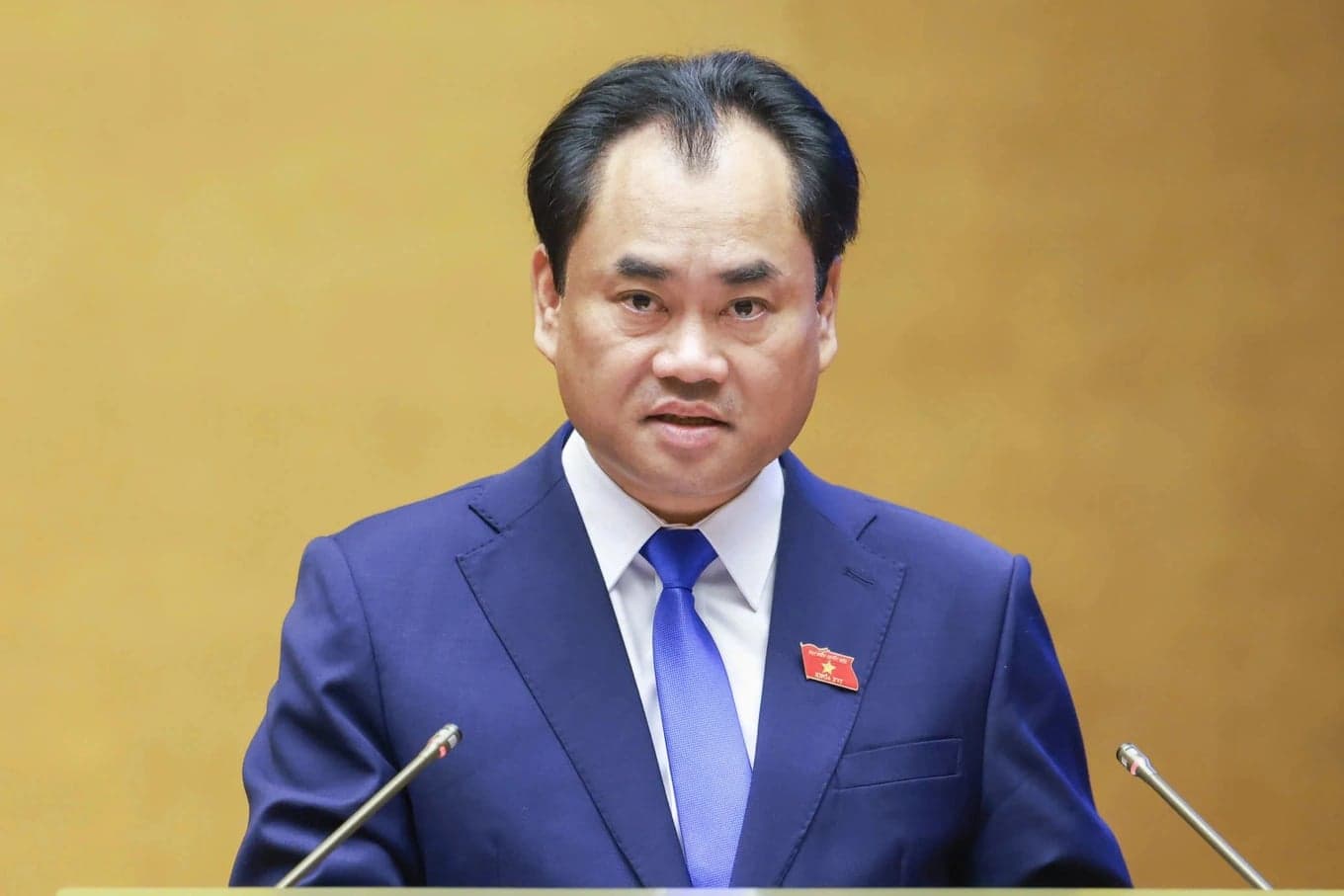
Vietnam's Minister of Agriculture and Environment Trịnh Việt Hùng said land recovery for economic and social development under the draft amended Land Law must follow strict rules, not be used without necessity and not hinder project implementation.
He made the statement on the morning of October 29 while explaining the draft amended Land Law to National Assembly deputies.
Hùng said land recovery, compensation, support and resettlement were among the issues that had drawn strong attention from deputies.
He said the draft law's provisions on land recovery for economic and social development in the national and public interest comply with the Constitution and give effect to resolutions of the Party Central Committee and other related resolutions.
According to Trịnh Việt Hùng, the provisions would regulate the process strictly, prevent abuse of land recovery and avoid creating difficulties for project implementation.
"The draft also clearly reflects a shift from compensating people for recovered assets to rebuilding their lives after the State recovers land. It aims to improve housing, living conditions and livelihoods for people whose land is recovered," Hùng said.
On the use of land through agreements to obtain land-use rights for commercial housing projects, Hùng said the government proposed continuing a pilot scheme under National Assembly Resolution No. 171 instead of immediately writing the provision into the law.
Explaining the provisions on land finance and land prices, the minister said the draft retains the rule that the State sets land prices. Prices will be determined using a land-price table and a land-price adjustment coefficient, rather than setting a specific price for each plot.
Provincial-level people's councils will issue the land-price table and adjustment coefficient. They will apply from January 1, 2028.
On notarisation and certification, the government proposes authorising itself to determine which contracts involving land users' rights must be notarised or certified. The rules would take account of the digital transition and the integration of land-management data.
The minister said the proposal follows the spirit of Politburo Resolution No. 66, gives authorities more flexibility, reduces compliance procedures for citizens and supports digital integration without taking away land users' lawful rights and interests.
Minister Hùng also briefed deputies on administrative-procedure reform and digitalisation in the land sector.
The draft law, he said, would give each plot of land a single identification code used nationwide as a reference for linked identifiers in national databases.
"When land data is accurate, complete, clean and live, and is shared for common use, citizens will be able to complete administrative procedures more simply and conveniently," the minister said.
He stressed that agencies and officials handling administrative procedures may not request documents already available in the published land database. If additional documents need to be requested or supplied, the notification or submission may be made only once.
According to Hùng, the government has assigned the Ministry of Agriculture and Environment to build the land database, and the work must be completed in 2026.
VNeID data shows that, out of 105 million plots of land nationwide, more than 70 million already have data. Data for 44 million plots has been connected, integrated and made available for shared use.
"If the National Assembly allows it, we can install this system for all National Assembly deputies this afternoon so they can monitor the data at any time," Hùng said.
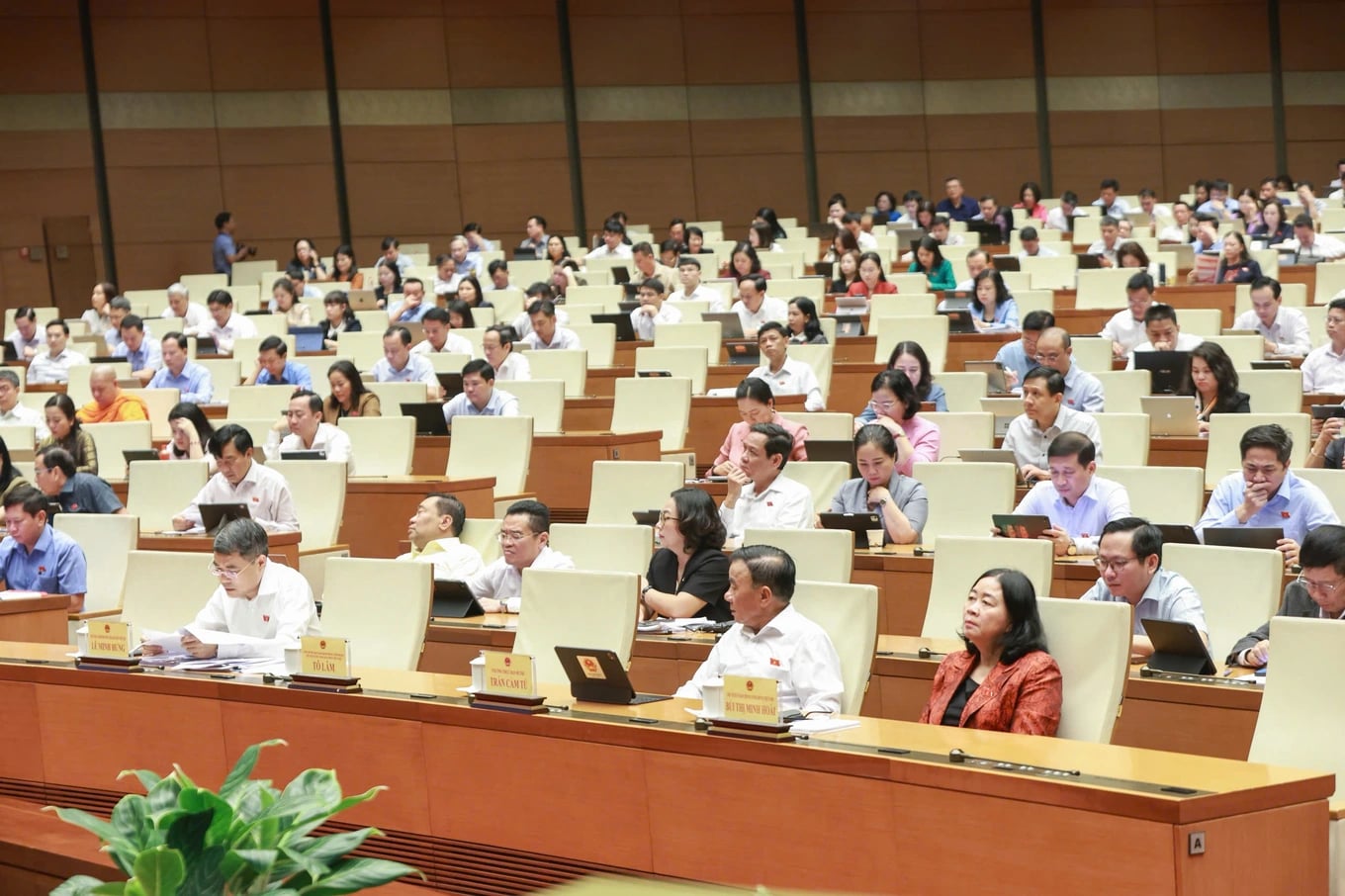
Under the agenda, the National Assembly will consider passing the draft amended Land Law during the current session.
Sources: Dân Trí

