
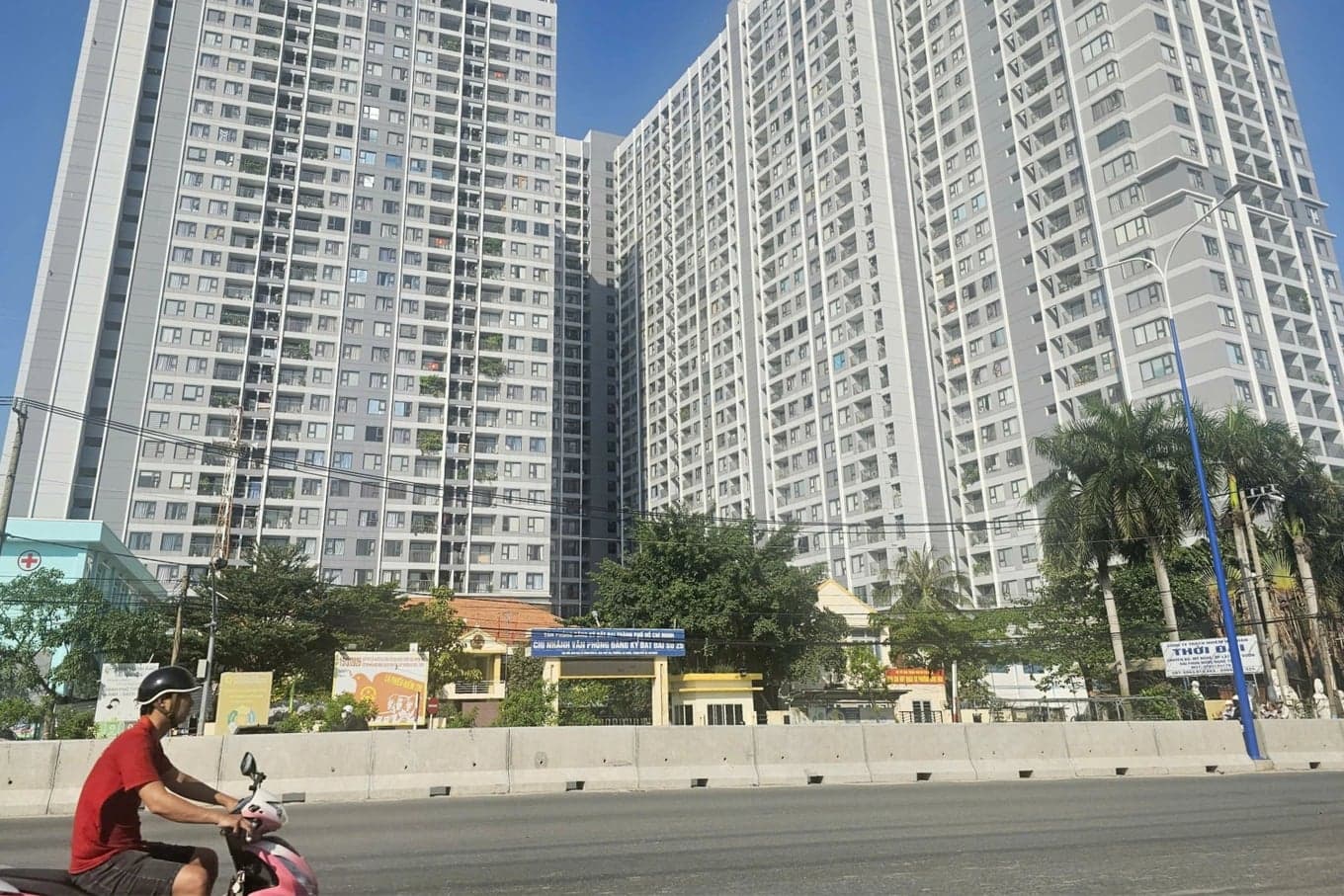
Vietnam's draft revised Land Law proposes assigning a unique identifier to every land parcel nationwide. If the databases are connected, the system could make it easier to check transaction histories and property prices and limit declarations that understate transaction values.
Under the proposal, land registration and the issuance of certificates could be carried out on paper or electronically, with both formats having the same legal value. People would also not have to resubmit information already held in the database when completing procedures.
Lawyer Tran Thi Thanh Thao, director of Thao Tran Law Co., Ltd., said a single identifier for land and property is necessary because the market still has transactions involving “two prices,” in which the declared transfer value is lower than the actual value to reduce tax obligations.
However, the identifier would only work effectively if land, notarial, tax and payment data were connected and synchronized.
According to Thao, land data should show information about the parcel, its user, legal status and changes over time. Notarial data should record the transaction date, the parties involved and the contract value. Tax data should show the taxable value and financial obligations. For banking data, an access mechanism that complies with the law would be needed to verify transaction values when there are legal grounds to do so.
When the data sources are linked, regulators could track transaction histories, identify unusual changes, and detect signs of speculation, circular resales or price inflation instead of examining each contract separately.
Buyers would also have more evidence for checking prices. For example, if a property is offered at 7 billion dong but the data shows that comparable properties in the same area changed hands for 5.8-6.2 billion dong over the previous six months, buyers would have more grounds to assess the asking price.
Likewise, if a property's price rises sharply from its previous transfer, buyers could compare the increase with changes in planning, infrastructure or the property's condition to see whether it has a basis. Banks and valuation firms could also use reliable transaction data to value collateral.
Thao cautioned that an identifier would not directly reduce property prices because prices also depend on supply and demand, planning, infrastructure and credit. “In the long term, this tool could improve the ability to trace and verify information, making parties more careful when declaring prices and meeting tax obligations. Limiting speculation will still require tax policy, credit management, public planning information and an adequate supply,” lawyer Tran Thi Thanh Thao said.
Pham Van Nam, director of GH Land Services Co., Ltd., also said an identifier is necessary for digital transformation and improved market management. However, its value would not lie in giving every property another number, but in linking, comparing and verifying data throughout an asset's life.
Nam said the system would require a stronger legal framework and standardized, connected data on land, transactions, notarization, taxes and payment information allowed under regulations. Price verification would also need to improve so that asking prices, values recorded in documents and actual transaction prices could be clearly distinguished.
The identifier could then help regulators detect unusual transactions instead of mechanically controlling every transaction. Buyers, banks and valuation firms would also have more data to assess property values, while transactions with unusual signs would have a clearer basis for verification and enforcement.
Nam said data disclosure should be limited. People should have access to the information needed to check legal status and compare prices, while the personal data, property information and financial details of owners should be protected.
“The value of a property identifier does not lie in giving every property another number. It lies in whether that number becomes a point for verifying information, tracing transaction histories and increasing the accountability of market participants,” Nam said.
Sources: Dân Trí

