
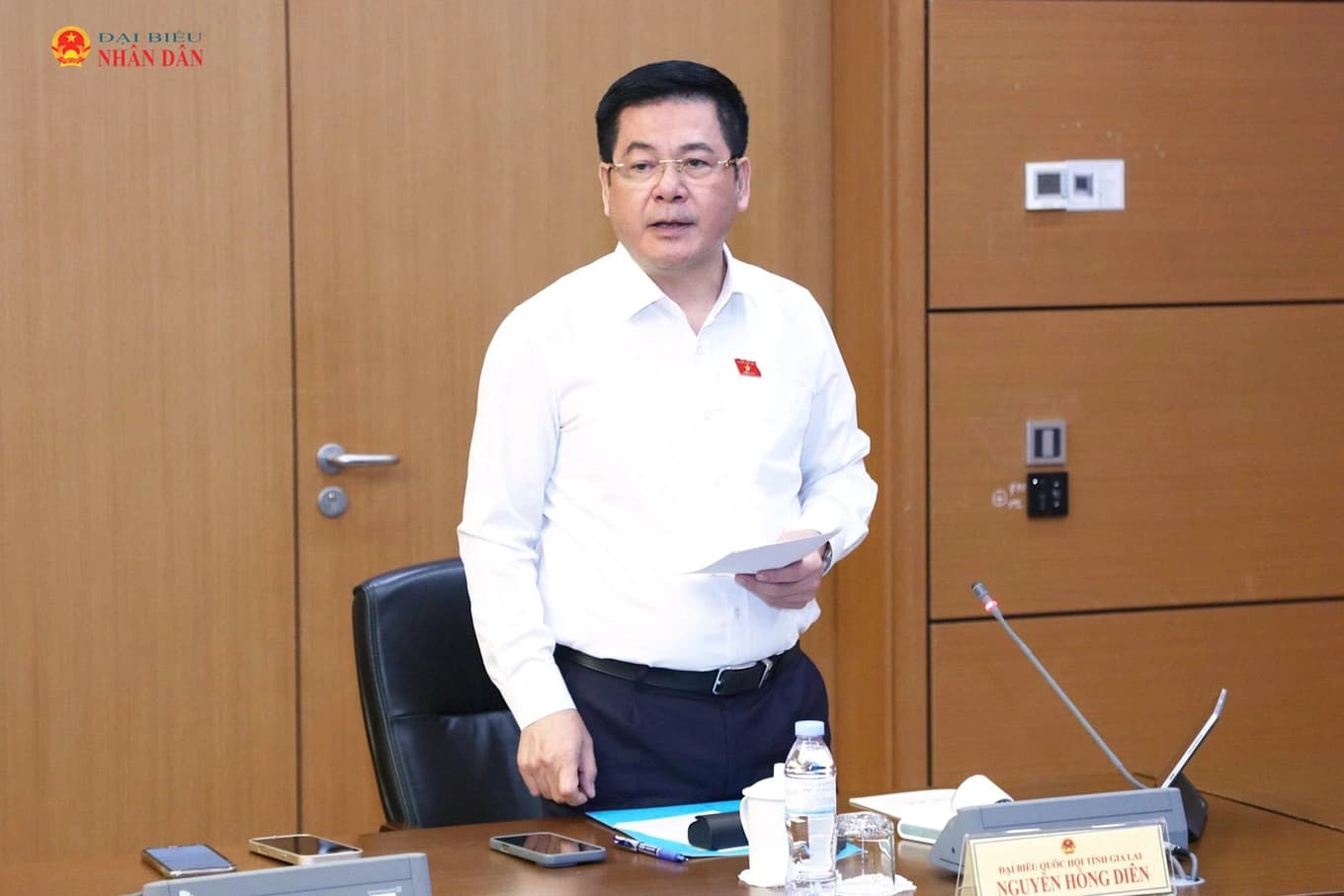
Vietnamese National Assembly Vice Chairman Nguyen Hong Dien supported amendments intended to make it easier for businesses to operate, but said that easing securities offering conditions must be combined with risk controls.
Lawmakers discussed the draft amendments to the Securities Law on October 17, the first working day of the second session of the 16th National Assembly.
Simpler procedures must not weaken risk controls
Nguyen Hong Dien said the amendments should address practical problems, cut business conditions, simplify administrative procedures, support capital market development, and improve management and oversight.
The law should also make it easier for companies to raise capital and provide services while protecting market safety and investors' rights.
These two goals must be pursued together. Administrative simplification should not be placed above risk control, Nguyen Hong Dien said.
On investor protection and public securities offerings, he generally supported changes intended to remove obstacles for companies. He said simpler offering conditions must come with risk controls, better information quality, and investor protection.
Under the draft law, an IPO would be cancelled if, after distribution ends, the shares are not held in the required minimum proportion by at least 100 investors who are not major shareholders. The threshold is 15%, or 10% for companies with charter capital of at least VND1 trillion.
Nguyen Hong Dien said this rule could create risks for money already paid by investors if an offering is cancelled.
He said investors must have enough information to assess investments and make safe and effective decisions. The amendments should improve transparency, risk prevention, access to the capital market, and protection of investors' lawful rights and interests.
Lawmakers propose a flexible mechanism to limit risks
National Assembly deputy Le Nu Thuy Duong from Dong Nai, a member of the Economic and Financial Committee, supported removing the requirement on the proportion of shares sold in an IPO while retaining post-offering controls. She said this was consistent with administrative reform, the removal of business conditions, and a shift from pre-inspection to post-inspection.
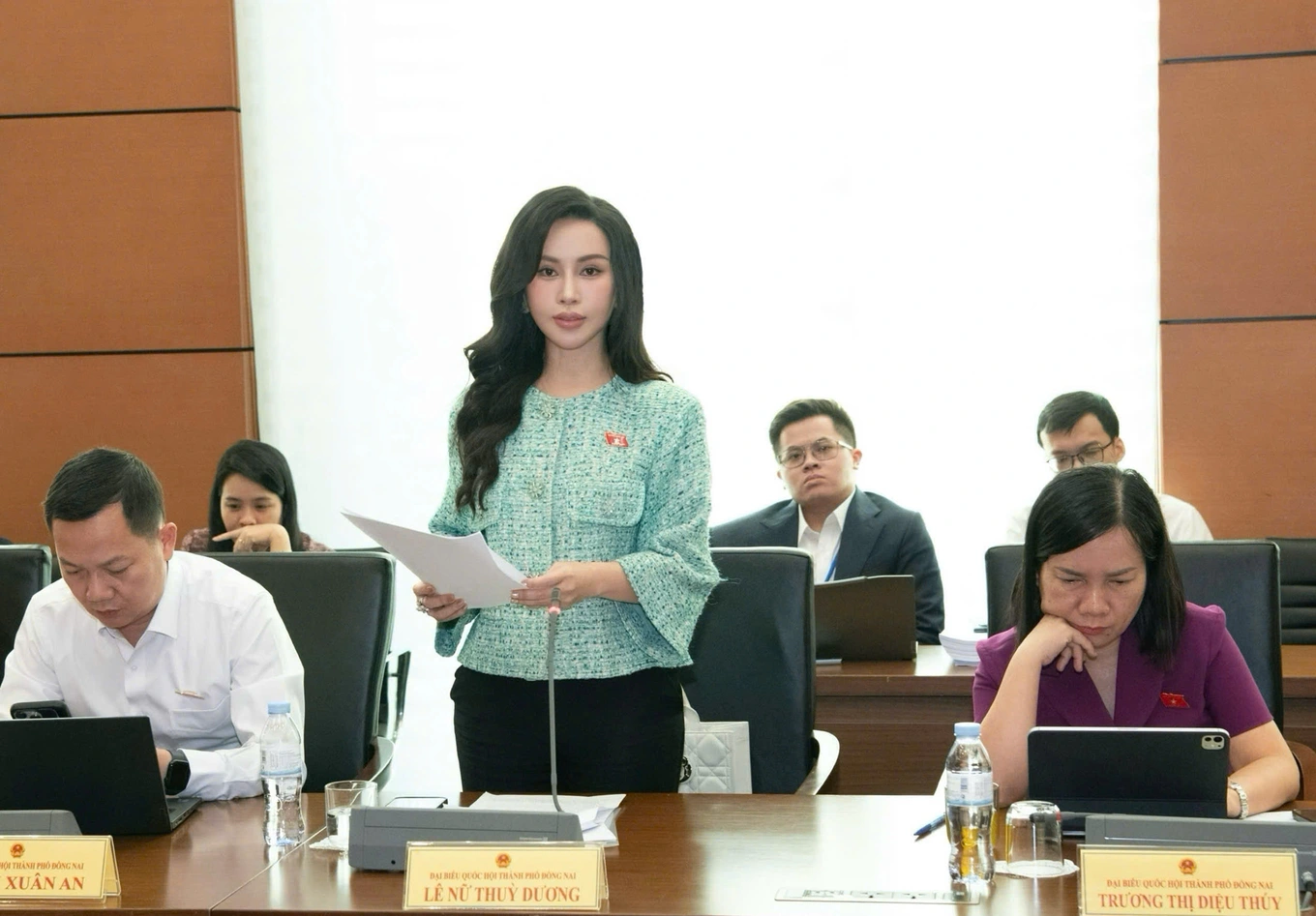
For issuers with very large charter capital or market capitalisation, applying both a requirement for at least 100 non-major-shareholder investors and a minimum holding of 10% of voting shares may not reflect their characteristics.
Duong said that for large companies, the 10% free-float shareholding may already have a very high value. Applying both criteria could increase the risk of failing to meet post-offering conditions even when the free-float value remains high.
She proposed studying a flexible mechanism for large issuers under government regulations.
Alongside the minimum requirement of 100 non-major-shareholder investors holding at least 10% of voting shares, an equivalent criterion based on the value of shares held by those investors could be allowed.
Duong said this would preserve the public nature and liquidity of shares after an IPO while making listing and capital raising easier for large companies. It could also improve the quality of securities on the market and attract long-term investment.
National Assembly deputy Trinh Xuan An, a standing member of the Committee on National Defence, Security and External Relations, proposed rules for managing domestic and foreign investors' transaction information to limit the risk of market manipulation.
He also called for clear governance and oversight principles for the Vietnam Stock Exchange and its subsidiaries, so that the model can be supervised and does not become excessively bureaucratic.
Sources: Dân Trí

