
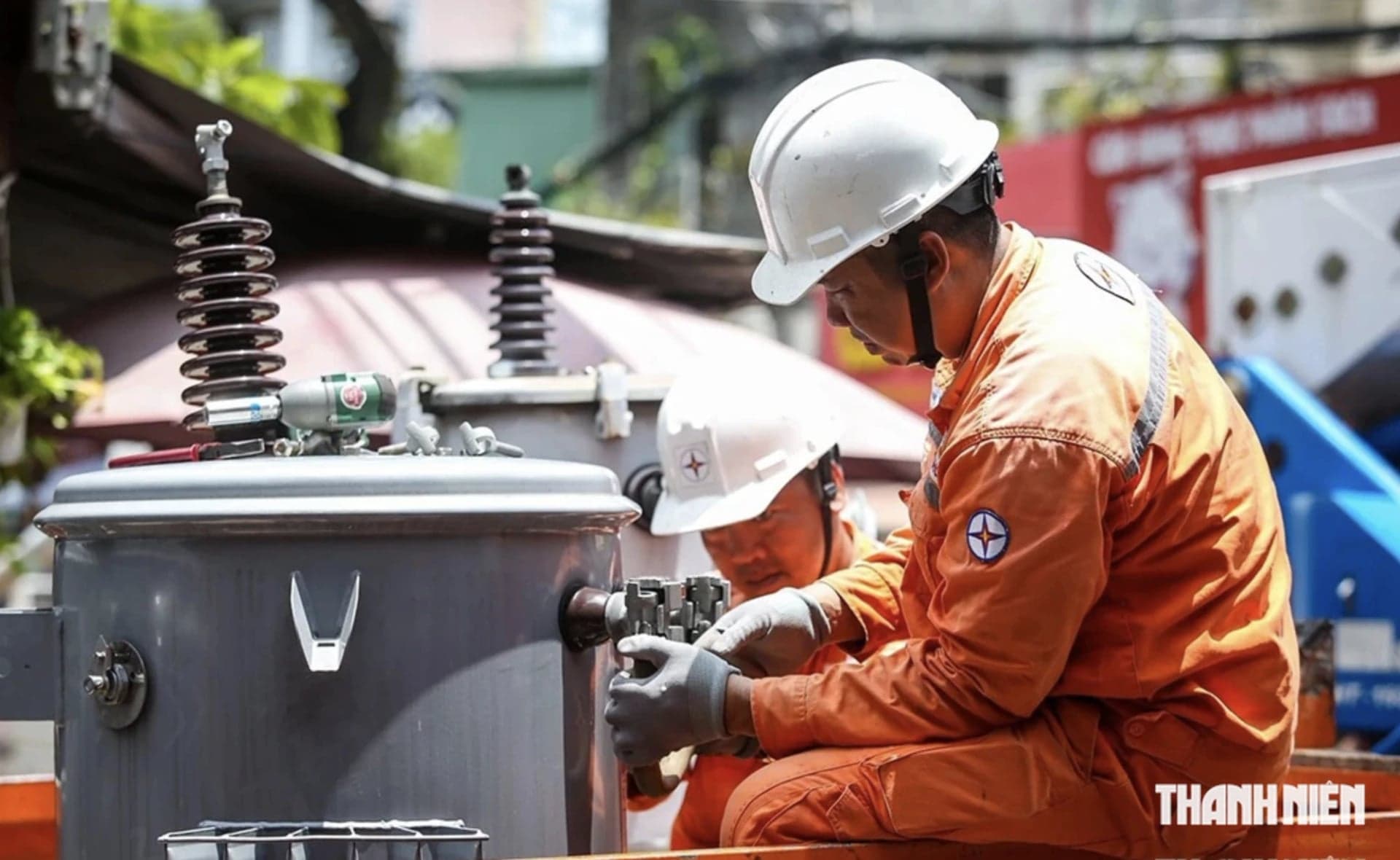
Time of use electricity pricing could encourage more efficient consumption and reduce pressure on the power system during peak hours. But if it is applied to households, the policy raises a question: who can shift when they use electricity and save, and who would pay more because daily life cannot be rearranged?
During a National Assembly discussion on amendments to the Electricity Law on October 20, deputy Tạ Thị Yên pointed to a practical problem. A factory can change its production shifts, but a family cannot easily wait until 11 p.m. to have dinner, shower, do the laundry, or help children study. Evening is when people return home after work and school.
Households currently pay according to their monthly consumption, divided into price tiers. They are not charged a higher evening peak rate. Introducing time of use pricing for household electricity is being considered as part of a future roadmap.
The same 300 kWh could mean different bills
A light switched on at 7 p.m. uses the same amount of electricity as one switched on at 1 a.m. But when millions of households use air conditioners, electric stoves, and other appliances at the same time in the evening, the power sector may have to bring in more expensive generation. Lines and substations must also handle the higher demand. Moving part of demand to less busy periods can reduce system operating costs. Electric cars, for example, can be charged after midnight instead of during peak hours.
Not every demand can be shifted. People who return from work at 7 p.m. still have to cook. Families with young children, older people, or sick relatives may find it difficult to limit air conditioning simply because electricity costs more. Tenants and shift workers have even fewer choices. Two families using 300 kWh a month could therefore pay different amounts under time of use pricing. A family that can adjust when it uses electricity would have a better chance to save, while a family that must consume during peak hours could pay more. That is a policy problem to solve, not only a matter of designing a tariff.
International experience: offer a choice and test it first
Since the beginning of 2025, electricity companies in Germany have had to offer at least one contract with prices that change with the market. Customers with suitable meters can choose it, but they are not required to leave a standard contract. Suppliers must explain the benefits and risks before customers decide. Spain adjusted its policy after putting it into practice. Amid sharp energy price changes, the country changed its calculation formula in 2024 and added a component set in advance to reduce bill volatility. By 2026, that component accounted for 55% of the electricity cost calculation.
France chose to test a new approach before expanding it. Under a decree issued in April 2026, the country is testing a new pricing method with 6,600 randomly selected households. One group uses the new method and another keeps the old calculation for comparison. Participants may refuse or stop taking part, and they are guaranteed not to pay more than under the baseline option during the trial. These examples show that time of use pricing must also help people understand risks and provide suitable protection.

Calculate sample bills for different household groups
Vietnam already uses three time periods for electricity pricing for some production and business customers. The power sector has also introduced electronic meters, electricity monitoring apps, and programs encouraging customers to adjust consumption. Since October 2025, EVN has been calculating additional bills under a two component electricity price for large businesses, allowing customers to compare them with the current method. This is different from time of use household pricing, but the comparison bill is an approach worth considering.
Calculations by the Ministry of Industry and Trade show that the effects differ between customer groups. Under a proposed new peak period, electricity costs for steel producers were projected to rise by an average of less than 9%, while costs for dragon fruit growers were projected to rise by less than 6%. Under another proposal, moving household electricity prices from six tiers to five was forecast to reduce bills for about 94% of customers. That calculation concerns price tiers, not the effect of time of use household pricing.
Research into household pricing should answer how much large families, older people, shift workers, and tenants would gain or lose. Different household groups should be selected for trial calculations. They would continue paying under the current tariff, but each month would also receive a hypothetical time of use bill for comparison. The results should show the share of households that benefit and those that pay more, the reasons for the differences, and the amount the power system could save.
At the initial stage, people should have a choice. Suitable households could register for time of use pricing, while others could continue with the standard tariff. People should also know how to return to the old option. It must be clarified whether time of use pricing would replace or be combined with tiered pricing. If people pay more both for high monthly consumption and for using electricity in the evening, they need to know exactly how the bill is calculated.
The Ministry of Industry and Trade has set a new peak period from 5:30 p.m. to 10:30 p.m., but its implementation has a separate roadmap. This does not mean households must currently pay a peak rate during those hours. Time of use electricity pricing could make the power system operate more efficiently. A car can wait until midnight to charge, but dinner after work, a child's study lamp, and caring for an older person cannot always be rearranged. Electricity prices can be divided into peak and off peak hours, but family life does not always run according to those time periods.
Sources: Thanh Niên

