

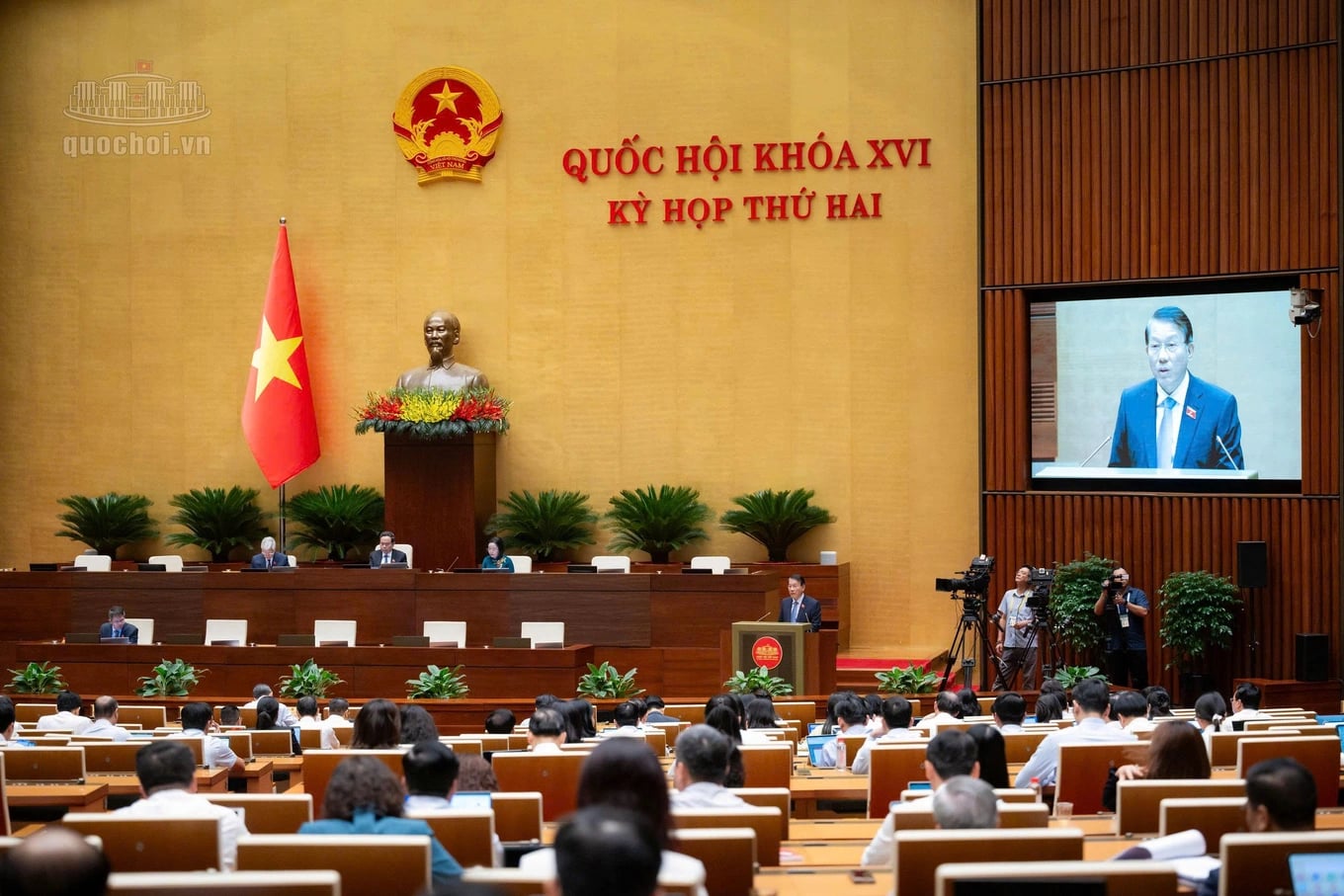
On November 5, Minister of Public Security General Luong Tam Quang, acting on behalf of the prime minister, presented the National Assembly with a proposal on the investment policy for a national target program on drug and crime prevention for 2026–2035.
The minister said the regional and global drug and crime situation is becoming more complex. This creates a risk that Vietnam could become a transit area, a place where different forms of crime are concentrated, or a base used by transnational criminal organizations.
At home, the structure and nature of crime are changing quickly. Criminal, drug-related, economic, environmental and information-technology offenses increasingly overlap. Non-traditional, cross-sector and transnational crimes are growing, while offenders are making greater use of technology and cyberspace.
The drug situation is also complex, particularly in some large cities. The number of people dependent on drugs or using them illegally remains high. Cases occur among different social and age groups and, according to the government, are tending to increase among young people.
The government says these problems require coordinated, cross-sector solutions rather than only routine tasks or separate coordination mechanisms. The program was therefore developed by integrating the national target program on drug prevention through 2030, approved by the National Assembly, with crime-prevention tasks for 2026–2035.
VND 22,851 billion in additional funding proposed for the first phase
The proposal puts the program's total cost for 2026–2030 at more than VND 45,300 billion. About VND 39,676 billion would come from the central budget, more than VND 5,497 billion from local budgets and about VND 128 billion from other lawful sources.
More than VND 22,450 billion of the funding for this phase belongs to the national target program on drug prevention through 2030. The National Assembly approved its investment policy in Resolution No. 163/2024/QH15. The government is seeking approval for an additional VND 22,851 billion.
For 2031–2035, the preliminary estimate is about VND 18,152 billion, including more than VND 9,492 billion in development investment and more than VND 8,659 billion in recurrent funds. The government will report the funding need for this period to the National Assembly later, based on the program's results in 2026–2030 and the actual situation.
The total proposed and preliminary funding for the program in 2026–2035 is therefore about VND 63,453 billion.
The program has 10 components covering organized and transnational crime, cybercrime, safe communes, environmental and natural-resource violations, food safety, technology applications, and improved drug treatment and post-treatment management.
Target: cut crimes against public order by 10% each year
The government has placed residents at the center of the program and communes at the foundation of its work. Prevention and early action at the local level are its main priorities.
By 2030, the program aims to reduce crimes against public order by 10% each year. It also targets a situation in which at least 50% of communes, urban wards and special administrative zones nationwide have no drug-related problems.
Other targets include identifying and managing 100% of criminal groups so they can be dismantled or broken up, and solving more than 75% of crimes, including more than 90% of very serious and especially serious crimes.
In technology, the government proposes an interagency operations center to combat online fraud. By 2030, it aims to digitize and standardize more than 90% of data on criminal suspects and match it with the national population database and electronic identity data.
The program also calls for data analysis, artificial intelligence and modern technologies to be used in 70% of criminal cases and other cases handled as part of crime prevention, when required by the competent authorities.
In drug treatment, the target for 2030 is for more than 80% of commune-level medical stations and all public drug-treatment facilities to be able to determine dependence. Suitable treatment reception and counseling points are planned for more than 70% of communes where people with drug dependence live.
Reviewers call for an end to flat funding allocations
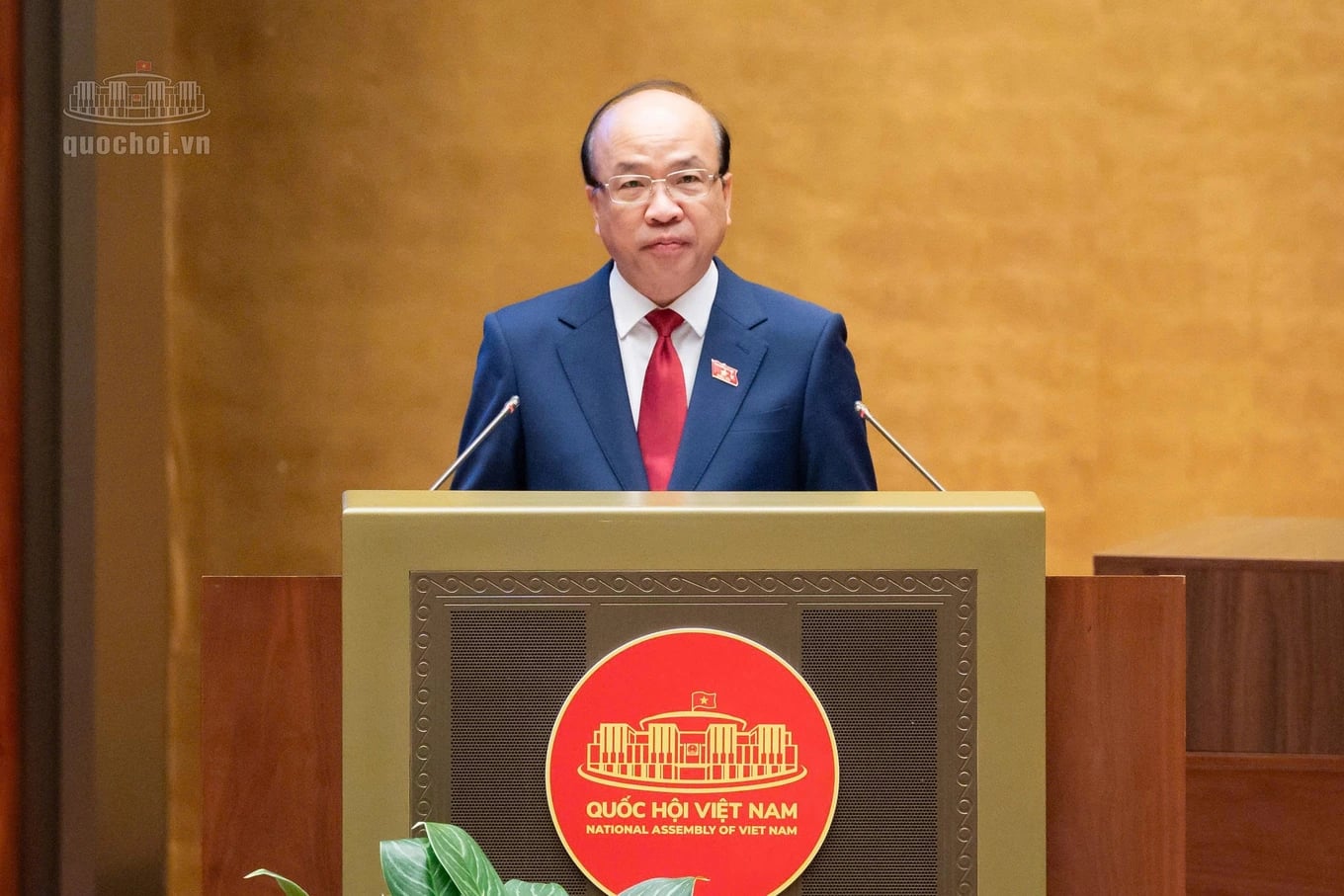
Presenting the review report, Phan Chi Hieu, chairman of the Committee on Law and Justice, said the committee broadly agreed that the program was necessary. Integrating drug and crime prevention tasks is consistent with practical requirements and the goal of using resources more effectively.
The committee noted, however, that some similar tasks had been placed in several projects. In some projects, funding was allocated on a flat basis rather than according to the complexity and scale of the tasks and their expected results. Some figures in the cost estimate were also inaccurate and need to be reviewed and corrected.
The committee called for clarification of the basis for calculating each project's costs, local authorities' responsibility for funding, the mechanism for attracting other lawful resources and the funding need for 2031–2035. It also recommended prioritizing border areas.
It also called for a review of tasks overlapping with other national target programs, including their scope, target groups, outputs and funding sources, to avoid duplicated tasks and overlapping budget spending.
For tasks carried over from the approved drug-prevention program, the committee called for clear rules on when the new mechanism would apply and who would be responsible for transferring property, equipment, data and software. This would keep implementation continuous.
Sources: Dân Trí

