
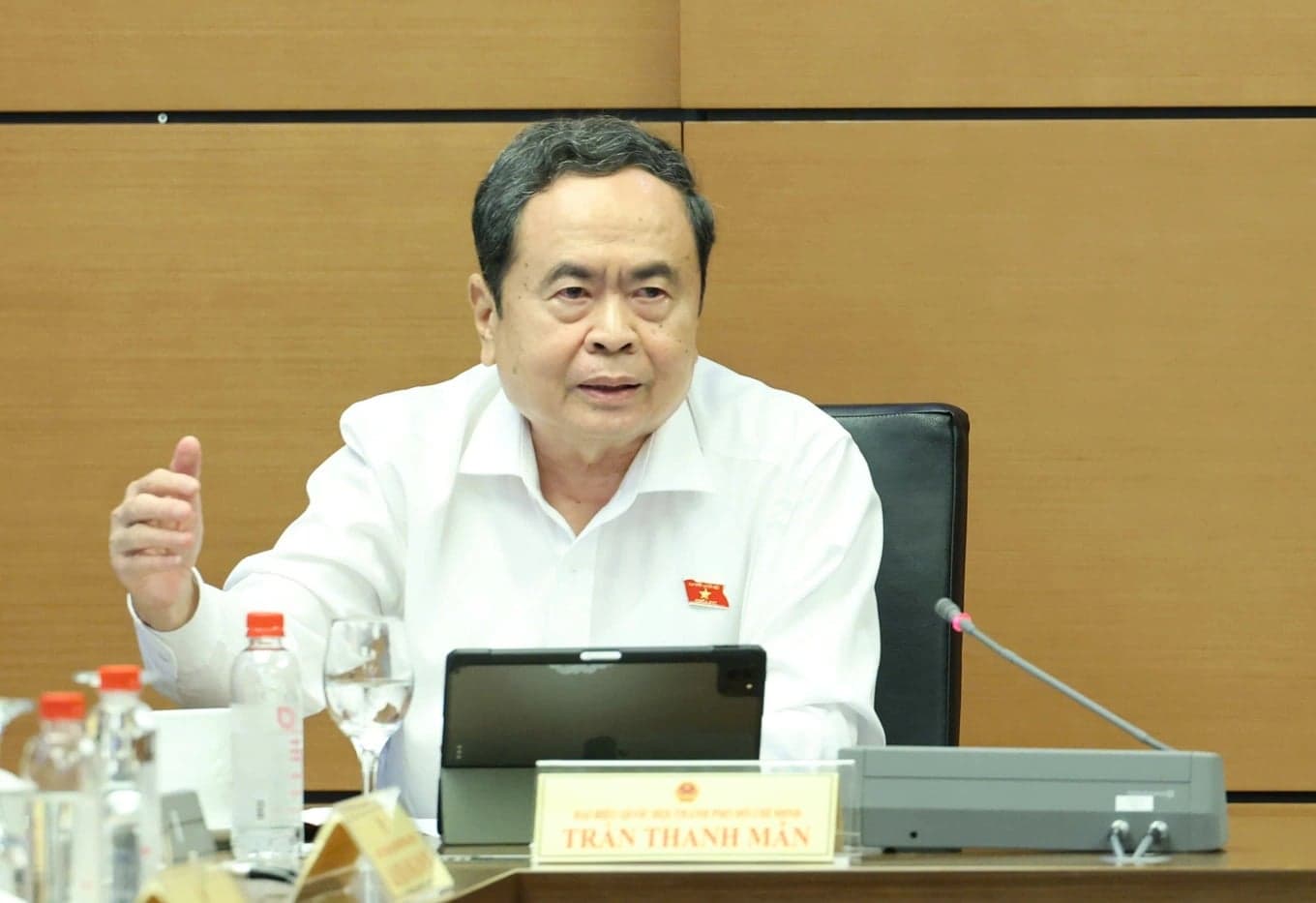
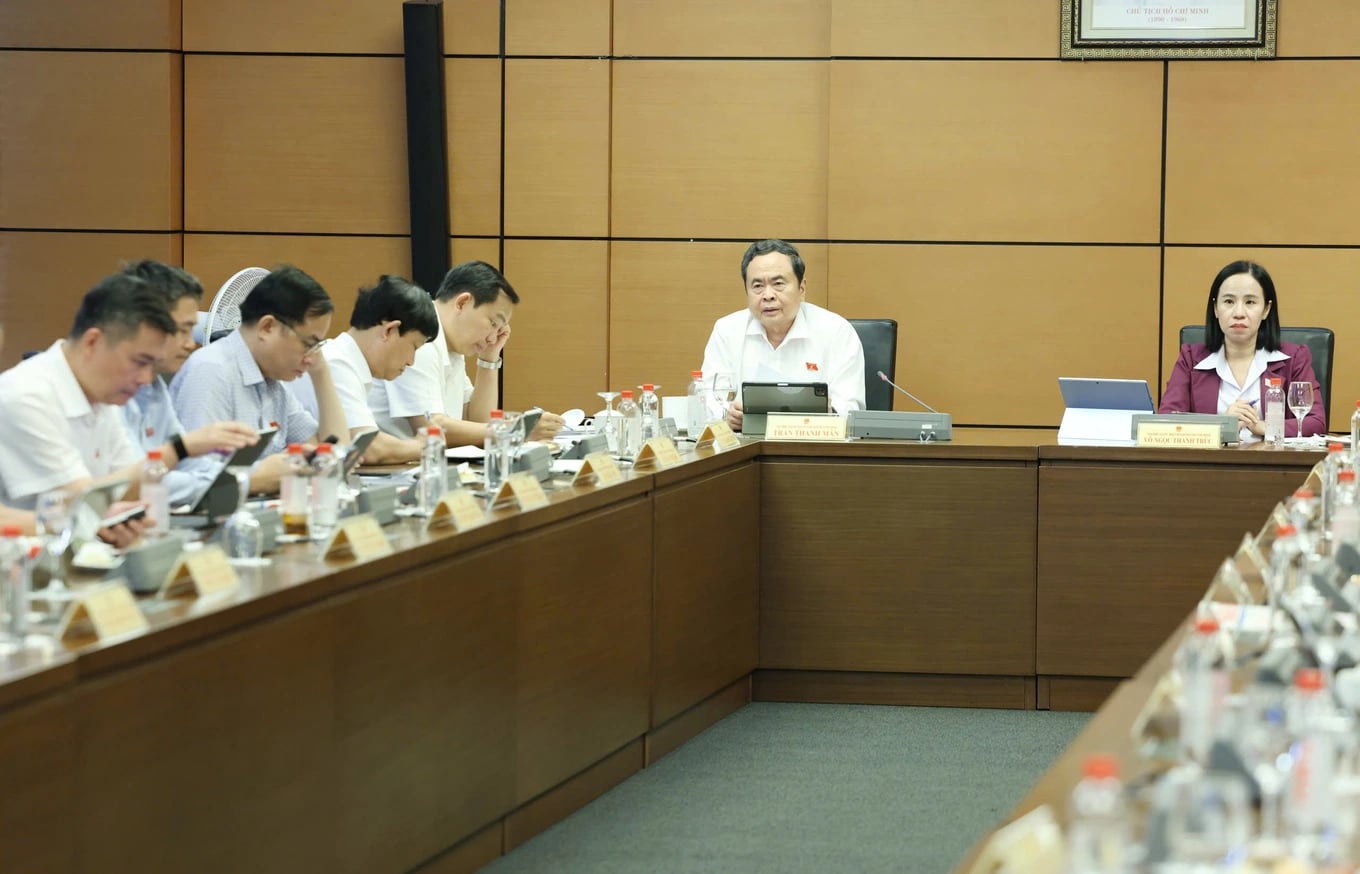
National Assembly Chairman Tran Thanh Man made the proposal on October 24 during a group discussion of a draft amendment to the Law on Food Safety.
Food safety, the chairman said, concerns every meal, every family and every resident. It is also directly linked to the health of future generations and the country's reputation.
One agency instead of three
"I am very pleased that one meal used to involve three managing ministries, while this amendment aims to establish one managing ministry," the chairman said. He suggested four areas for further work on the draft law.
First, the major changes must be written into the law instead of being left to wait for government decrees and ministerial circulars.
The draft assigns the government and ministers responsibility for detailing 32 of its 74 articles. Some provisions described as breakthroughs have also been left open rather than set out in the law.
The chairman said the National Assembly could not pass a law in which the policy's "shell" is in the law while its "substance" waits for decrees and circulars.
Second, there must be one real coordinating authority that remains responsible to the end.
The chairman stressed the need for unified food safety management from the central to the local level, but said the draft still retains the involvement of six sectoral ministries.
The Ministry of Health is named as the coordinating authority, yet many tasks are still assigned to other ministries to lead or coordinate. The chairman called for a careful review of the issue.
"When several agencies manage the same area, responsibility may be passed around at the points where their duties meet. Large networks producing and selling counterfeit milk and fake functional foods, discovered recently, slipped through such gaps," the chairman said.
Post-registration checks must not remain a formality
The third issue raised by the chairman was post-registration inspection. Reforming procedures, he said, must produce real results rather than weaken oversight.
The management goal is legitimate, but its tools should be data instead of repeated requests for companies to resubmit documents. The chairman proposed that the law include an online automatic-renewal mechanism for eligible applications, without resubmitting documents or paying a reception fee when no change requires a new assessment.
The list of products requiring registration should also be narrowed to groups that actually carry high risks, while group interests must be kept out of the licensing and certification process.
"Conditions should be open for honest businesses, but those who deceive must face strict action. People who comply with the law should be protected, while violators must be checked rigorously so they can be detected and dealt with in time," the chairman said.
Fourth, post-registration inspection needs enough staff, equipment and sanctions with a deterrent effect. Without laboratories, data and people, the chairman said, it would be only "inspection on paper".
He said mass poisoning cases in schools showed that the causes were sometimes identified too slowly, wasting time needed to respond and limit the consequences. The chairman proposed mandatory activation of an alert in the system within 2–6 hours after a mass food poisoning incident is detected.
The chairman also proposed clarifying the responsibilities of businesses operating on e-commerce platforms, including joint liability for compensation where there is a legal basis. He called for the addition of temporary or permanent bans on practising a profession for people who intentionally commit particularly serious violations, when the conditions set by law are met.
He also demanded sanctions strong enough to deter violations and said the cost of breaking the rules must not be lower than the cost of compliance. Those who deliberately endanger consumers' health for profit should face serious punishment and, where necessary, be removed from the market.
Sources: Dân Trí

