
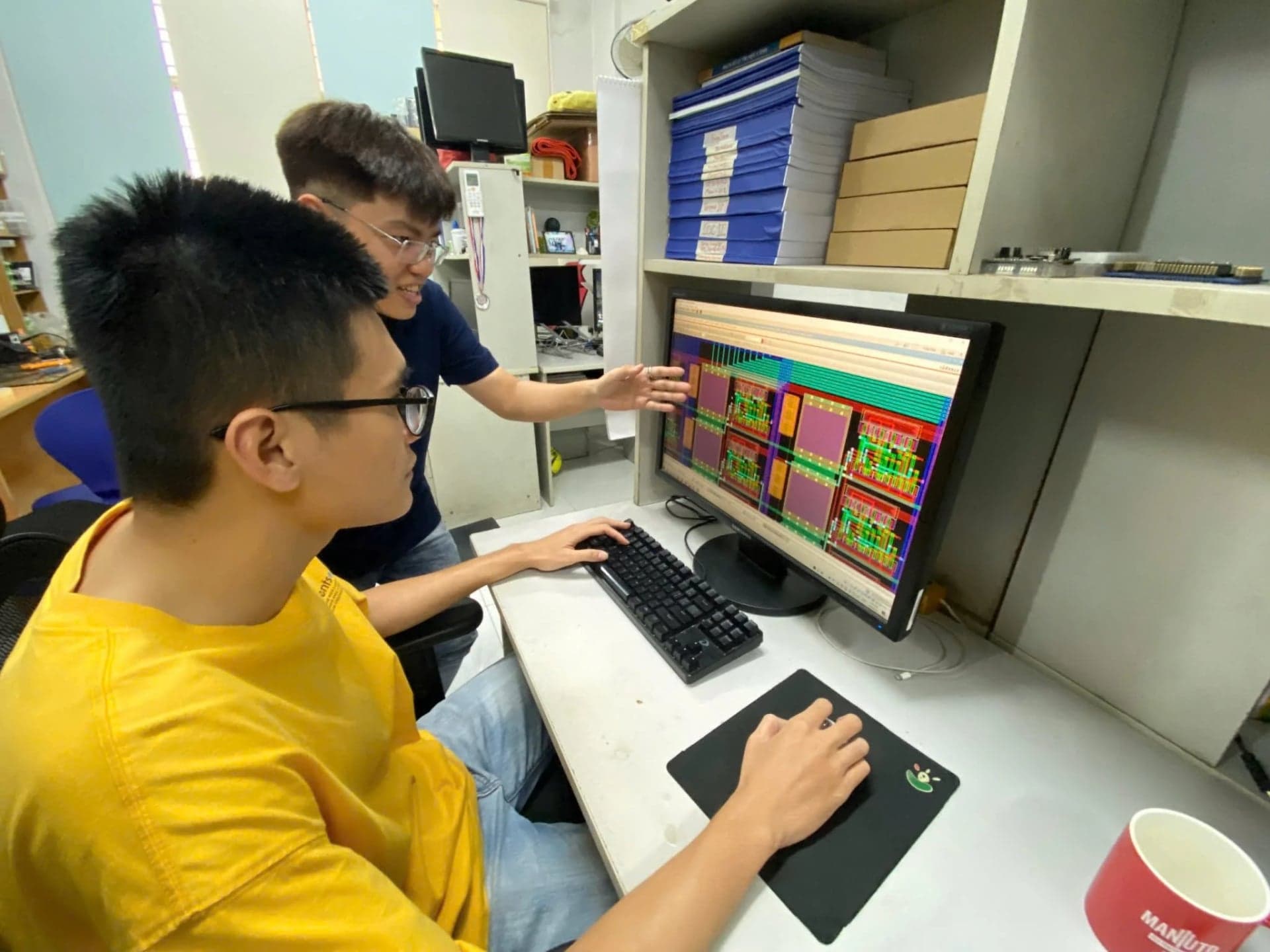
Vietnam's electronics industry is growing rapidly, with exports reaching about US$150 billion in the first eight months of 2026. Companies are struggling to find skilled workers, according to a Navigos Search report based on a survey of 22 manufacturing companies.
Electronics is Vietnam's largest export sector
Electronics has consistently accounted for more than one-third of Vietnam's total goods exports. Other countries in the region are increasing semiconductor investment. Experts said Vietnam must address the worker shortage if it wants to become a regional center for chip design, research and development.
Worker shortages remain the biggest challenge
Demand is rising for chip-design engineers, semiconductor engineers, research and development specialists, and experienced managers, while the current supply does not meet market requirements. Chu Thi Ngoc Hanh, director of finance and legal affairs at Navigos Group, called this one of the biggest challenges for Vietnam's position in the global semiconductor value chain.
Among the 22 surveyed companies, 82% plan to expand their workforce in the next 12 months. Ninety-one percent expect growth in direct labor and technical positions, 86% in production and quality positions, and 82% in research and development and NPI, or new product introduction. Eight companies, or 36%, plan to increase their workforce by at least 20%.
Seventy-three percent of companies said direct labor would be the hardest position to recruit for over the next three to five years. The current supply of semiconductor engineers meets less than 20% of demand. Ninety-one percent also consider high turnover a major constraint. Annual turnover among direct workers exceeds 20% at six of the 22 companies and 10% at another 10 companies.
Marvell Vietnam general director Le Quang Dam said the company has 650 employees and plans to expand its workforce by 15–20% a year, or roughly 100 people, reaching about 800 by the end of 2027. Between 60% and 80% of recruits are recent graduates, while another 20% are experienced engineers.

Training quality remains a major issue
Many universities have opened microelectronics and semiconductor programs over the past three years. Vietnam's strategy targets 50,000 engineers and bachelor's degree holders by 2030. The University of Science and Technology at the University of Danang produced about 2,680 electronics-related engineers from 2020 to 2026 and now has 4,387 students in electronics programs. The University of Science under Vietnam National University Ho Chi Minh City enrolls about 350 students a year in electronic and telecommunications engineering and chip design. About 1,000 students study electronics-related fields at the Ho Chi Minh City campus of the Posts and Telecommunications Institute of Technology. FPT University opened a semiconductor chip-design program in 2024, and thousands now study it and related programs.
Le Quang Dam said the goal of training 50,000 engineers and bachelor's degree holders, including 15,000 design engineers, by 2030 is achievable. Vietnam has about 60–70 chip-design companies with demand for around 2,000 engineers a year. The main question is how to ensure quality, he said.
Companies want stronger and more consistent training
Graduates have strong foundations in mathematics, physics, chemistry and electronics, but often lack professional and communication skills and foreign-language ability. In the Navigos Search survey, 64% of companies cited weak soft skills, 59% insufficient practical experience in automation, and 73% English as a weakness.
About 50% of companies work with universities and vocational schools to develop curricula and build a talent pipeline. However, university recruitment of engineers was effective for only 23% of companies, while recruitment of direct workers through schools was effective for just 5%. Another 32% have to hire foreign specialists or workers to manage core processes.
Sources: Thanh Niên

