
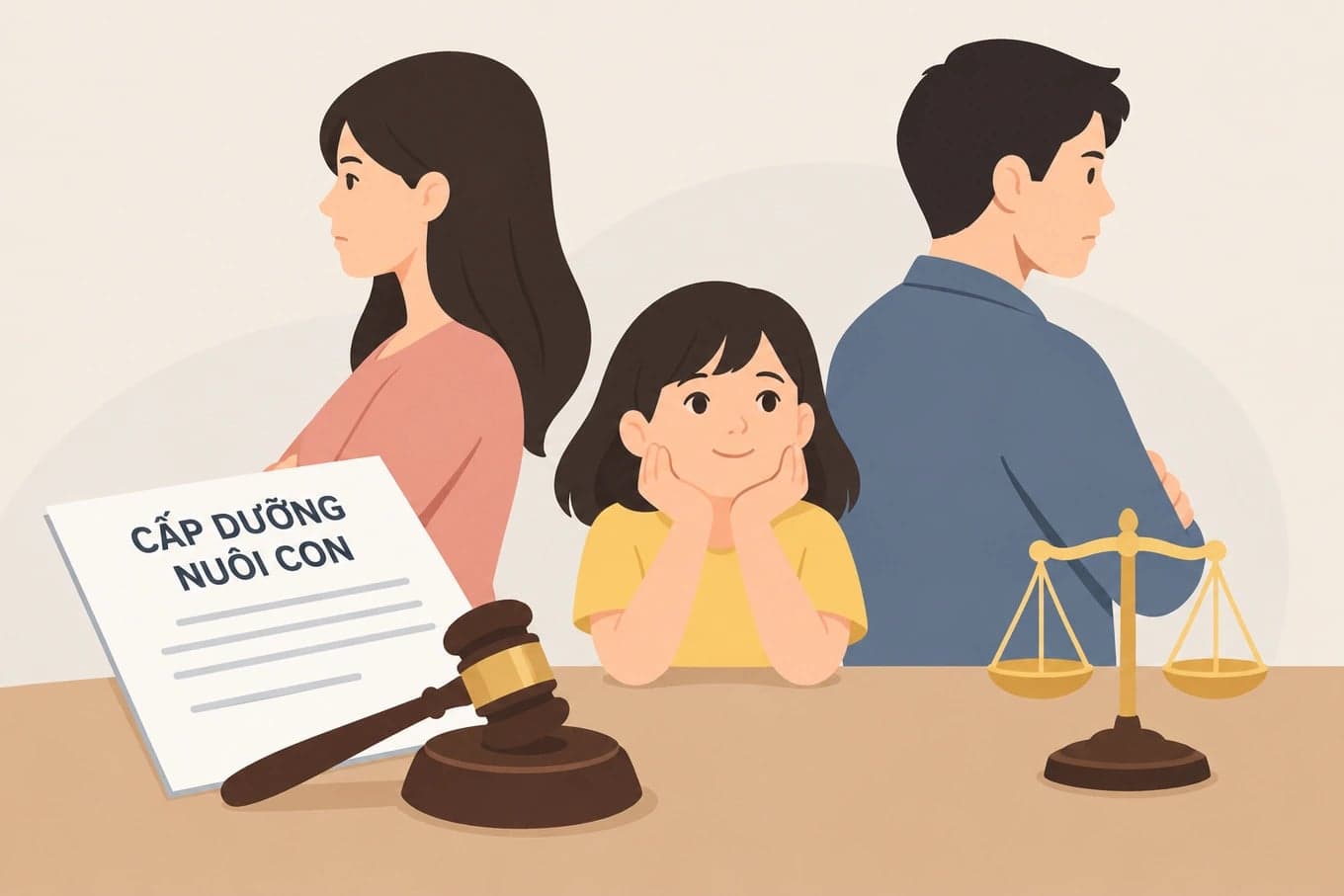
Vietnam's Supreme People's Court has reminded courts that when the parent living with a child does not request support during a divorce, the other parent is not released from the duty to support the minor child.
In Guidance No. 64/TANDTC-GĐKTII on judicial review, the Supreme People's Court's Department of Supervision and Inspection III said it had identified several issues for courts to consider in marriage and family cases.
One issue concerns determining child-support obligations when a court settles a dispute over which parent will live with a child after divorce.
According to the court, in some cases one parent asked to live with the joint child but did not ask the other parent to pay support. The court's decision then stated that the parent who did not live with the child was not required to pay support.
The Supreme People's Court said that wording was incorrect. Under Article 110 of the 2014 Law on Marriage and Family, parents must support a minor child when they do not live with the child, or when they live together but breach their duty to care for the child. The rule is intended to protect the child's lawful rights and interests.
The fact that the parent living with the child did not request support when the case was decided does not mean that the other parent is exempt from the obligation.
The court warned that if, after the divorce, the parent caring for the child files a support claim, an earlier ruling that the other parent did not have to pay could affect the claimant's right to bring the case and seek protection of their lawful rights and interests.
Therefore, when the parent living with the child has not requested support, the operative part of the judgment should record that the parent is not currently seeking support. It should not state that the parent who does not live with the child has no support obligation. This wording complies with the law and avoids affecting a future support claim.
The same applies when a couple has two children, each parent lives with one child, and neither asks for support. The court should record that the parties have not requested child support. It should not state that the parties are not required to support each other's children, because that wording could be understood to mean that their support obligations have ended.
Sources: Dân Trí

