
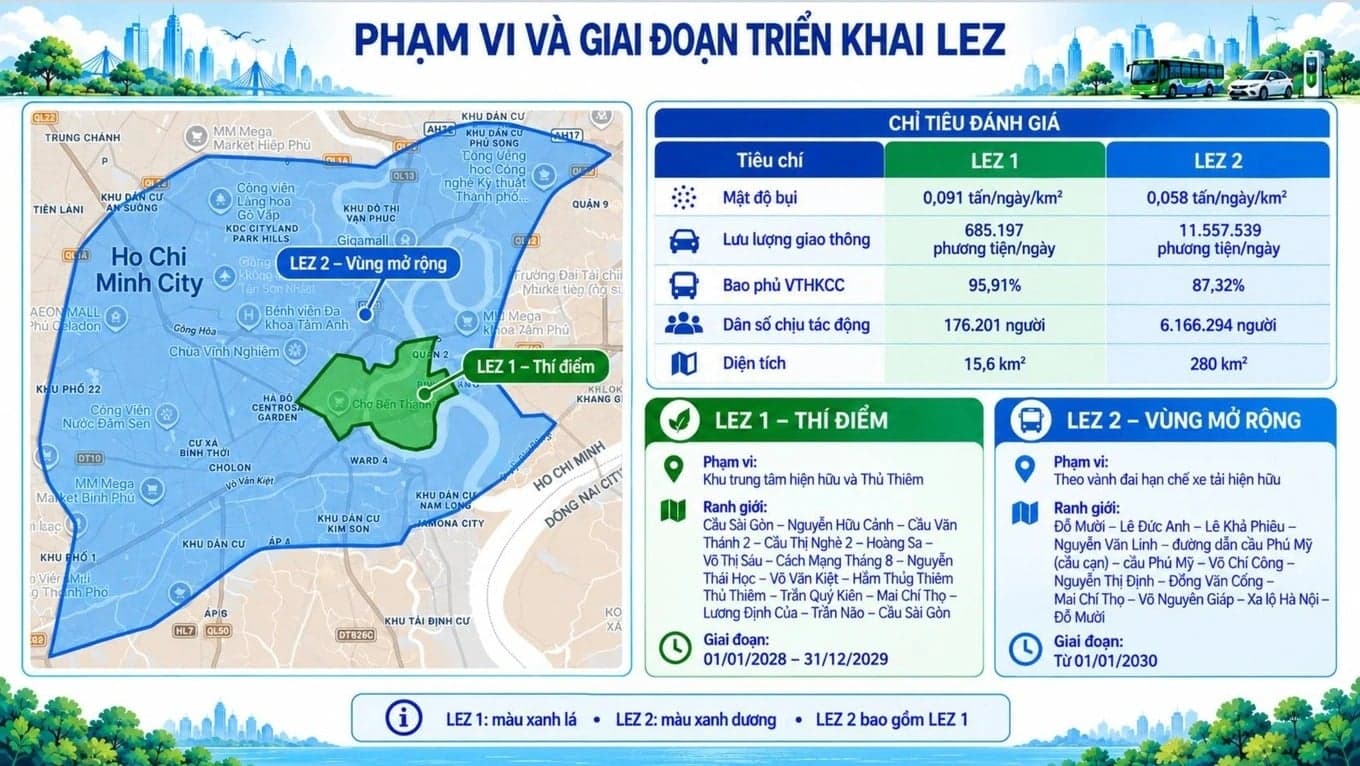
Vietnam's Construction Ministry sent the Ho Chi Minh City Department of Construction comments on a project to shift to green transport and establish low-emission zones.
One proposal concerns the classification of hybrid vehicles. The ministry asked the draft to list battery-electric and fuel-cell vehicles separately and state that hybrid electric vehicles, or HEVs, do not belong to that group. It also proposed treating hybrids as a transitional solution with an appropriate end date as the city moves fully to clean energy.
For low-emission zones, the ministry proposed reviewing the boundaries against the city's master plan and urban development program so the requirements remain feasible and do not create inequality between areas.
It also proposed using several criteria to define the zones: areas under strict protection and emissions restrictions, places with recurring traffic congestion rated D to F under standard TCVN 13592:2022, and areas where the air quality index, or AQI, was below average at least once during the previous year.
The draft should assess the results of the low-emission zone in Area 1 in 2028–2029 before expanding it to Area 2 from January 1, 2030, the ministry said. The city should also provide traffic arrangements, alternative routes and transfer points at the boundaries to prevent congestion from shifting to neighboring areas.
The timelines for a full transition to green transport, including 100% adoption by 2035 on Con Dao, by 2040 in low-emission zones and by 2045 across the city, should be coordinated with public transport, green-energy buses, park-and-ride facilities, charging infrastructure and the metro system.
The ministry separately asked the city to review the legal basis and suitability of a requirement that, from January 1, 2030, motorcycles used by civil servants, public employees and government workers must run on clean energy. Restrictions should be based on vehicle characteristics and emissions rather than the identity of the user, it said.
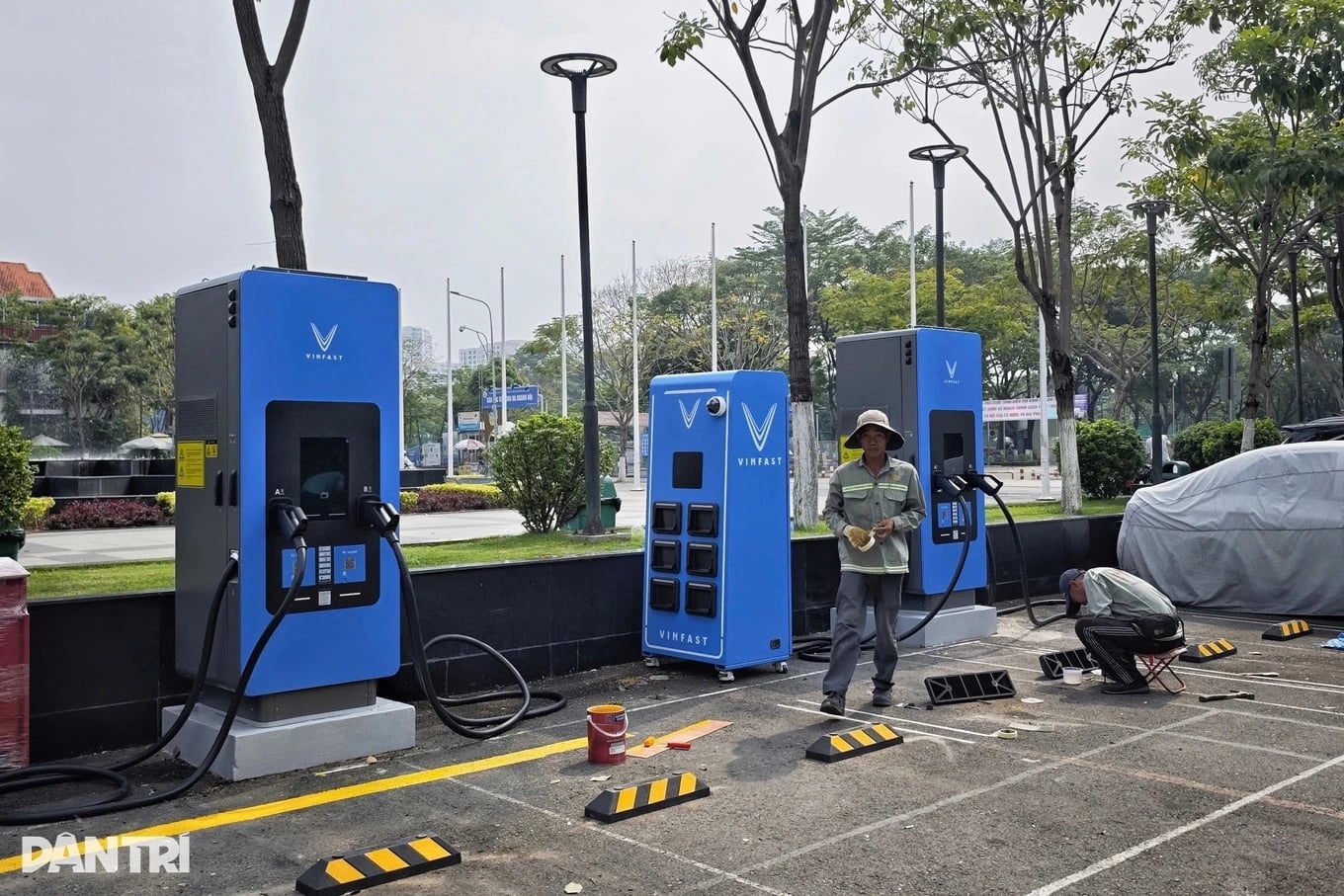
The ministry proposed setting requirements for charging and energy-supply infrastructure in urban plans, new urban-area projects and renovation projects, rather than relying mainly on sidewalks.
If roads or sidewalks are used temporarily for charging facilities, the draft should require enough space for pedestrians, accessible routes for people with disabilities and protection of the urban landscape.
For apartment buildings, the draft should set out how electric-vehicle parking and charging areas will be provided, including the share of parking spaces, the number of chargers and the implementation schedule. Rules for existing buildings should reflect their available space, technical infrastructure and ability to be retrofitted, while meeting strict electrical and fire-safety requirements.
On monitoring data, the ministry proposed defining responsibility for checking and updating information and creating a mechanism for connecting and sharing vehicle registration and emissions-inspection data between the Vietnam Register and the Ho Chi Minh City People's Committee.
Earlier, the Ho Chi Minh City Department of Construction asked ministries and agencies to comment on a draft resolution by the city's People's Council on the transition to green transport, support measures and low-emission zones.
Sources: Dân Trí

