
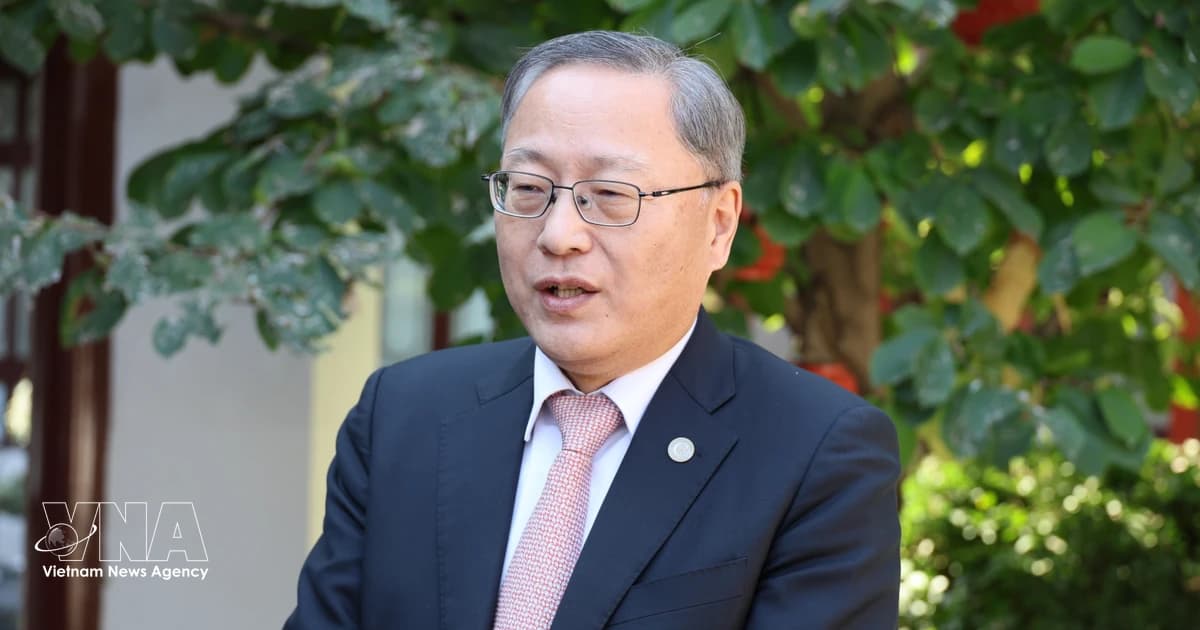
The official visit to China by Vietnam National Assembly President Tran Thanh Man carries important strategic significance, helping strengthen political consensus, expand legislative cooperation and create opportunities for practical cooperation across fields, Chinese expert Zhang Jianguo said.
According to Zhang Jianguo, former Director-General of the Western Europe Department under the International Liaison Department of the Communist Party of China Central Committee, the visit builds on the strategic momentum established at the meeting between the top leaders of the two Parties and countries in April 2026. He also described it as an important step by the two countries' legislative bodies towards building a Vietnam-China community with a shared future of strategic significance.
The high-level engagements and outcomes of the visit reflect the two sides' commitment to maintaining positive bilateral relations and speeding up the implementation of cooperation orientations agreed by their senior leaders, the expert said.
Zhang Jianguo, who is also Secretary-General of China's Charhar Institute, said that amid changes in the international and regional situation, high-level meetings during the trip help strengthen consensus and mutual trust and reaffirm the direction of bilateral ties. Positive Vietnam-China relations serve the fundamental interests of the people of both countries and contribute to regional peace, stability and economic integration, he added.
Assessing one of the visit's main outcomes, the expert said the second session of the Cooperation Committee between Vietnam's National Assembly and China's National People's Congress marked progress in regular exchanges between the two legislative bodies.
Sharing experience in legislation and oversight, together with the implementation of cooperation documents, will help create a fair, transparent and predictable business environment, Zhang Jianguo said. Legislative cooperation could also help address legal barriers to trade, investment and cross-border activities, reducing transaction costs and risks for businesses.
Zhang Jianguo said the visit could give new momentum to economic cooperation in infrastructure connectivity, artificial intelligence, the digital economy, clean energy and satellite communications.
Vietnam's needs in infrastructure development, the energy transition and digital industries complement China's strengths in technology, production capacity and supply chains, Zhang Jianguo said. Expanding cooperation in these fields, he added, will help the two countries use their advantages, allocate resources more effectively and seize opportunities created by scientific and technological progress and industrial transformation. This would develop bilateral ties beyond trade in goods to technology, capital and services.
To make the most of the visit's results, Zhang Jianguo proposed turning shared understandings into concrete mechanisms, policy measures and practical steps.
He called for legal and policy adjustments in areas including investment market access, cross-border data flows and intellectual property protection to establish a clear and stable legal framework for businesses in both countries.
The expert also stressed the need to strengthen the oversight role of legislative bodies so that cooperation agreements are effectively implemented at the local level.
Exchanges between local legislative bodies, particularly in border areas, should be expanded to address legal issues involving infrastructure connectivity, border-gate economies, cross-border industrial parks and logistics, he said.
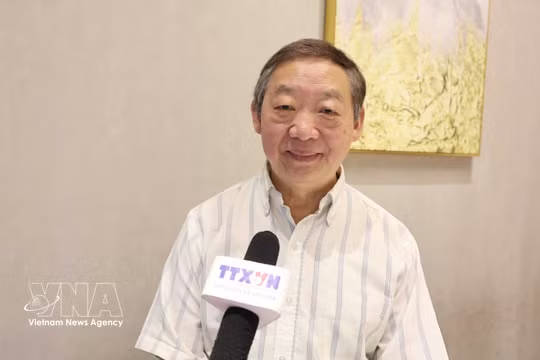
The expert said building a Vietnam-China community with a shared future of strategic significance is a long-term process requiring coordination through official channels and people-to-people exchanges. Translating the visit's outcomes into concrete cooperation programmes, he said, will help strengthen the two countries' comprehensive strategic cooperative partnership and support stable and sustainable bilateral relations.
Sources: VietnamPlus / Vietnam News Agency

