
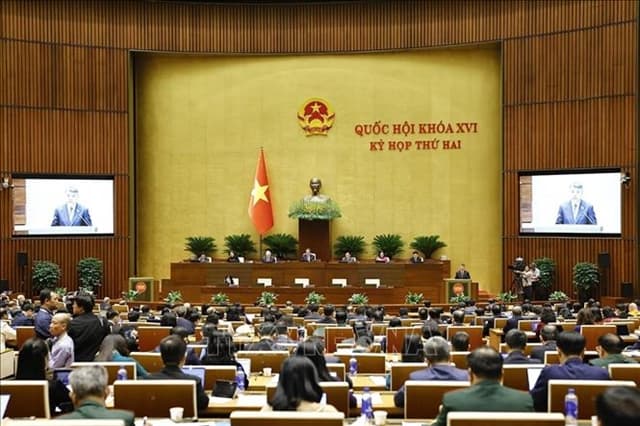
Prime Minister Le Minh Hung presented a report on the 2026 socio-economic plan and a proposed plan for 2027 at the opening sitting of the 16th National Assembly's second session on Saturday morning.
Fourteen of 15 key targets for 2026 expected to be met or exceeded
The PM said 2026 is the first year of implementing the Resolution of the 14th National Party Congress. Amid a complex international and regional environment, the political system produced major socio-economic results, with 14 of 15 primary targets expected to be met or exceeded.
GDP growth reached 9.95 per cent in the third quarter and 9.01 per cent in nine months. State budget revenue is estimated at VND3.06 quadrillion, up 14 per cent. Public debt is projected at 33–34 per cent of GDP, Government debt at 32–33 per cent, external debt at 28–29 per cent and the budget deficit at about 4.1 per cent.
The consumer price index rose 4.52 per cent. Industry and construction grew 11.21 per cent, the highest rate since 2015. Vietnam received 17.7 million foreign arrivals, up 14.5 per cent. Foreign trade turnover rose 30.4 per cent and is projected at $1.11 trillion. Total investment reached VND3.11 quadrillion, public investment disbursement about VND643 trillion or 63 per cent of the annual target, and registered FDI $50.36 billion, up 76.4 per cent.
The PM cited progress in legal reform, administrative reorganisation, strategic infrastructure and Vietnam's rise to 43rd among 139 economies in the 2026 Global Innovation Index. He also acknowledged pressure on macroeconomic governance and inflation control, high interest rates, and difficulties for small and medium-sized enterprises in accessing land and credit.
Striving for GDP growth of 10 per cent or higher next year
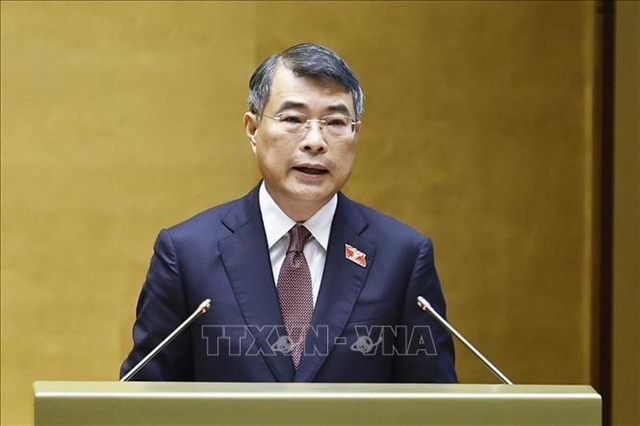
The main target for 2027 is economic growth of 10 per cent or higher while maintaining macroeconomic stability, controlling inflation and laying the groundwork for a development model driven by science, technology, innovation and digital transformation.
The 45 targets for next year include GDP growth of at least 10 per cent, average CPI growth of about 4.5 per cent, GDP per capita of $6,100, an 8.6 per cent increase in labour productivity and a 1–1.5 per cent reduction in multidimensional household poverty.
The Government plans to improve the legal framework, cut administrative procedures, operate the two-tier local administration model effectively, expand the private sector and selectively attract FDI with technology transfer. It also plans modern infrastructure, completion of the expressway system, railway projects, faster construction of Long Thanh and Gia Binh airports, the National Data Centre, expanded 5G and pilot 6G testing.
The PM pledged to improve education and high-tech training, develop culture, social services and healthcare, strengthen welfare, improve resource and environmental management, and implement the one-million-hectare low-emission rice project in the Mekong Delta. Defence and security will be reinforced, international integration expanded and preparations made for APEC 2027.
Implementation capacity and leadership accountability must improve, the PM said. He stressed that the tasks through 2026 and throughout 2027 would be difficult and important, requiring authorities and localities to strengthen unity, promote innovation and act decisively. The Government expects guidance and support from national institutions, citizens and overseas Vietnamese to meet the targets and implement the 2026–2030 plan.
Sources: Viet Nam News

