
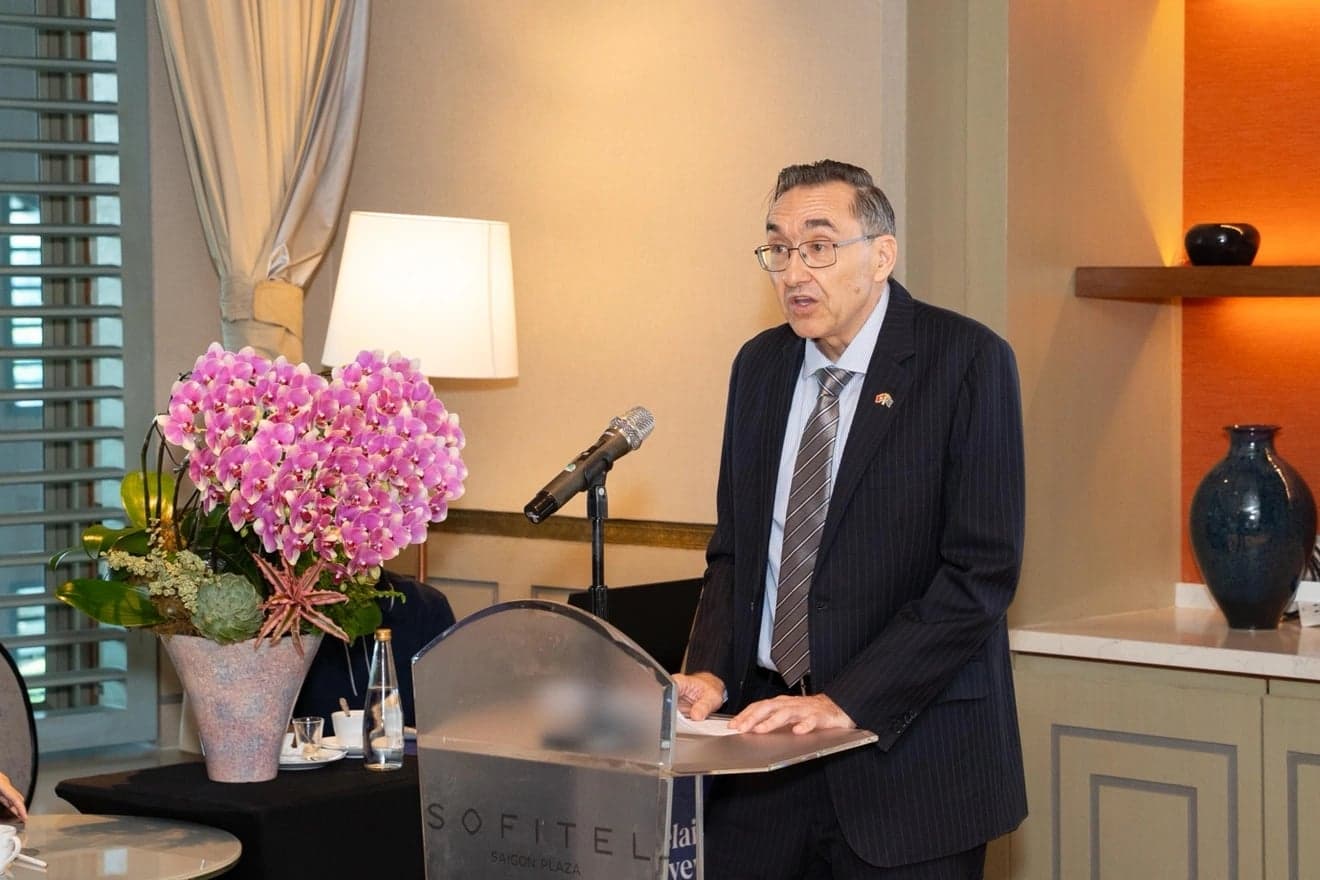
On October 20, a roundtable titled “A cooperation model to unlock resources in Vietnam’s semiconductor, artificial intelligence and applied finance sectors” was held in Ho Chi Minh City. Participants discussed how to direct research and trained specialists to areas where the market needs them.
The event was organized by the University of Adelaide in Australia and Dear Our Community, with professional partners including the Australian Alumni Business Network and the Semiconductor Industry Resource Development Alliance of Vietnam (SEVINA).
The roundtable had two sessions. The morning session focused on moving semiconductor and AI research from laboratories to the market, talent and cooperation among government, universities and businesses.
The afternoon session addressed career pathways in finance at Vietnam’s International Financial Center. The discussion focused on giving graduates of international education, particularly in Australia, the thinking, knowledge, skills and experience needed for careers in Vietnam, especially at the Ho Chi Minh City International Financial Center.
Vietnam described as an important partner
After the event, Professor Jessica Gallagher, Deputy Vice-Chancellor for Global Engagement and External Relations, said the University of Adelaide considers Vietnam one of its important partner countries, first because of the country’s local talent.
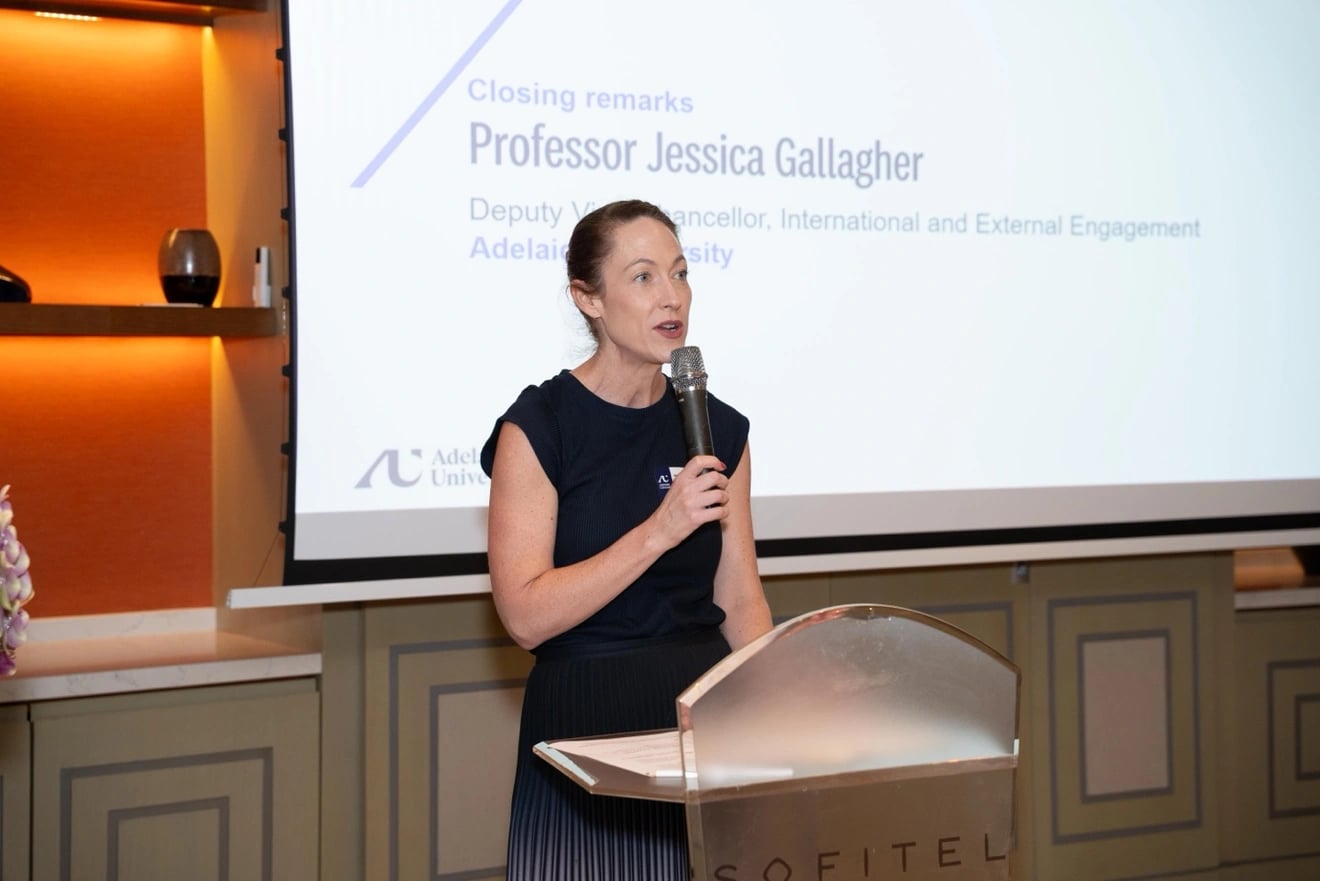
She said Australia and Vietnam share priorities including the transition to green energy, applying AI to build a more sustainable and prosperous society, agriculture and food, healthcare and connections between people. The University of Adelaide wants to expand research cooperation and exchanges of faculty and students, while continuing to work with its alumni network of business leaders and specialists.
The professor also said students need more than specialist knowledge. In her view, a degree is not enough for an entire career, so universities should update programs with companies and alumni to support lifelong learning.
Three sides at the same table
Discussing partnerships that can benefit students, researchers and employers, Gallagher said signing a cooperation agreement is only a catalyst. “A partnership forms when the parties genuinely want to work together, businesses are committed because they see the value of cooperation, and university leaders are ready to invest,” she said.
She said three layers are needed: agreement within academia, leadership commitment and an international team that connects the work and helps ensure that plans and targets are carried out. The human factor also matters, because the parties need to want to work together and make time for it.
The event emphasized the roles of government, universities and businesses. Universities and companies should design programs together and spend more time in each other’s workplaces. The government sets policy direction, while businesses and universities provide feedback so policy is closer to reality.
Nguyen Thi Thu Suong, head of the science and technology development division at the Ho Chi Minh City Department of Science and Technology, presented the goals for 2026–2028: bring at least 10 science and technology products to market, establish at least five partnerships and commercialize 8–10% of intellectual property funded by public money.
Trieu Hiep Loc, vice chairman of SEVINA, said the alliance has partnered with 15 universities to train semiconductor engineers.
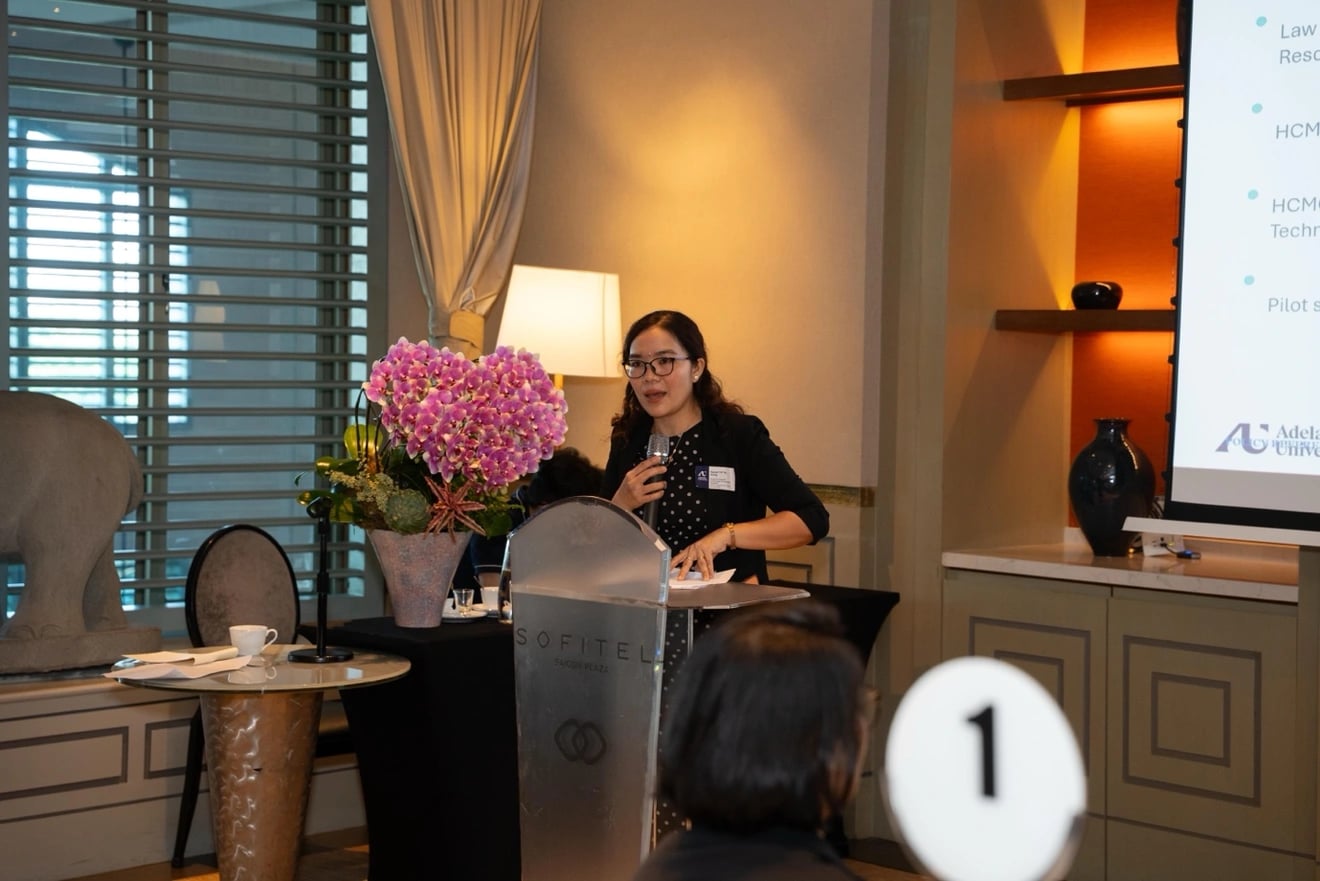
At the discussion tables, many participants raised similar concerns: research and prototypes can struggle to reach the market, intellectual property rights are not always clear from the start, and students lack opportunities for early practical experience.
Long-term commitment
Nguyen Khac Viet Bach, CEO of BlockBase Private Capital and an Australian university alumnus, said the most important follow-up to the dialogue was a regular channel for communication.
He said responsibility belongs to both sides. “There needs to be demand from businesses, especially employers. The relationship has to be built over the long term, so I hope this is not a one-time event but becomes an opportunity for regular connection and discussion,” he said.
The University of Adelaide also said it wants Vietnamese universities, businesses and government agencies to see it as a genuine partner committed to Vietnam’s development. Professor Gallagher said: “We are here for the long term and will return to Vietnam regularly to meet students, alumni and partners.”
The University of Adelaide is a newly merged Australian university that carries 180 years of experience and achievements from the University of Adelaide and the University of South Australia. It is a member of the Group of Eight leading research-intensive Australian universities (Go8), linking teaching and research to business needs and supporting innovation, talent development and international cooperation for the benefit of the community.
Dear Our Community (DOC) is a social impact enterprise that builds a specialized platform connecting young people, businesses and leading experts in the sustainable development ecosystem. Its network currently includes more than 19,000 young people, more than 20 universities and over 150 companies, organizations and specialists.
Sources: Dân Trí

