
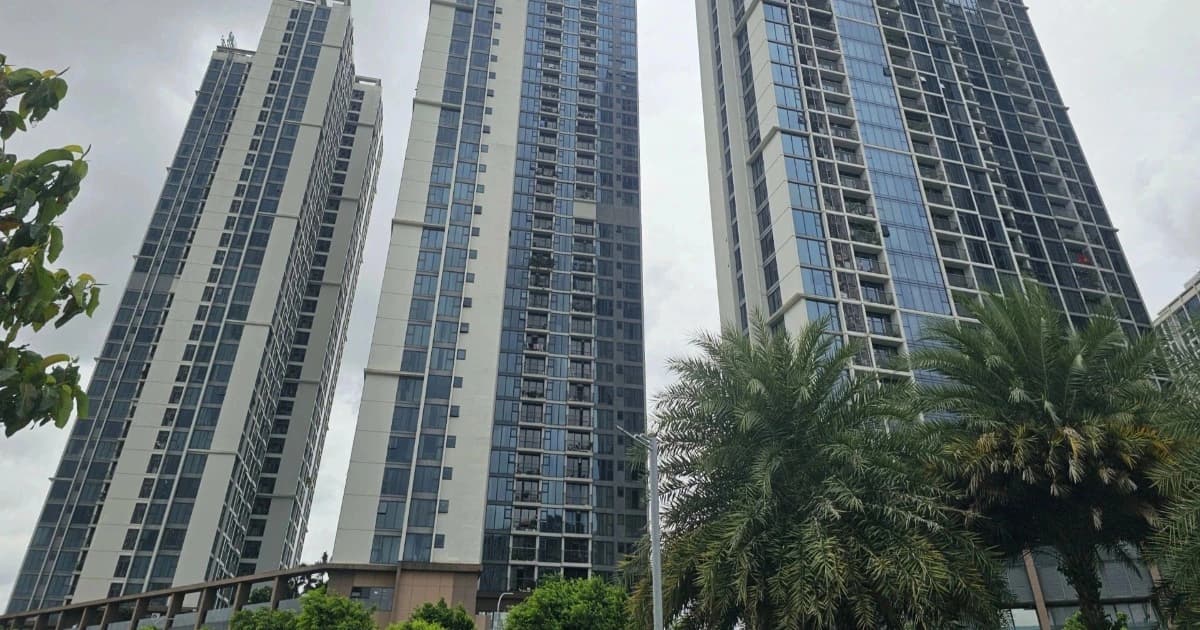
Hanoi and Ho Chi Minh City are expected to see a substantial increase in apartment and low-rise housing supply in 2027. SSI's 2027 investment strategy report says the increase may be supported by the gradual resolution of legal obstacles and the launch of large-scale projects.
Citing CBRE, SSI forecasts about 82,000 newly launched apartments in 2027. That would be nearly unchanged from this year's high level, with high-end homes expected to make up most of the supply. Another 18,500 low-rise homes could increase supply by 30% from the previous year. Total new supply across the two segments could therefore reach about 100,500 units.
The increase in supply may not lead to a similar recovery in demand. Property prices remain high, while housing-loan rates limit buyers' purchasing power. Floating rates currently range from 12% to 18.5%, with little room for a short-term decline.
Borrowers may face additional financial pressure after preferential-rate and grace periods end. New supply is concentrated mainly in the high-end and luxury segments, further limiting access for buyers seeking homes for their own use.
As affordability comes under pressure, housing policy is gradually shifting from removing legal obstacles and unlocking supply toward expanding housing that matches actual demand. Since 2025, social and rental housing have received stronger support. The report says 907 social-housing projects covering nearly 858,500 units are currently being developed nationwide, with total investment close to VND 793 trillion. Of these, 301 projects with about 201,500 units have been completed.
SSI says rising supply in both commercial and social housing will intensify competition. Companies with large project land banks, execution capacity, access to capital and strong legal capabilities will have an advantage, especially developers backed by banks. Asset quality and the ability to generate cash flow will also become more important.
Greater supply and policies focused on affordability leave less room for further price growth. A return to higher housing-loan rates after preferential periods may increase secondary-market supply and put pressure on liquidity and prices.
"Developers may face narrower margins because of higher financial costs, the need to offer buyers greater incentives, stronger competition and continued growth in project-development costs," SSI said.
For the near term, the Dat Xanh Services Institute for Economic, Financial and Real Estate Research (DXS-FERI) prepared three scenarios for the fourth-quarter market based on a third-quarter absorption rate of 20% to 25%.
In the ideal scenario, supply would rise by 30% to 40%, prices would increase by 5% to 10%, floating rates would fall to 10% to 12%, and absorption would reach 40% to 45%.
In the expected scenario, supply would grow by 20% to 30%, prices would remain flat, rates would stand at 12% to 14%, and absorption would reach 30% to 35%. In the challenging scenario, rates could rise to 14% to 16%, prices could edge down and absorption could fall below 20%, increasing pressure on some secondary-market assets.
DXS-FERI says the market is shifting its focus from increasing supply to creating real liquidity. As buyers become more cautious, projects with clear legal status, convenient locations, suitable prices and flexible payment policies will have an advantage in competing for demand.
Sources: Dân Trí