
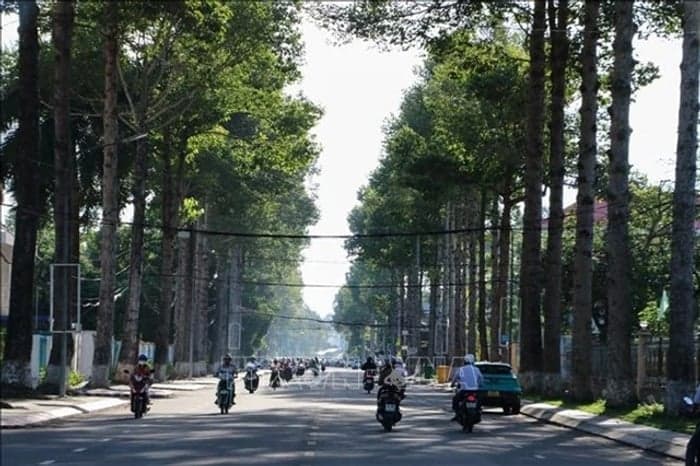
Vietnam will study urban tree species capable of reducing fine particulate matter and absorbing exhaust emissions as major cities face air pollution concerns.
The task is linked to parks, green areas and public spaces. A decision signed by Forestry and Forest Protection Department Deputy Director Pham Hong Luong carries out Ministry of Agriculture and Environment tasks on pollution mitigation and air quality management for 2026–30.
The department will identify planting structures that reduce air pollution and help design urban public spaces. The work includes planting research, a tree list, targets and funding mechanisms, based on a January 26 report on the one-billion-tree project for 2021–25.
The plan will assess whether forests and urban green systems can reduce PM2.5 and PM10, absorb emissions and regulate the microclimate. Research is scheduled for 2027–30, with findings transferred to relevant stakeholders.
Reducing smoke
The plan requires controls on biomass and vegetation burning and reductions in forest-fire emissions. Guidance will prioritise mechanised methods, composting and biomass recovery, and conditions for controlled burning will be established.
Specialised forces and local authorities will guide and control slash-and-burn cultivation and burning after logging. Violations that risk fires or air pollution must be handled under the law.
The department will coordinate artificial intelligence, remote sensing and unmanned aerial vehicles for early detection, and will build a monitoring network with national agencies and the Hanoi People’s Committee.
Forest-fire data is intended to be integrated with the air-pollution hotspot database. Dust and emissions will be assessed, with results reported to the ministry by December 15 each year, an interim review at the end of next year and a final review at the end of 2030.
Sources: VietnamPlus / Vietnam News Agency

