
When a reminder becomes a conflict
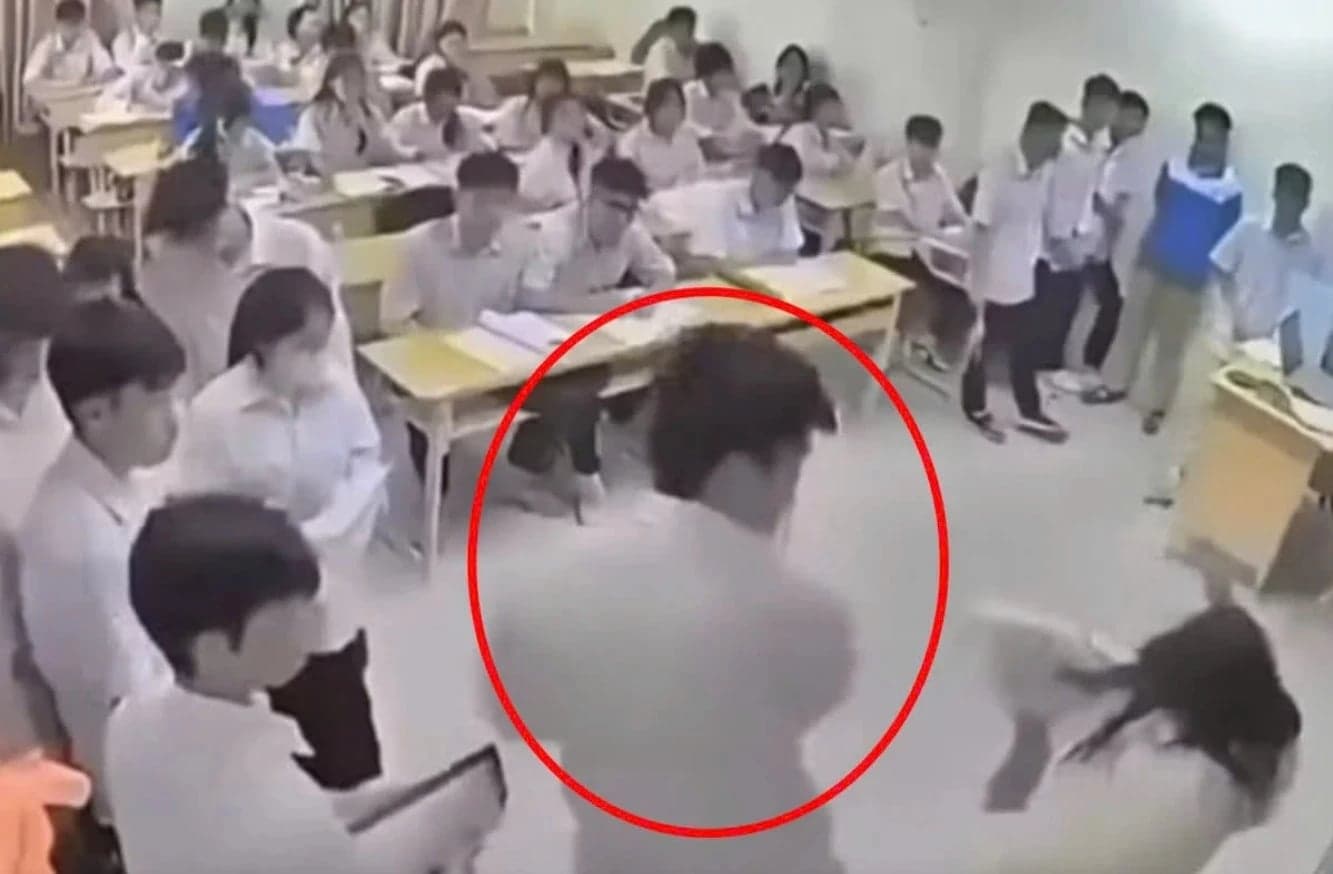
The case involving a 17-year-old student who assaulted a teacher at Mạc Đĩnh Chi High School in Hanoi on October 19 caused widespread concern. The student and several classmates had not done their homework, so they were asked to stand at the front of the classroom. The student then hit the teacher. She suffered a fracture of the nasal bones, with the harm to her health assessed at 12%. The student was charged and remanded in custody.
Ngo Anh Kiet, a student at Tam Phu High School in Ho Chi Minh City, said he was shocked and saddened when he heard about the incident. In his view, some teenagers see criticism in front of their classmates as humiliation. Exposure to negative content on social media and a lack of ways to relieve pressure can also lead to impulsive reactions.
“Anger may be instinctive, but learning to control emotions and behave respectfully is a sign of maturity in a new generation of students,” Kiet said.
Kiet said that when students disagree with a teacher, they should calm down, talk privately after class, or seek help from their homeroom teacher or the school counselling office.
Le Hoang Tu Uyen, a student at Tran Dai Nghia High School for the Gifted in Ho Chi Minh City, said that she and many other students sometimes feel that teachers do not understand them. Instead of arguing, Uyen chooses to think calmly and then find a suitable time to explain how she feels.
Uyen, who plans to pursue a career in education, said some students confuse the right to express their emotions with permission to act however they want.
Le Hoang Yen, a parent of two children at An Nhon Primary School and An Nhon Lower Secondary School in Ho Chi Minh City, said respecting teachers does not mean students must agree with everything they say. If her child feels unfairly treated, she listens, looks into what happened and talks with the school. If the child is at fault, she teaches the child to take responsibility, apologise and make amends. Parents, she added, must also set an example in managing emotions and resolving disagreements.
Teachers also need protection
Phan The Hoai, a teacher at Binh Hung Hoa High School in Ho Chi Minh City who once saw a student hit a teacher while he was in high school, said not every act of violence can be explained by a momentary conflict.
Hoai said that when he began teaching in 2007, he sometimes faced angry reactions from students. As a young teacher, he could lose his temper and admits that he did not always handle situations gently. After several years, he began meeting students privately and sharing stories about his own mistakes as a student.
“If I am wrong, students have every right to criticise me and argue their point openly,” Hoai said. He added that teachers should avoid hurting a student’s self-respect in front of the whole class.
Do Duc Anh, a teacher at Bui Thi Xuan High School in Ho Chi Minh City, agrees. When a student loses control, he said, the teacher must remain calm and avoid turning a reminder into a contest over who wins. Safety should come first, followed by a private conversation once the situation has settled. “A teacher’s authority should not be built on fear. It should grow from knowledge, fairness, compassion and the ability to earn students’ respect,” Duc Anh said.
Nguyen Viet Dang Du, a teacher at Le Quy Don High School in Ho Chi Minh City, is worried that similar incidents may continue and asks what teachers should do when they become victims of violence. He said families must teach children to take responsibility for their actions, while schools must build a culture of dialogue. “We need to teach students how to debate, not how to answer disagreement with violence,” Du said.
Ethics should not remain only on the page
Thach Tran Bach Long, a visiting lecturer at the Ho Chi Minh City Institute of Applied Educational Psychology, said a reprimand can sometimes be the last straw for a student already carrying pressure from schoolwork, family problems or unresolved hurt.
At the age of adolescence, fear of losing face in front of peers can also trigger a strong reaction. Long said schools should teach emotional management and nonviolent communication, while counselling offices should work in practice rather than intervene only after an incident.
Nguyen Anh Khoa, head of the psychology programme at the Ho Chi Minh City University of Economics and Finance, said a reminder can trigger frustrations that have built up over time. They may not come only from the teacher-student relationship, but also from family, friends and society.
Khoa said the prefrontal cortex, which is linked to emotional and behavioural control, is still developing in lower and upper secondary school students. Children therefore need early practice in restraint and in considering the consequences of their actions. Adults must set an example, listen and teach children to disagree without insulting others.
Mai My Hanh, deputy head of the Psychology Department at Ho Chi Minh City University of Education, is concerned that children may be able to solve difficult problems without yet knowing how to handle their emotions.
Hanh, who has taken part in teacher training, also worries that ethics classes do not always receive enough attention and are sometimes used for other subjects. In her view, moral education should appear in how adults behave and how schools resolve conflicts, not only in lessons. Educational achievement is not measured only by impressive marks, but also by how each child treats themselves and other people. (To be continued)
Sources: Thanh Niên

