
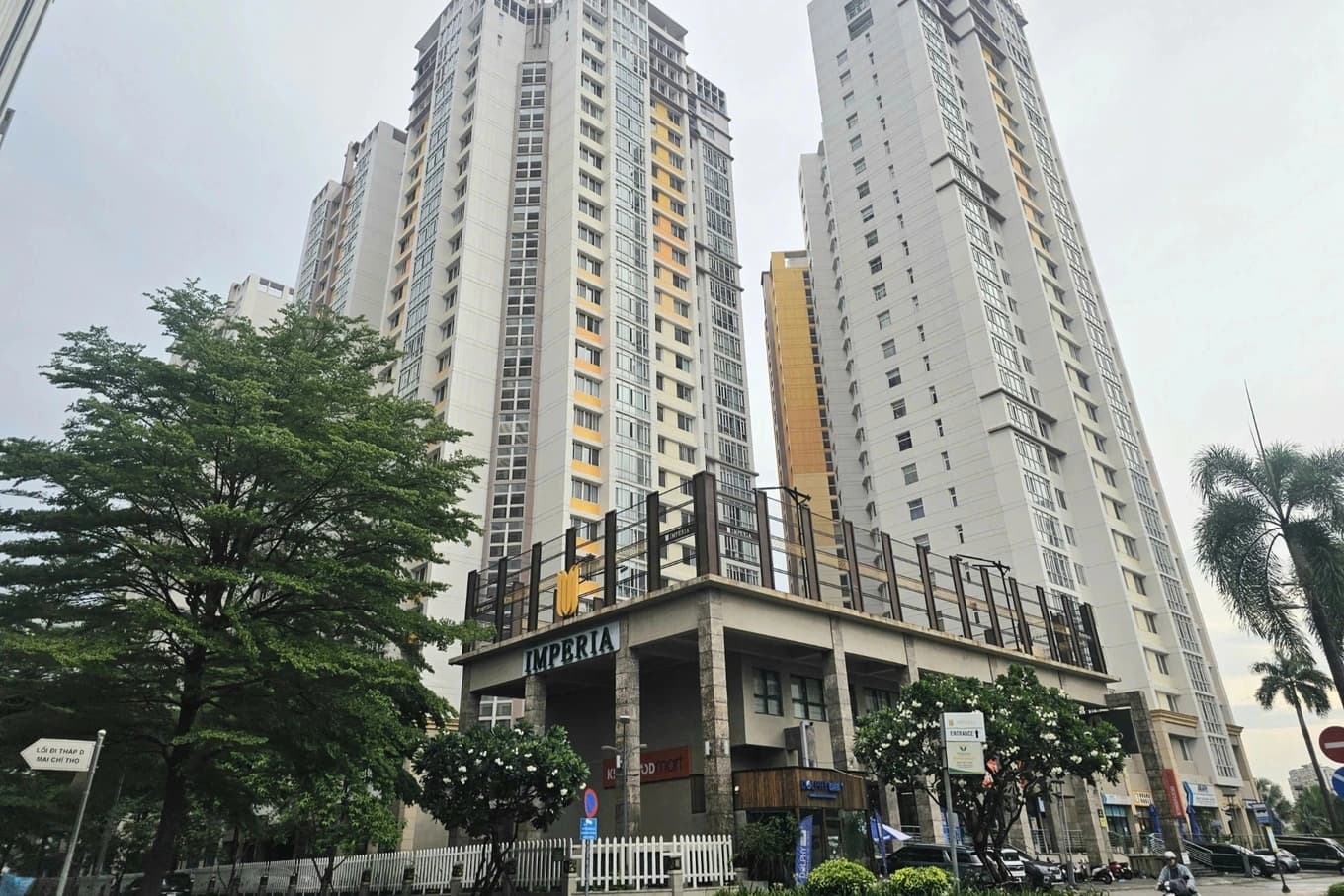
Primary property prices in many parts of Vietnam fell 5–20% in the third quarter from the previous quarter. Rising supply, weaker demand and high capital costs weighed on the market, according to a DXS-FERI report. The Vietnam real estate market report for the first nine months and forecast for the final three months of 2026, prepared by the Dat Xanh Services Institute of Economic, Financial and Real Estate Research (DXS-FERI) under the title “Adjusting to Adapt”, said the housing market continued to face pressure from interest rates and buyers’ ability to absorb supply. Primary prices were adjusted across most regions and product types, usually by 5–20%, with the sharpest adjustment in the north.
Apartment and landed-home prices fall across regions
High-rise apartment prices fell in every region. In the north they dropped 15–20% to 45–160 million dong per square metre; in the central region they fell 10–15% to 30–100 million dong; and in the south and Mekong Delta they fell 5–10% to 36–145 million and 30–55 million dong per square metre. Low-rise homes in urban projects fell 15–20% in the north to 70–280 million dong per square metre, 10–15% in the south to 50–320 million dong, and 10–15% in the central region and Mekong Delta to 45–200 million and 30–100 million dong. Land-plot prices fell 15–20% in the north to 45–90 million dong per square metre and 10–15% in the central region, south and Mekong Delta to 15–75 million, 25–135 million and 10–40 million dong respectively.
DXS-FERI said the figures reflect adjustments by segment and region and do not mean every project fell by the same amount. With high rates and limited liquidity, products with suitable prices, complete legal documents and a fit with actual use needs have an advantage. By the end of September, total primary supply reached 114,857 units, up 21% year on year, while new supply reached 49,657 units, up 33%. More than 30,000 units are expected in the fourth quarter, taking annual primary supply above 140,000.
Primary-market sales reached 32,469 units in the first nine months, down 16% year on year despite higher supply. The secondary market also received inventory from projects entering handover. DXS-FERI said cash flow mainly comes from owner-occupiers and medium- to long-term investors, while short-term speculation has almost left. Absorption was 35–40% in the south, 30–35% in the north, 13–18% in the central region and 5–10% in the Mekong Delta. Large supply gives buyers more choice but increases competition, with absorption increasingly determined by legal status, developer reputation, price, transport infrastructure and financial support.
Supply shifts south as market faces three scenarios
The south is expected to receive about 16,900 new units from more than 15 projects in the fourth quarter, or 56% of total new supply. The north is expected to receive about 8,000 units from seven projects, or 26%, while the central region and Mekong Delta will each receive about 2,700. DXS-FERI developed three scenarios based on third-quarter absorption of 20–25%. In the ideal scenario, lower capital costs and better economic conditions could lift supply 30–40%, prices 5–10%, floating rates would be 10–12% and absorption 40–45%. In the expected scenario, supply would grow 20–30%, prices would be flat, rates 12–14% and absorption 30–35%, with demand focused on products for actual needs. In the challenging scenario, rates would reach 14–16%, supply would grow 15–20%, prices would fall slightly and absorption would fall below 20%. Portfolio restructuring could put pressure on some secondary-market assets. DXS-FERI said the market is shifting from expanding supply to creating liquidity, favouring projects with transparent legal documents, convenient locations, suitable prices and flexible payment policies.
Sources: Dân Trí