
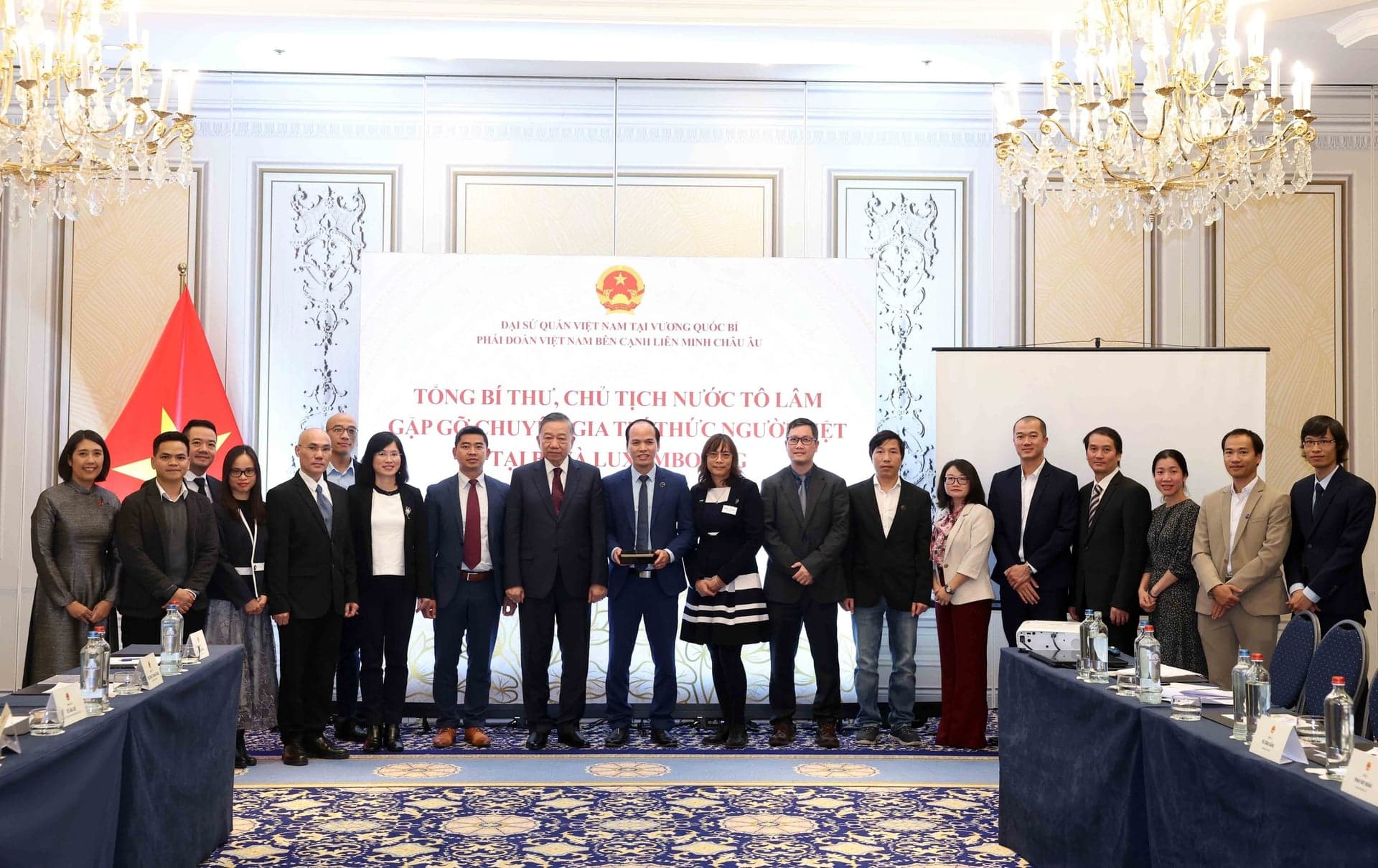
On October 24 local time in Brussels, To Lam and a high-level Vietnamese delegation met representatives of Vietnamese experts and intellectuals in Belgium and Luxembourg.
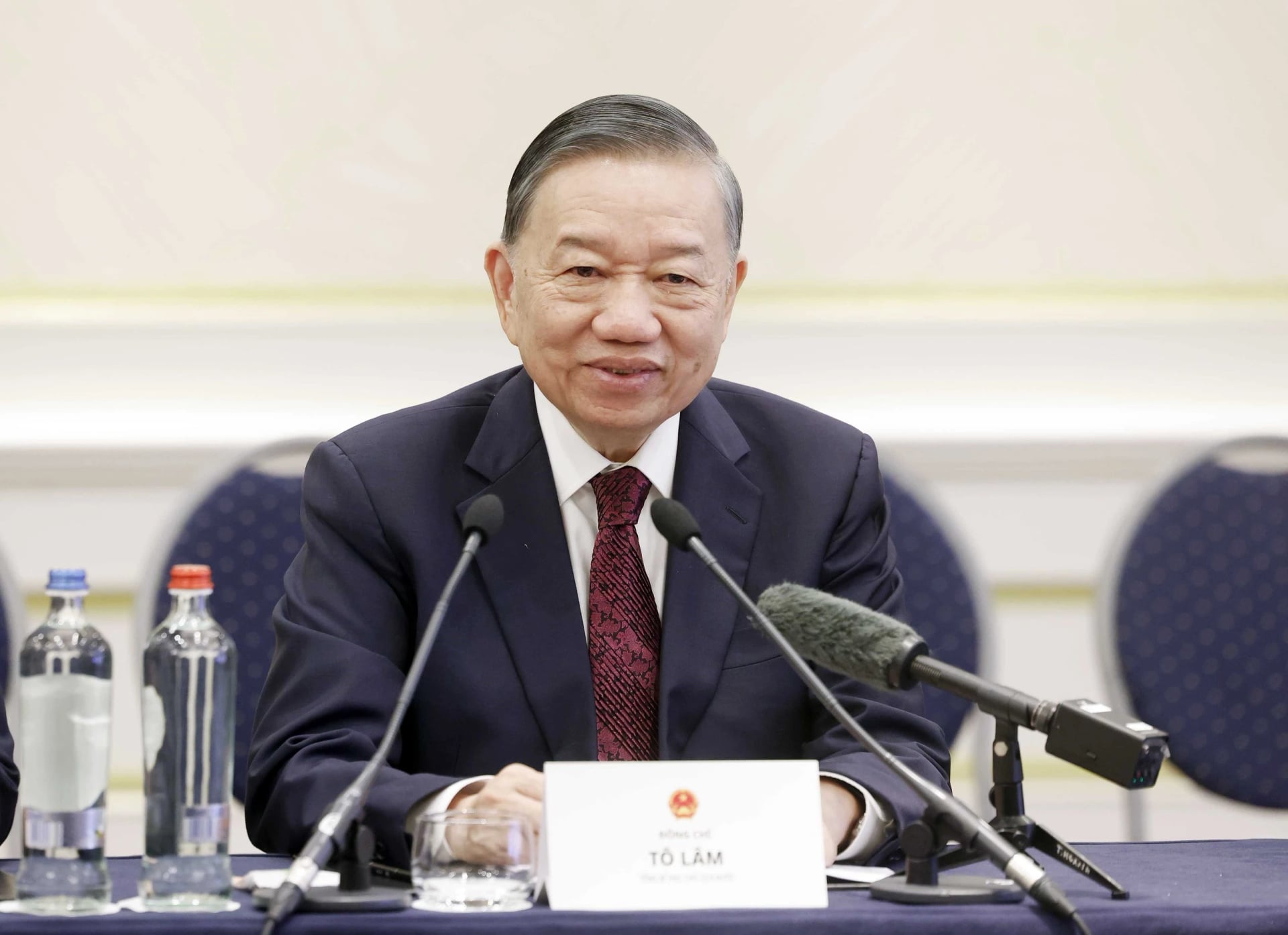
At the meeting, To Lam, representing the Party and state leadership, praised policy recommendations from experts and intellectuals in Belgium and Luxembourg. They discussed what the country needs to do, what they themselves can do and which tasks they are ready to take on. He said this was the approach of people who see themselves as participants in the country’s work and show their commitment to their homeland through concrete action.
To Lam said the 14th Party Congress had set a goal of making Vietnam a developed, high-income country by 2045. The country cannot continue pursuing that goal through cheap capital, cheap labor and raw resources. Science, technology, innovation and digital transformation are now a required path. Practical results, however, have not yet matched the stated determination. The biggest bottleneck is implementation.
To Lam acknowledged that many thoughtful proposals from Vietnamese intellectuals abroad had been recorded at forums and then left there, with no office assigned to receive them and no one responding. Many experts and intellectuals returned to Vietnam with good ideas but became stuck in procedures and financial mechanisms and eventually stopped. He said that responsibility lies first with the administrative system, not with the experts and intellectuals.
To Lam called for future work to start from the country’s practical problems and for a shift from searching for resources to connecting resources with specific needs.
Central agencies, ministries, local authorities and businesses must issue clear requests: what problem needs to be solved, which technology is missing, who will receive the result and what the final product should be. Experts and intellectuals were urged to register for tasks linked to major national problems and strategic technologies.
To Lam stressed the need to select fewer tasks but carry them through decisively. Relevant agencies should choose feasible priority tasks with domestic partners and potential for wider application. Each task must have a clear objective, timeline and person responsible. It should be considered complete only when there is an operating product, verifiable data, real users and measurable effectiveness. Successful solutions should then be expanded and developed.
Mechanisms must be changed so intellectuals can contribute from anywhere and scientists do not need to move back permanently to Vietnam. To Lam proposed task-based expert contracts, remote work, joint research and funding tied to the final product. Flexible financial arrangements are also needed, along with clear intellectual-property rights and acceptance of research risks and delays.
Intellectuals should be assessed by their results and their professional expertise should be respected. The best people should be selected to carry out tasks rather than being obstructed by administrative procedures.
Each cooperation project should leave Vietnam with new capabilities. The final measure should not be the number of memorandums signed, but the number of engineers and scientists trained in Vietnam, laboratories and strong research groups established, and technology companies formed. Technology transfer alone is not enough; the parties must develop together in order to move toward self-reliance.
To Lam instructed the Ministry of Science and Technology, together with the Ministry of Foreign Affairs, the Ministry of Education and Training and other agencies, to receive all proposals from experts and intellectuals. Matters within their authority should be resolved immediately, while matters beyond it should prompt proactive proposals. Each task must have a designated coordinator and a written response.
The Vietnamese Embassy in Belgium, which also serves as the mission to the EU, should become a permanent coordinator, review progress regularly and report to the Ministry of Foreign Affairs for a subsequent report to the Party Central Office. It should also coordinate with relevant agencies to remove obstacles.
To Lam called on the Association of Vietnamese Intellectuals in Belgium and Luxembourg to expand its network with universities, research institutes and technology companies in Belgium, Luxembourg and Europe. It should help European partners understand a changing and internationally integrating Vietnam, and support young Vietnamese intellectuals in Europe so that the flow of knowledge toward the homeland is not interrupted.
Experts and intellectuals should make proposals, offer frank criticism and take on tasks. The Party and state, in turn, must listen, remove obstacles and respond with results.
Sources: Thanh Niên

