
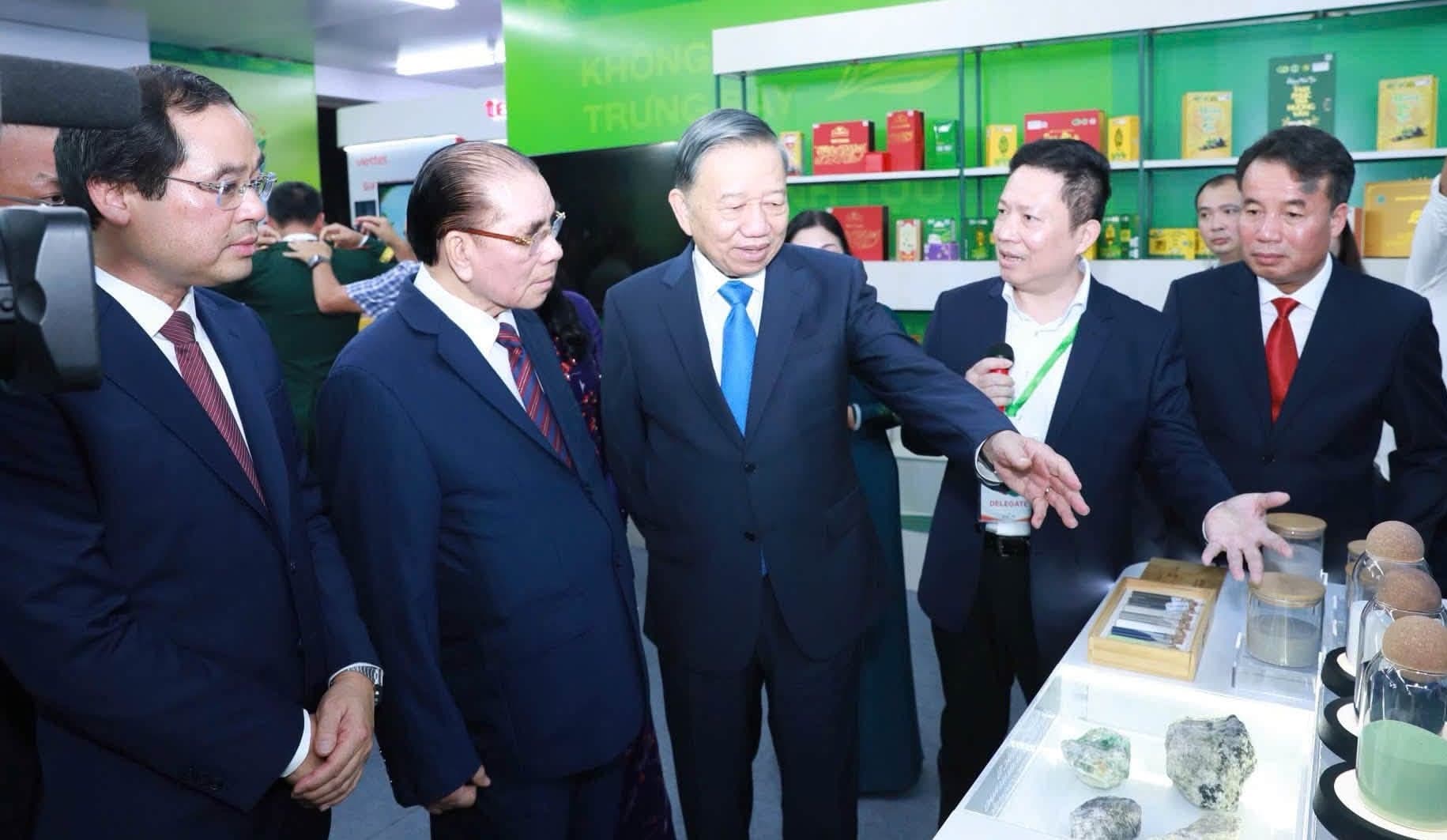
On the evening of October 30, To Lam attended a programme marking the 195th anniversary of Thai Nguyen province (November 4, 1831 to November 4, 2026), the presentation of the First Class Labour Order and the opening of the 2026 Thai Nguyen International Tea Festival.
Preserving Thai Nguyen’s famous tea through quality
Speaking at the event, To Lam recalled that on November 4, 1831, under Emperor Minh Mang, Thai Nguyen became a province. It included the two phủ of Phu Binh and Thong Hoa, as well as the area that later became Bac Kan province. Despite later divisions and mergers, solidarity among the province’s ethnic communities and ties between its territories were preserved and became a foundation for Thai Nguyen’s development.
He said the First Class Labour Order recognised the contributions and achievements of the province’s party organisation, authorities and people of different ethnic groups in building, developing and defending the country. After the 195th anniversary, Thai Nguyen should prepare for the province’s 200th anniversary in 2031 and continue contributing to the country’s development goals for 2045.
To Lam said decisions made today on land, infrastructure, education and the environment would shape the lives of future generations. He urged Thai Nguyen to prepare for development as its advantage of low-cost labour declines, technology changes and environmental requirements rise. The goal of becoming a high-income province before 2045 should rest on labour productivity, science and technology, innovation capacity and residents’ quality of life.
One of To Lam’s requests was that the province preserve its culture, raise the value of Thai Nguyen tea and expand the festival’s reach. Tea is associated with hospitality and warmth in Vietnamese life. Each tea product contains the knowledge, care and work of the people who grow and process it. The knowledge passed down through cultivation and processing in Tan Cuong and other distinctive tea areas should be preserved by passing on skills, protecting landscapes and creating good livelihoods for local people.
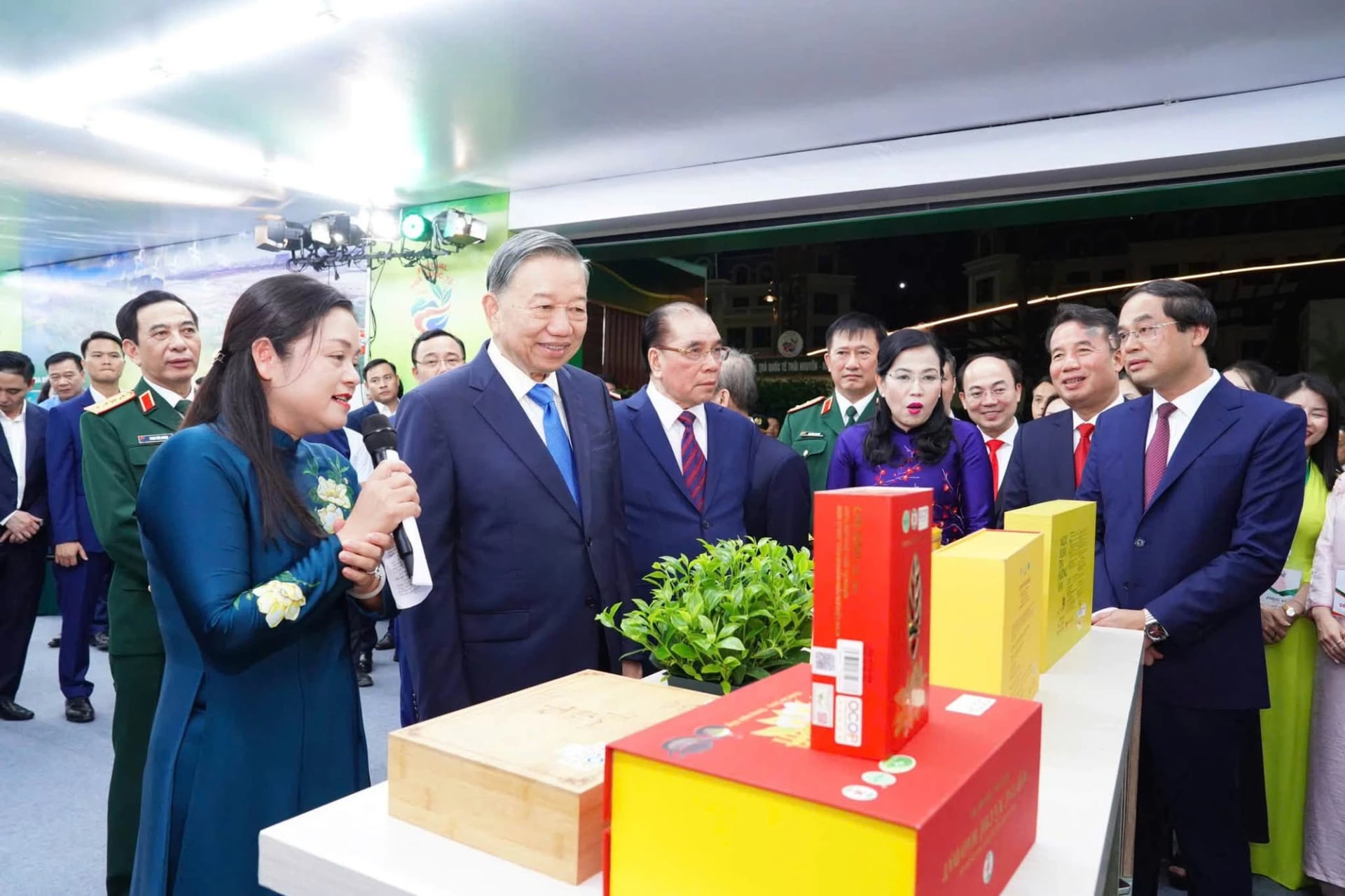
“The name ‘Thai Nguyen’s finest tea’ is a source of pride, but it also creates a responsibility to protect the tea region’s reputation. That reputation must be secured by consistent quality, transparent origin, safe products and market trust,” To Lam said. He asked the province to support cooperatives, businesses and household producers in applying science from growing areas through processing, protecting the geographical indication, stopping origin fraud and developing products that suit consumer tastes while retaining the tea’s distinctive qualities.
To Lam said the festival allowed tea growers, artisans, businesses and international visitors to meet, share knowledge and expand cooperation. He hoped these meetings would lead to sales contracts, cooperation programmes and year-round tourism routes linking tea areas with the ATK historical site, Nui Coc Lake and Ba Be Lake. He also called for Vietnamese tea to reach young people and international friends through genuine experiences, with festivals organised economically and in an environmentally friendly way. The festival’s reach should be measured by brand reputation, expanded markets and better incomes for tea producers.
Aiming to make Thai Nguyen tea a world heritage
Trinh Xuan Truong, secretary of the Thai Nguyen provincial Party Committee, said that after 195 years Thai Nguyen had become a historic land closely associated with the activities and memory of Ho Chi Minh during the revolutionary struggle.
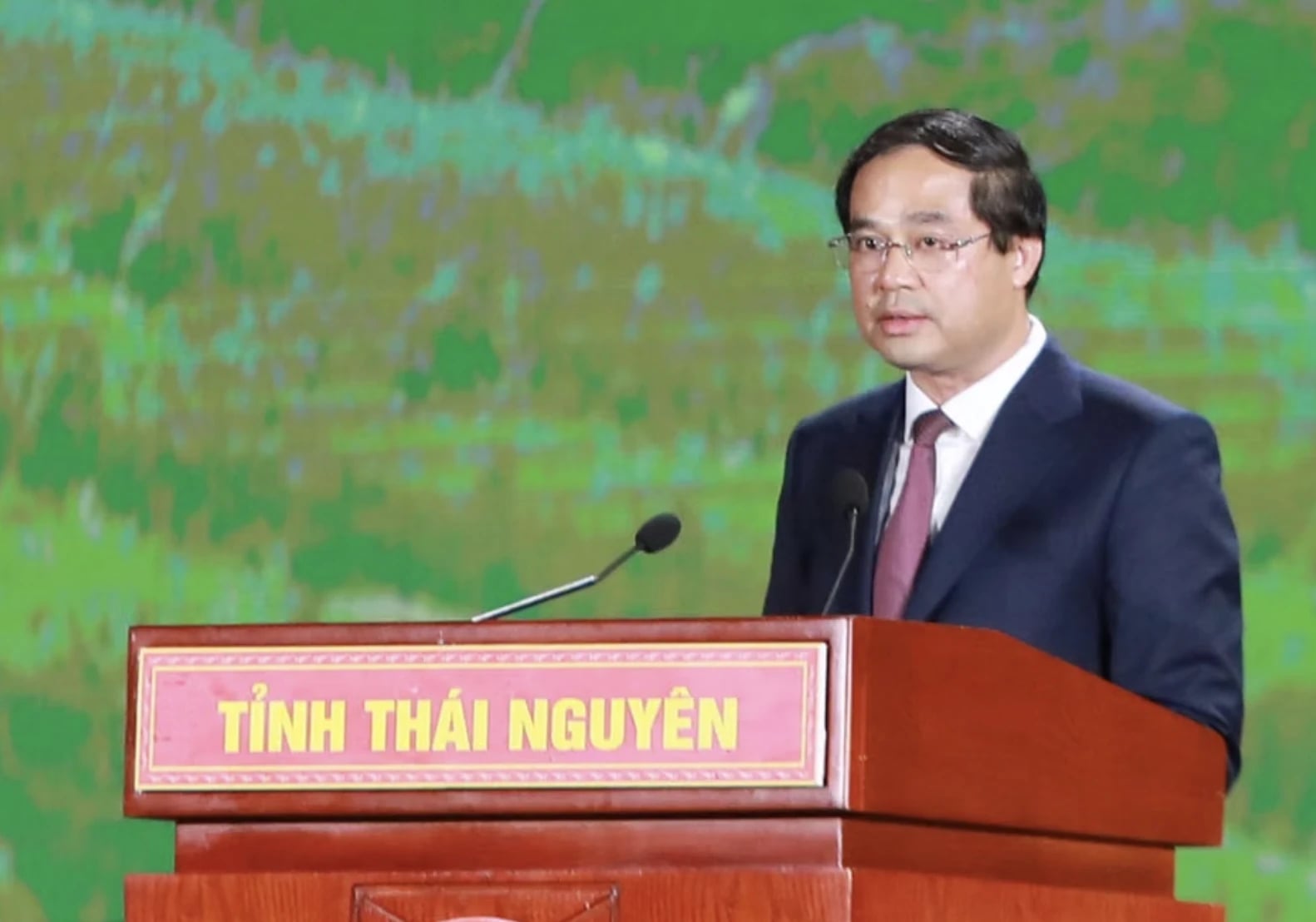
Trinh Xuan Truong said that after 40 years of the renewal policy, Thai Nguyen had achieved major socio-economic development results and strengthened its position as a centre for industry, education, healthcare, science and technology in the northern midlands and mountain region. After the merger, the new province had more room for development based on high-tech industry, ecology, revolutionary heritage, cultural identity and skilled human resources. Thai Nguyen is working to build a province based on discipline, safety, civilisation, harmony and development, become a growth pole and pursue the goal of becoming a centrally governed city.
Trinh Xuan Truong said tea plants and tea culture were a livelihood for thousands of households, a leading economic product and a distinctive cultural symbol of Thai Nguyen. The Ministry of Culture, Sports and Tourism has listed knowledge of growing and processing Thai Nguyen tea as national intangible cultural heritage. The province continues to seek UNESCO recognition of Thai Nguyen tea as world cultural heritage.
“Through the festival, Thai Nguyen wants to show international friends a province with rich traditions and identity, one that is dynamic and open. It also wants to promote cooperation and investment, raise the value of tea products and create tourism experiences linked to tea areas, historic sites, natural landscapes and the cultures of different ethnic groups,” Trinh Xuan Truong said.
Sources: Thanh Niên

