
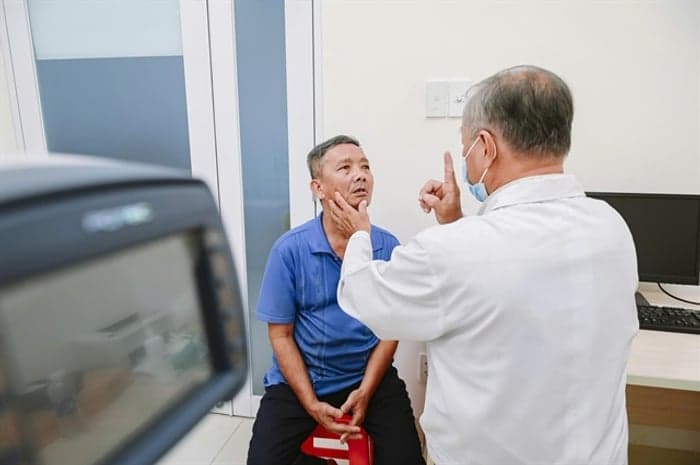
When free health checks were announced in Hamlet 2, 51-year-old Ngo Van Thai went to learn about his health. The examination found problems with his heart, muscles and joints. Rated Grade 2, he decided to monitor his condition and change his daily habits.
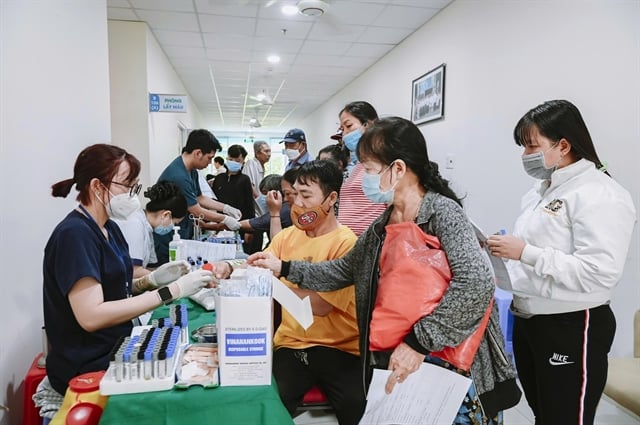
Le Van Trien, 76, was also rated Grade 2. He said a free check-up gave older people a chance to learn about their health and showed that government and health services cared about them.
The two men are among the beneficiaries of Vietnam's large health initiative. From this year, everyone in the country of more than 100 million people is to be offered a free check-up at least once a year. The policy aims to shift care from treating illness towards monitoring people while they are healthy.
Tay Ninh ran a '90 days and nights' campaign from July to September. By mid-October, two-thirds of its population had been examined, although the campaign showed that continuing care is harder to establish than the initial examination.
Taking check-ups to the hamlets
Tan Hoa, the border commune where both men live, is large and has a changing population. Many residents work elsewhere, while others farm or tap rubber. Heavy rain made travel harder, and some residents believed people should see a doctor only when ill or saw little point in a check-up without free medicine.
A 29-member task force delivered invitations to every household. Loudspeakers, loudspeaker vans, door-to-door visits and local Zalo groups publicised the campaign. Screening points opened in each residential cluster. Residents travelled no more than about 8km, while staff serving remote hamlets travelled 20 to 40km.
By September 30, Tan Hoa had examined all 11,868 people on its verified list. In Vinh Hung, a hospital gave free examinations and medicine to 200 people, while donors provided goods worth more than VND40 million, about US$1,550. By August 15, the commune had completed all 2,963 planned examinations a month and a half early.
In Can Giuoc, mobile teams visited frail older people, people with disabilities and those without help reaching a screening point. A one-way route shortened queues. Each record was uploaded and digitally signed on the Health Ministry's national portal.
Private hospitals also joined the campaign. Hong Hung General Hospital sent four teams and three mobile X-ray trucks, examining 19,885 people from July to September. The State pays up to VND350,000, about US$14, per person per year, only for services delivered and documented. Tay Ninh has approved about VND277 billion, more than US$10 million.
Examined but not yet entered
A check-up changes little without advice, monitoring, a follow-up appointment or a referral. By October 15, Tay Ninh had examined 2,106,755 of its 3,178,342 residents, but only 429,821 records, about one in five, had entered the Health Ministry's system.
Senior vice-chairwoman Nguyen Dai Thy said the campaign had brought care closer to residents and shown who lives in each area, what care they need and whether local clinics can provide it. "The results of these check-ups must be turned into data with real, practical value for the long-term management of people's health. We must not chase the number of examinations at the expense of data quality," she said.
The province ordered a review of who had been examined and whose results had not been entered. It called for a portal accessible to local clinics and for treatment records to be linked to electronic health records so completed tests would not be repeated. From 2027, the annual check-up is intended to become a habit rather than a campaign.
Sources: Viet Nam News

