

Extreme weather continued to affect Ho Chi Minh City and southern Vietnam in October, with days reaching 35–36 °C. Temperatures were 0.5–1.3 °C above the long-term average. Rainfall varied widely: some areas received more than 100 mm in 24 hours, and monthly totals reached 500–600 mm, while other areas had below-average rainfall.
According to the Southern Regional Hydro-Meteorological Station, Ho Chi Minh City’s average October temperature was 0.8–1.5 °C above the long-term average. The highest temperature at Tan Son Hoa station was 35.6 °C on October 27, while the lowest recorded temperature was 24.1 °C at Thu Dau Mot on October 2.
Across southern Vietnam, the highest temperature was 36.2 °C in Bien Hoa, Dong Nai, on October 1. The lowest was 12 °C in Da Lat on October 26.
Rainfall varied between localities. Le Minh Xuan station in Ho Chi Minh City recorded 120 mm on October 1, Ben Cat recorded 97.2 mm on October 8, and Binh Chanh recorded 81 mm on October 23.
Most of the region received near-average or above-average rainfall, while Tay Ninh and Vinh Long recorded less. Several heavy downpours exceeded 100 mm in a day: Vong Dong in An Giang recorded 195.2 mm on October 17, Dak Lua in Dong Nai recorded 181.4 mm on October 2, and Dak Mil recorded 158.1 mm on October 21.
Very strong El Nino remains an important factor shaping the region’s weather. Rain may be more frequent during the first 10 days of November, then gradually decrease in the middle and final 10-day periods. The rainy season in southern Vietnam may end in the first half of November.
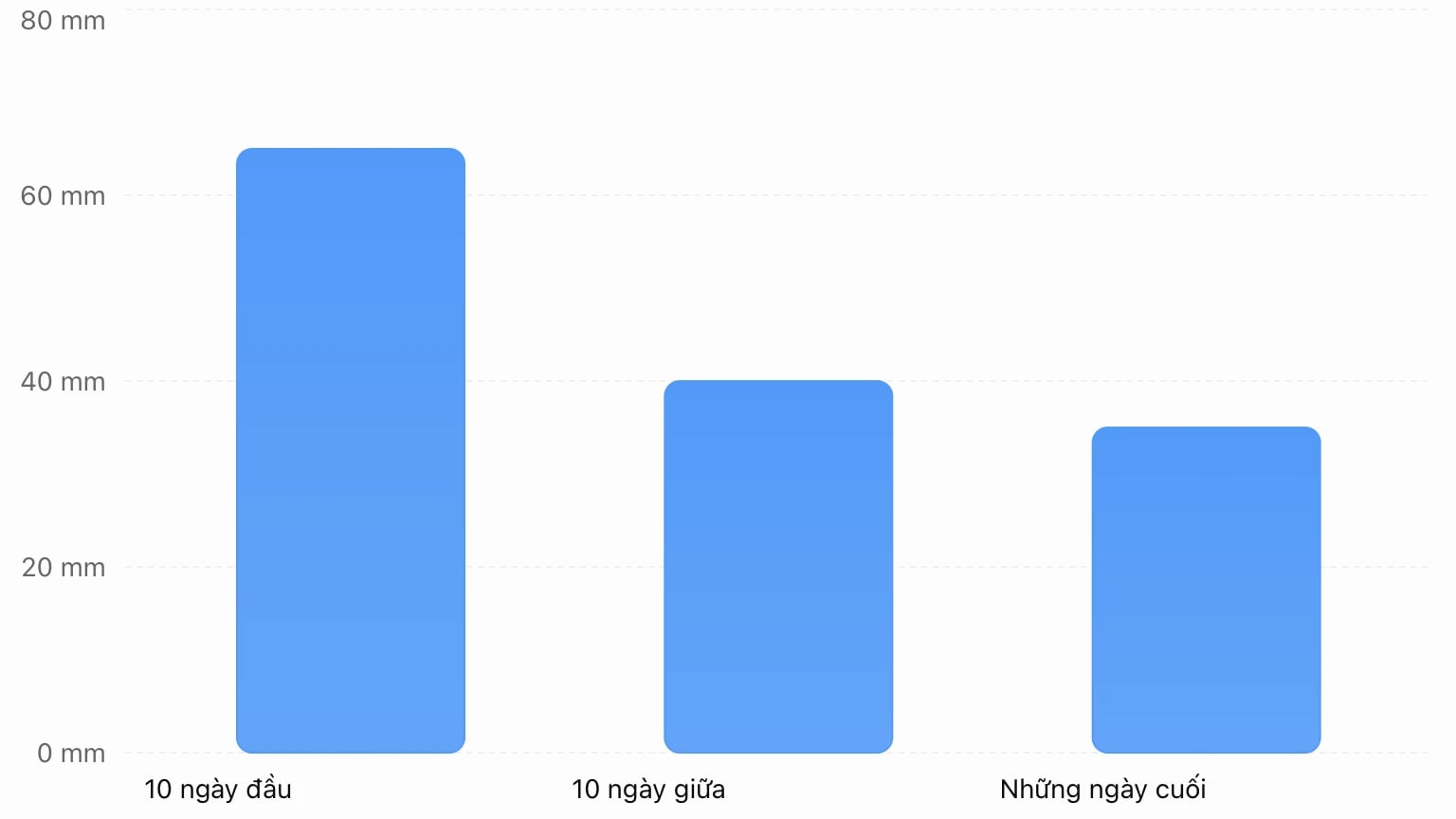
Rainfall in central Ho Chi Minh City may be 10–30% below the long-term average in November. Monthly totals are forecast at about 80–180 mm in Ho Chi Minh City, 60–160 mm in Dong Nai, 110–210 mm in Tay Ninh, 50–150 mm in Can Tho and 100–200 mm in Ca Mau.
Temperatures in Ho Chi Minh City and southern Vietnam are forecast to remain 0.5–1.3 °C above the long-term average. Some areas may experience isolated hot days with temperatures of 34–36 °C.
Sources: Thanh Niên

