

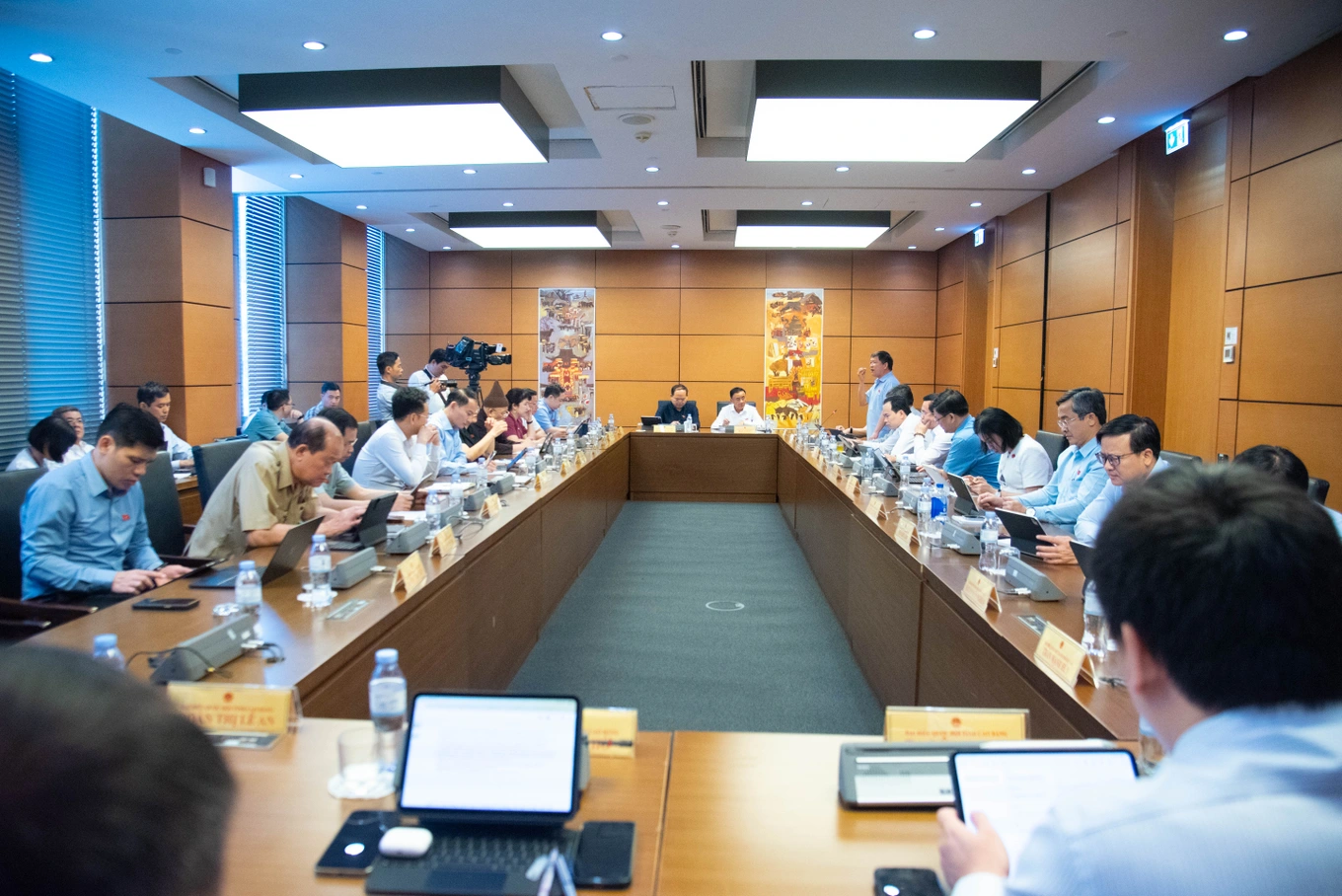
Quang Minh Cuong, secretary of the Quang Ninh city Party Committee, repeatedly stressed the need for high growth rates when he spoke on the morning of October 18 at a group discussion on the socio-economic situation.
Regions should not all be required to post double-digit growth
He said Quang Ninh's growth reached 11% in the first six months of the year and 15% in the third quarter, while the province remains determined to achieve 15% growth in the fourth quarter.
Cuong supported the national target of 10% growth but said all provinces should not be required to post double-digit figures.
Recalling his time as secretary of the Cao Bang provincial Party Committee, Cuong said it would be very difficult to require a region such as Cao Bang to grow by 10%, because there, “being able to live on what is produced locally is already a good result.”
Instead, Cao Bang's main responsibilities are protecting forests and water resources, preserving its culture and historical heritage, and safeguarding the border.
Speaking about Quang Ninh, where he is now secretary of the city Party Committee, Cuong said: “Quang Ninh categorically cannot grow below 10%. If it falls below 10%, then remove both the Party Committee secretary and the chairman from office.”
Cuong stressed that this approach cannot be applied to Cao Bang. In his view, growth targets should reflect each region's actual conditions, geography and specific responsibilities in order to support sustainable development.
The Quang Ninh city Party Committee secretary also said that over the first nine months, the province had removed an obstacle that had once seemed impossible to resolve: a shortage of construction materials.
“No one would believe that a large city such as Quang Ninh could lack sand, gravel and stone when the region has large reserves,” Cuong said. He attributed the shortage of construction inputs to problems linked to an old document.
“I will say it directly: there are group interests here,” Cuong said. Referring to an old resolution by the standing committee of the Quang Ninh provincial Party Committee, he asked why a decision had been made to temporarily halt mineral extraction without giving a reason when the law did not prohibit it.
Cuong said that after becoming Quang Ninh's Party Committee secretary, he asked for the legal basis for the suspension, but no one could provide one. A review found only a notice from the provincial Party Committee office.
Cuong said Quang Ninh had previously faced illegal coal mining, with people using mineral extraction to steal coal.
Quang Ninh has now introduced a range of measures to reduce the prices of raw materials and construction materials, Cuong said.
Income growth lags behind prices
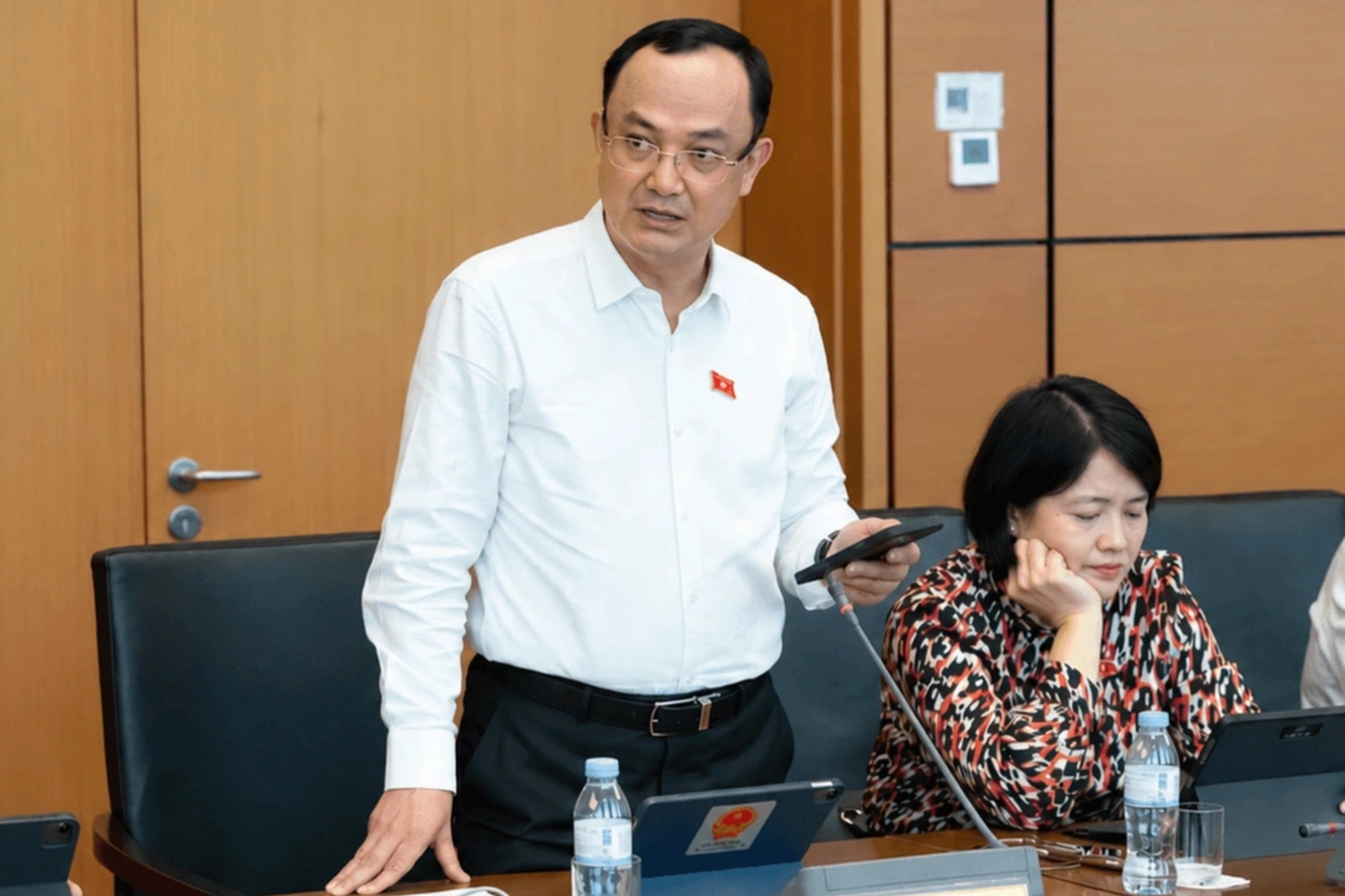
At a Hai Phong group discussion, Nguyen Ngoc Son, a full-time National Assembly delegate on the Committee on Science, Technology and the Environment, said pressure to meet the 2026 economic targets remained very high. He said fourth-quarter growth would need to reach about 12.5% to meet the double-digit target. According to a government report, only six of the 34 localities are estimated to meet or exceed their assigned targets for the year.
Son asked the government to provide a clear scenario for actual growth in 2026. This would serve as a basis for setting the starting level for 2027 and help prevent next year's target from being set on an uncertain foundation.
On residents' real incomes, Son cited a report saying that the average worker's income reached about VND9.1 million per month in the first nine months, up about 9%. Average consumer prices also rose 4.52%, while September's increase was 5.08% year on year, the highest level in many years.
“This means real income rose by only about half as much as the nominal figure,” Son said.
He said the pressure was greater for workers, retirees and low-income people because most of their spending goes to essentials such as food, housing and transport.
A report by the Vietnam Fatherland Front also said that the improvement in real incomes had not kept pace with prices.
For that reason, the Hai Phong delegate asked the government to add an assessment of real incomes and residents' purchasing power to its report and treat them as a measure of growth quality.
Sources: Dân Trí

