
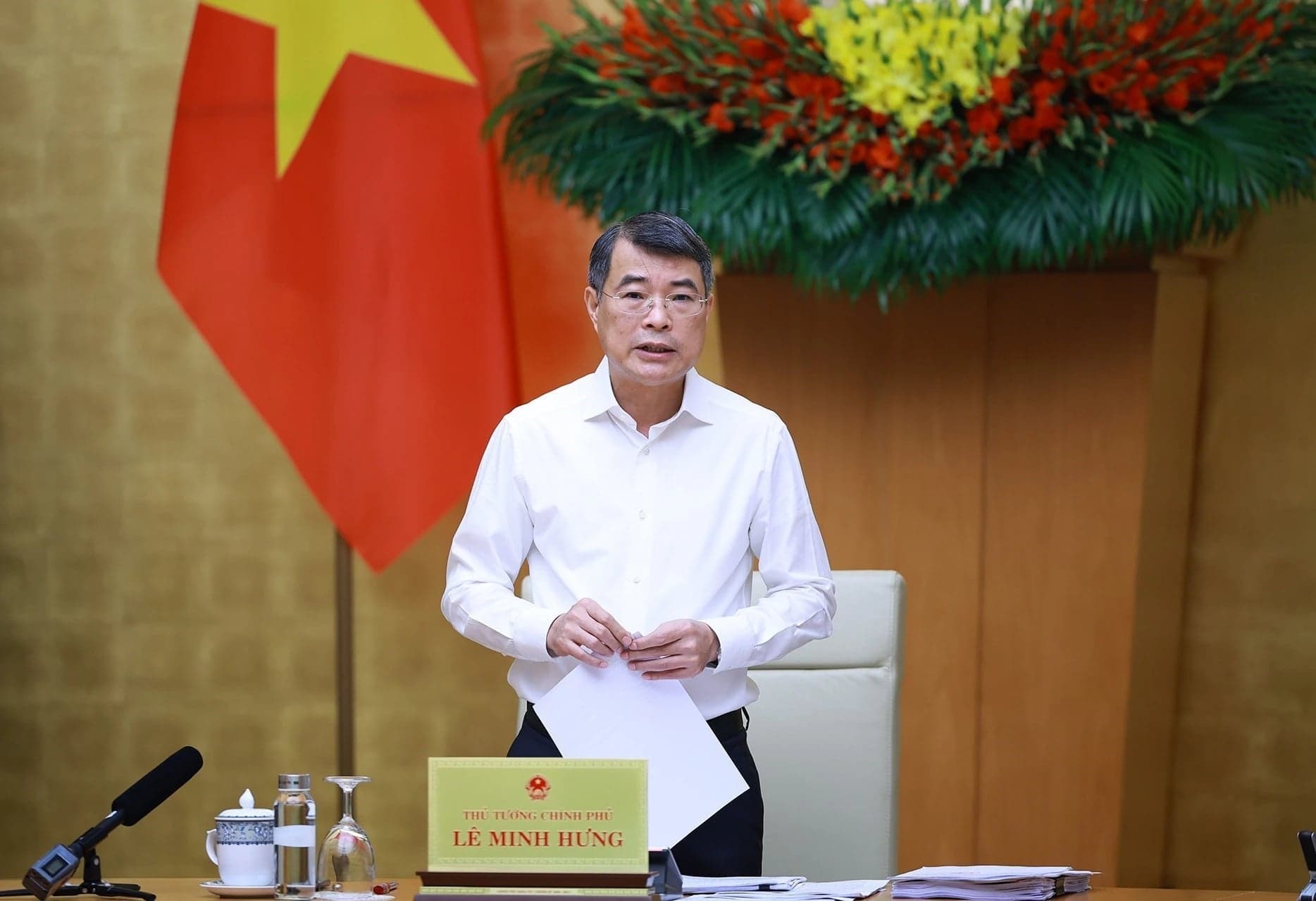
At the regular government meeting for October on the morning of November 4, Prime Minister Le Minh Hung stressed that inflation must be controlled during the last two months of the year while pursuing high growth and maintaining macroeconomic stability.
Local CPI control targets from 2027
The prime minister said the government remains committed to double-digit growth but must strengthen the foundations of the macroeconomy. The first priority is to control inflation in line with the target set by the National Assembly. If high growth is not accompanied by inflation control and price stability, its benefits will not spread through the economy and to the people.
The prime minister said measures to reduce electricity prices and fuel taxes were necessary to stabilize prices, even though they affect state budget revenue. "To control inflation, stabilize prices and maintain macroeconomic stability, the state budget must share responsibility with the economy, the people and businesses," he said.
Amid price developments, the prime minister ordered the Price Management Steering Committee to work immediately with local authorities whose 10-month CPI was higher than the national average and to implement control measures, especially in major cities.
The Ministry of Finance was tasked with closely monitoring price movements, updating the inflation scenario and managing prices accordingly. It must also urgently study VAT reform and tax administration and propose CPI control targets for local authorities from 2027.
Prevent waste in public investment resources
To meet the targets for 2026, the prime minister ordered agencies to follow the growth scenario for the final months of the year, boost consumer demand, tourism, trade promotion and links between supply and demand during the holiday period.
For public investment, projects should be reviewed and capital moved from slow-moving projects to those with good disbursement capacity, with a target of disbursing 100% of the plan. The prime minister called for strict control over the number of projects and firm action on local office-building projects so resources can be focused on essential infrastructure with a broad impact.
The State Bank of Vietnam was asked to use its policy tools flexibly and work with the banking system to reduce costs, stabilize and lower lending rates for production and business, imports and exports, and small and medium-sized enterprises.
The Ministry of Industry and Trade must ensure supplies of essential goods, especially fuel and electricity, urgently complete the decree on fuel trading and submit it to the government in November. The Ministry of Construction must monitor prices for materials, housing and construction costs, and propose measures to stabilize the property market.
The prime minister also ordered faster progress on national key projects, the implementation of social welfare policies, completion of targets for social and rental housing, and stronger efforts to search for, gather and identify the remains of fallen soldiers.
A report presented at the meeting said the macroeconomy remained stable in October and major balances were secured. However, average CPI for the first 10 months rose 4.57%, requiring close monitoring of price management.
State budget revenue for the first 10 months reached nearly VND2.45 quadrillion, or 96.4% of the annual estimate. Total import and export turnover exceeded US$1 trillion for the first time, reaching US$1.01055 trillion. The trade surplus exceeded US$7.3 billion in October. Retail sales and consumer service revenue rose 13.5%, while international arrivals reached 19.54 million.
Sources: Thanh Niên

