
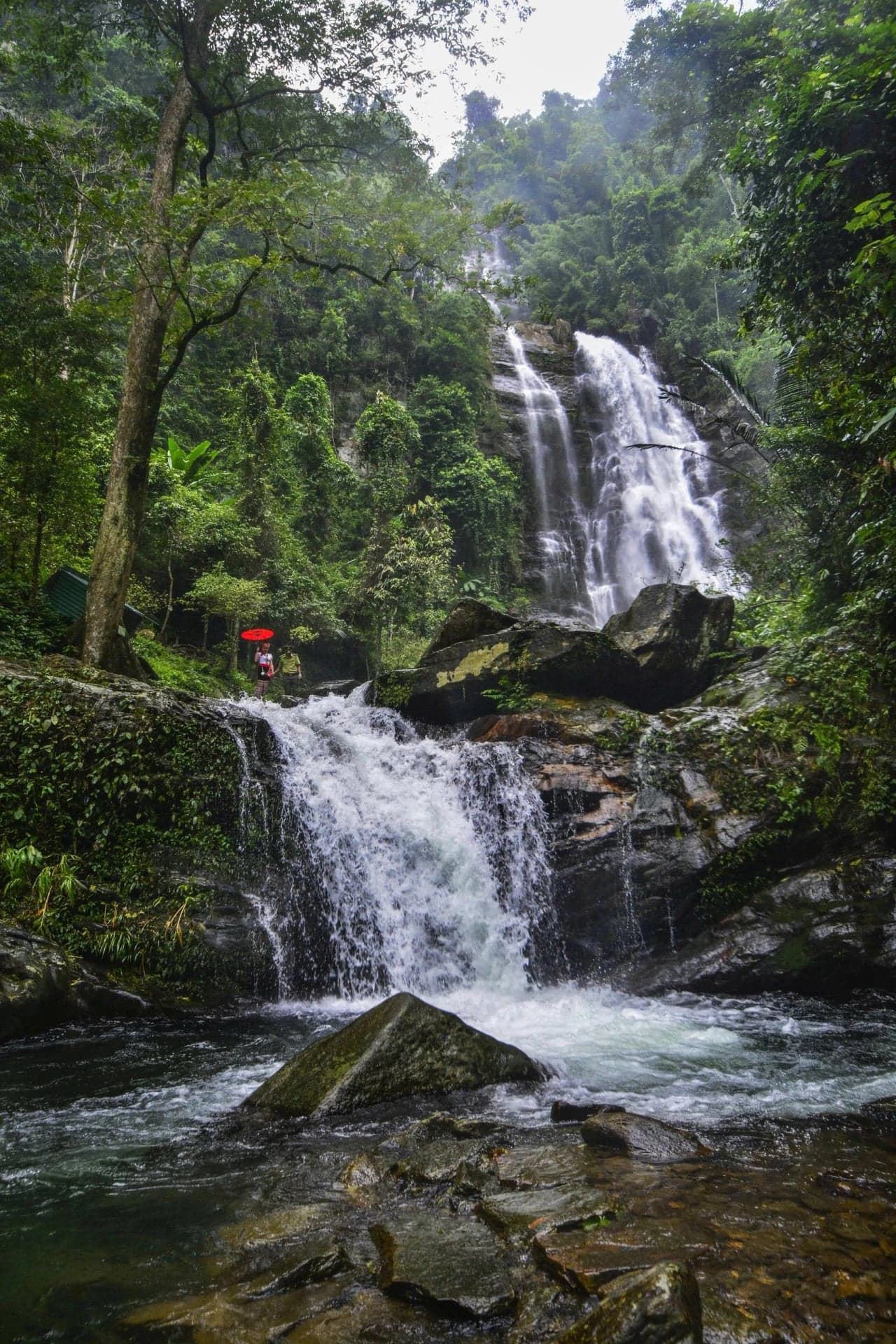
The primeval forests of Pu Mat National Park in Nghe An, with their rich flora, fauna and natural attractions, have significant potential as a tourism destination.
A forest air conditioner in a hot valley
Con Cuong is often described in summer weather reports as a hot spot in central Vietnam. Temperatures have at times passed 40°C and risen above 43°C. About 120 km west of the provincial capital, forests covering more than 91,000 hectares form a natural air conditioner. Meteorologists explain the heat through the southwest foehn, while the surrounding mountains trap heat in the valley.
The road from National Highway 7 to Khe Kem Waterfall winds past old trees. The waterfall is 25 km south of the former town of Con Cuong. Water falls more than 500 meters down a slope of about 80 degrees in three tiers. Below it are a small lake and a clear stream lined with smooth, flat rocks.
The waterfall area is cool even when it is hot outside the park. Visitors can follow a trail to the top or go up the Khe Bu valley. Park director Le Anh Tuan said the park enables these routes. A company from Ho Chi Minh City has received permission to invest nearly VND500 billion in tourism infrastructure at Khe Kem, without affecting the natural forest.
Villages deep in the forest
The Dan Lai people live deep in Pu Mat’s core zone, more than 20 km from the forest edge. Border guards discovered them during a patrol in 1980. According to legend, they are descended from the Kinh people, who fled into the forest hundreds of years ago.
After infrastructure and schools were built and many families moved out, life improved for the nearly 250 families that remain. The Dan Lai live beside the Giang River, which begins in the forest. The Fa Lai dam forms a deep, clear stretch of water. Fa Lai means “flower of the sky” in Thai.
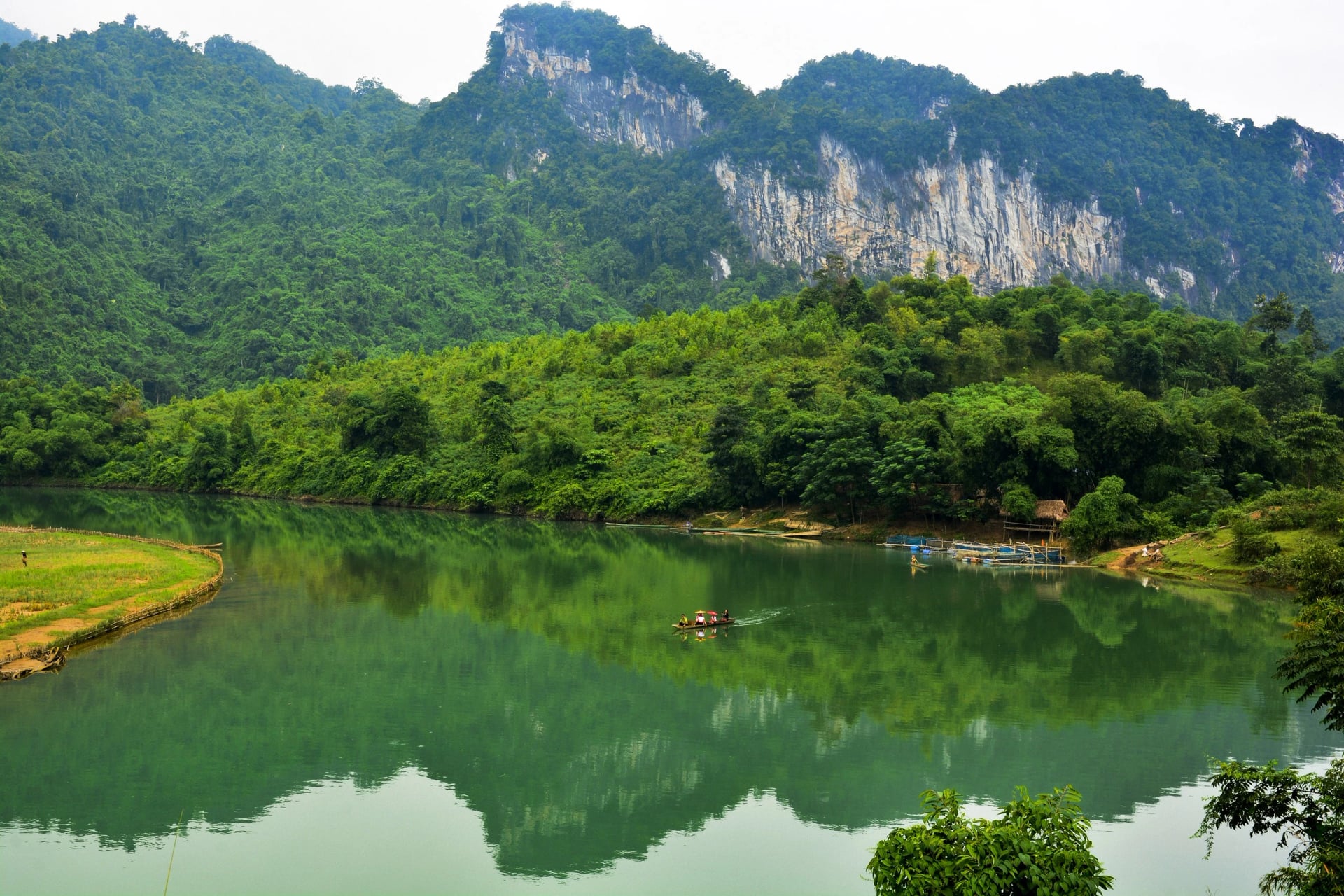
Tourism remains basic and spontaneous, and infrastructure has not been developed evenly. In 2011, with JICA support, the first three Thai families converted traditional stilt houses into homestays. Lo Van Thuy said his family earns about VND300 million a year from tourism. Visitors experience Thai food and culture. Le Anh Tuan said Pu Mat’s ecosystem helps conserve biodiversity, store carbon and regulate the climate, while also offering major tourism potential.
Sources: Thanh Niên

