
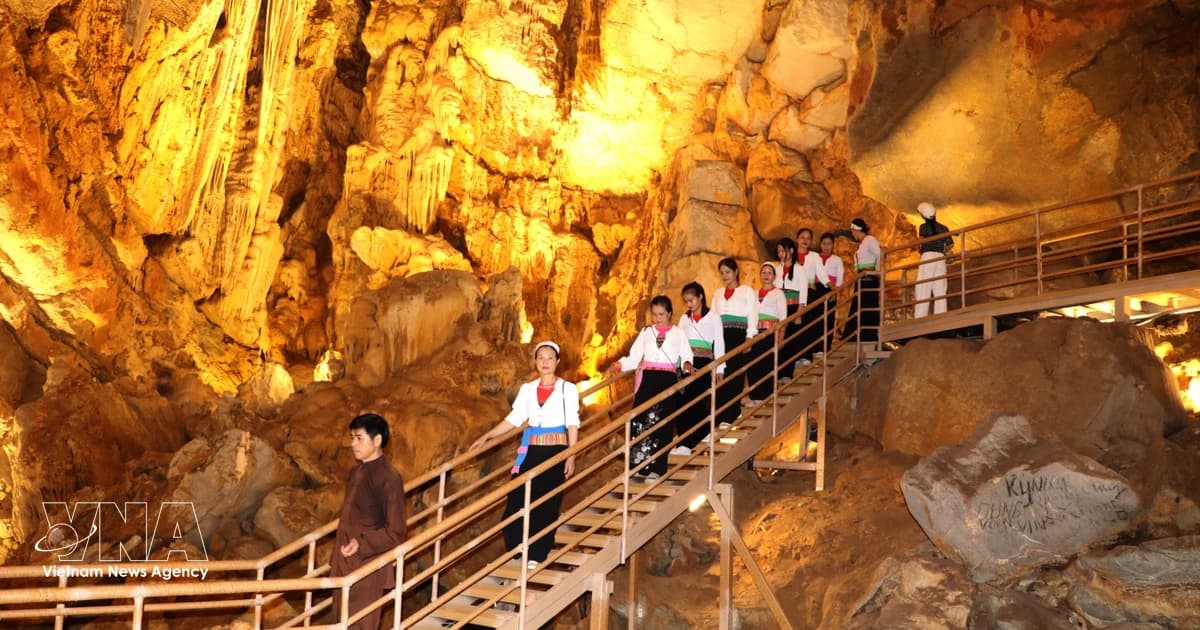
The opening of Hang Boi archaeological site at the Thung Ui Cultural Tourism Area in Tay Hoa Lu ward has introduced a new way to promote archaeological heritage alongside tourism development in Ninh Binh.
Bringing archaeological values to life
Located in the Trang An Landscape Complex, Hang Boi preserves traces of prehistoric human habitation dating back more than 12,000 years. Visitors walk about one kilometre from the Thung Ui forest entrance, climb stone steps to over 100 metres, and enter a cave approximately 60–70 metres long with stalactites and stalagmites formed over millions of years.
Mollusc shells near the entrance offer insights into how prehistoric inhabitants obtained food and adapted to their environment. Visitor Bui Thi Thuy said guides helped her learn about prehistoric settlement and daily life. Tour guide Nguyen Hoa Man said guides had studied historical documents and archaeological materials.
Developing heritage tourism sustainably
Vietnamese and international scientists have researched Hang Boi since 2007 and found evidence that has helped explain prehistoric life in Ninh Binh's limestone mountains. Opening the site connects research with education and tourism, but requires conservation, visitor management and accurate interpretation.
Phung The Quynh, operation director of the Thung Ui Cultural Tourism Area, said conditions had been prepared for visitor safety and protection of the heritage and natural environment. The area plans to survey nearby caves and develop further tourism products.
Nguyen Cao Tan, deputy director of the Ninh Binh Department of Tourism, said suitable sites create opportunities for archaeological tourism. Hang Boi's success will depend on combining research, interpretation and tourism with long-term preservation of archaeological remains.
Sources: VietnamPlus / Vietnam News Agency

