
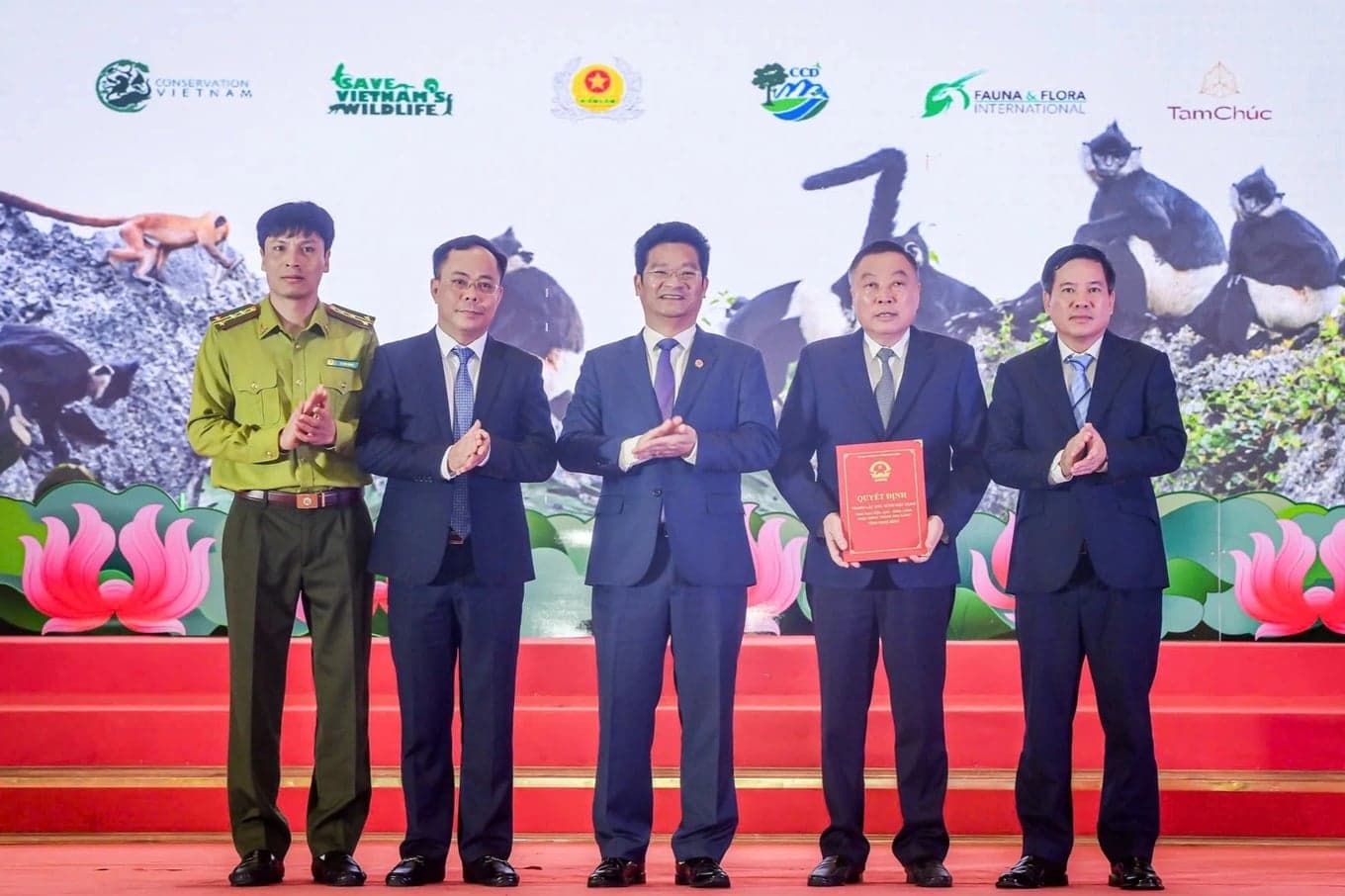
On November 3, Ninh Binh announced the creation of the nearly 3,200-hectare Kim Bang special-use forest reserve to protect Delacour's langur and its limestone ecosystem.
The province held a ceremony on the morning of November 3 at the Tam Chuc tourist area to announce the decision establishing the Kim Bang species and habitat conservation reserve.
Under a decision by the Ninh Binh provincial People's Committee, the reserve covers nearly 3,200 hectares across the Lý Thường Kiệt, Tam Chúc and Nguyễn Úy wards.
Delacour's langur, or Trachypithecus delacouri, is a primate endemic to Vietnam. The species is classified as Critically Endangered in the Vietnam Red Data Book and the International Union for Conservation of Nature's Red List. It is also among the 25 primate species at the highest risk of extinction in the world.
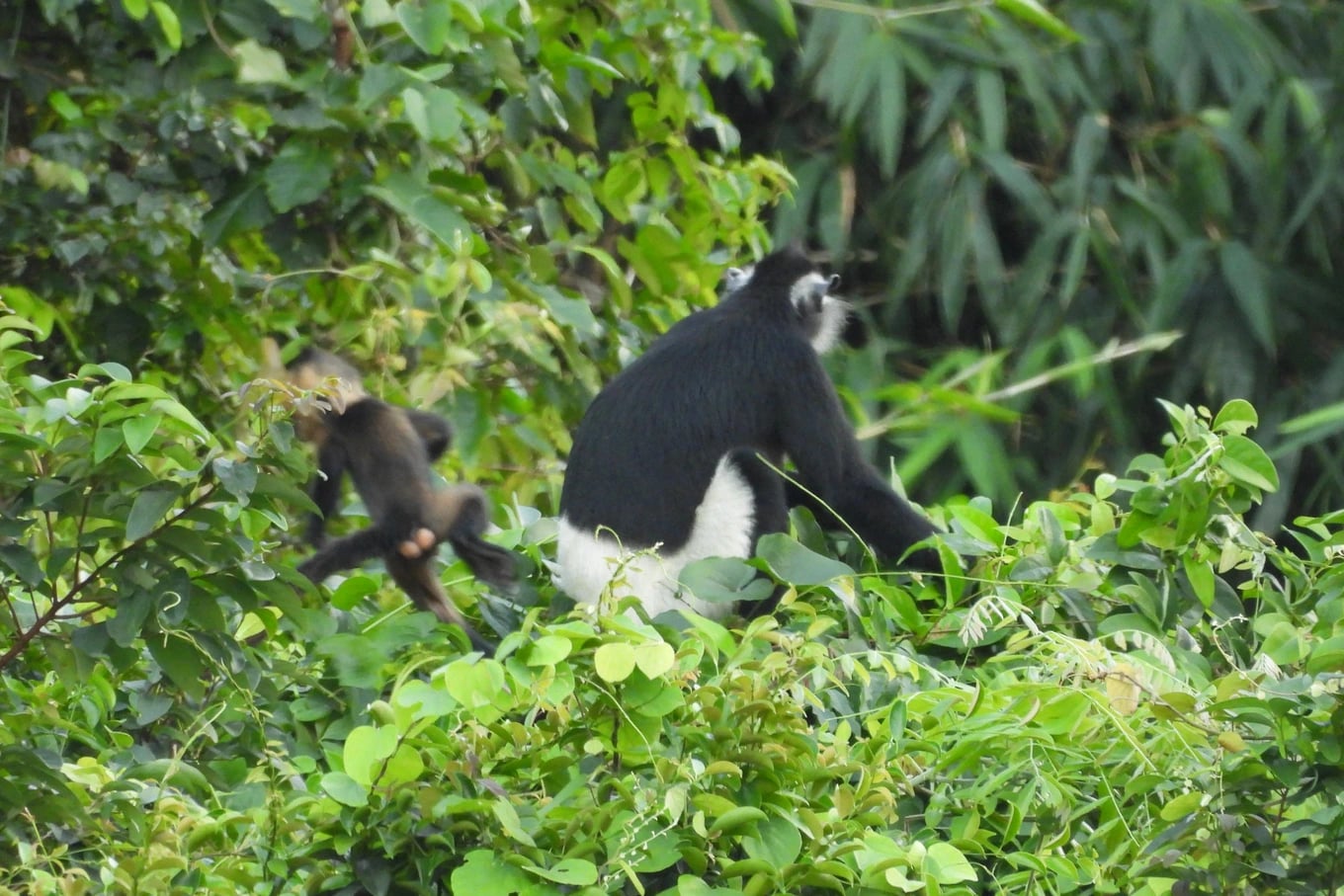
In the 1990s, about 16 isolated populations of Delacour's langur remained, with an estimated total of 300 animals. Many populations have since disappeared. Only 5 wild populations remain, with about 540 animals. Ninh Binh is home to nearly 470 of them, or about 90% of the total.
Field researchers have confirmed at least 116 animals in the Kim Bang limestone mountains. It is the world's second-largest population after Van Long.
Under the plan, the reserve will have 3 functional zones: a strictly protected zone of more than 1,807 hectares, an ecological restoration zone of nearly 1,360 hectares, and an administrative and service zone of nearly 16 hectares. The division is intended to protect natural habitats, restore forests, expand the langurs' living environment, and support management and scientific research.
At the ceremony, Tran Anh Dung, vice chairman of the Ninh Binh provincial People's Committee, said the Kim Bang population of Delacour's langur has special ecological value. He said the reserve's creation helps implement national forestry planning while combining environmental protection with sustainable development.
The vice chairman instructed the Department of Agriculture and Environment to work with other units on a forest management plan and use scientific and technological tools to monitor the langurs and forest conditions. Authorities in the relevant wards must increase patrols, address violations, and link conservation with the livelihoods of people in the buffer zone.
Construction and mineral extraction in adjacent areas must also be controlled to prevent habitat fragmentation and degradation. The Kim Bang reserve will also form an important part of the Van Long, Kim Bang and Tam Chuc heritage area, for which a World Heritage nomination dossier is being prepared.
Sources: Dân Trí

