
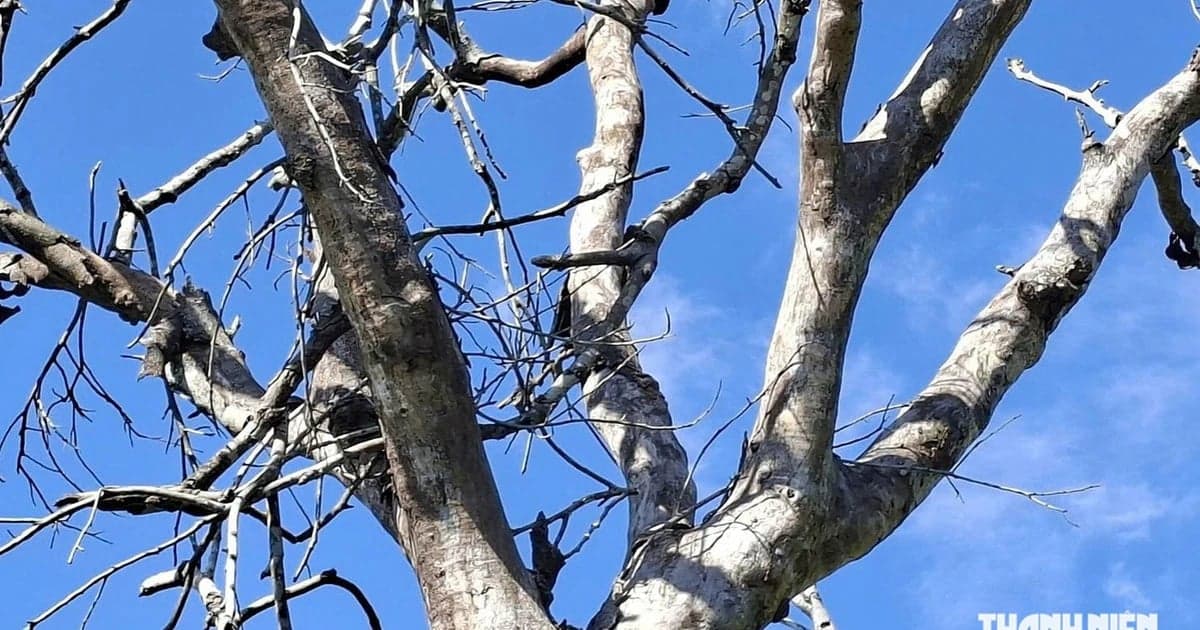
A special-use forest in Giai Lac Commune, Nghe An Province, has seen 254 lim trees die unusually, including many old trees. Behind the bare trunks is not only the loss of nature but also a question about responsibility for managing and protecting a forest with environmental, historical and cultural value.
The lim forest lies on a gently sloping, bowl-shaped hill surrounded by rice fields and residential areas. It has trees several hundred years old and is linked to Ca Temple, a lim-wood temple built in 1883 to honor officials who had served the country. For local residents, the forest is part of their shared memory and a source of pride passed down through generations.
The natural forest covered 81.6 hectares in 2014, but by 2020 its area had fallen to about 25 hectares. Over the same period, plantations of acacia and eucalyptus grew from 17.99 hectares to 81.35 hectares. The figures show a major change in the forest's condition and raise the need for a serious assessment of how this resource has been managed and protected.
The situation is complicated by land certificates issued in 2001 to 129 households managing protection forest and four households managing production forest. The total area exceeded 106 hectares, with a 50-year term.
In 2014, the area was included in a special-use forest plan connected to a historical, cultural and scenic heritage site. The land has not been recovered, and the issue of residents' assets on it has not been settled.
The overlap between land-use rights, production and conservation requirements has created long-running problems. Since 2015, local authorities have detected and handled many violations involving logging, burning vegetation and planting trees illegally in the forest.
Forest protection cannot stop at detecting violations and imposing fines. It also requires early action against conduct that could damage the ecosystem, a final resolution to the land disputes and a plan to restore the remaining natural values.
Sources: Thanh Niên

