
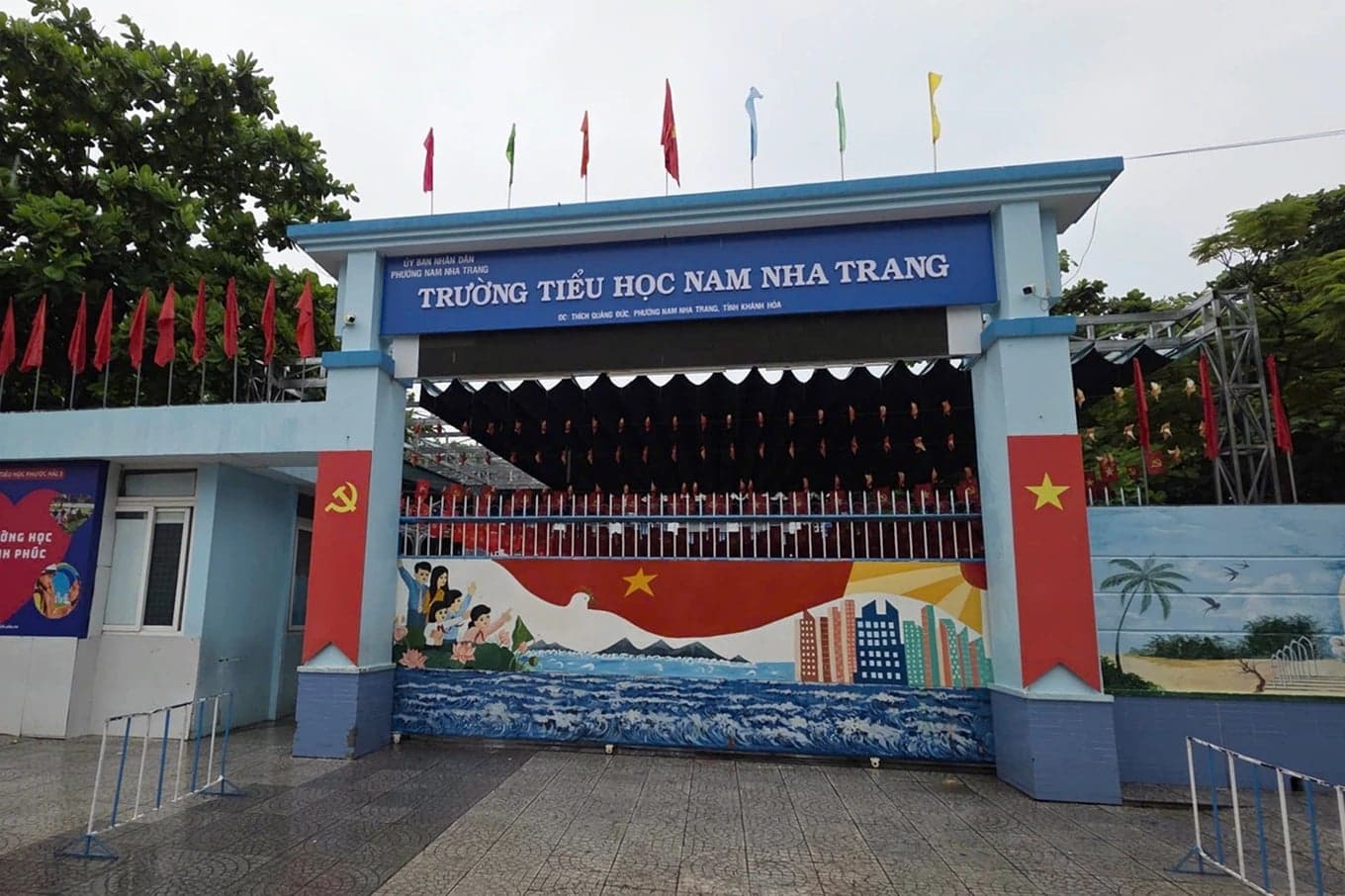
On October 27, authorities in Nam Nha Trang, Khanh Hoa province, said they had assessed the organization and operation of public kindergartens, primary schools and lower-secondary schools after the reorganization. The report also examines the changes’ effect on education quality from 2026 to 2030 and proposes a new organizational model.
According to the report, 20 public schools were arranged into three schools by education level, a reduction of 17 schools, or 85%. Nam Nha Trang Kindergarten has nearly 1,400 children, Nam Nha Trang Primary School has more than 9,600 pupils, and Nam Nha Trang Lower-Secondary School has more than 8,200 pupils.
The local administration said the schools had initially completed their management structures, assigned managers, arranged teachers and implemented the school-year plan. Childcare and teaching have broadly continued without interruption. A single management center has so far made it easier to coordinate staff and carry out common plans.
The administration also identified several difficulties. The management scale is far beyond what schools usually handle: one primary-school principal oversees 232 classes and more than 9,600 pupils at eight sites. The lower-secondary school has 182 classes and more than 8,200 pupils at six sites. The kindergarten has 51 groups and classes spread across several branches and school points.
The head of each school is responsible for academic work, personnel, finances, property, school safety and residents’ complaints.
“Appointing a vice principal to oversee a branch helps with management but does not replace the principal’s authority and responsibility. As administrative work increases, there may be less time for on-site inspections, classroom observations, teacher training and directing quality improvements,” the report said.
Another difficulty is the size of the management area and the distance between sites. School reports said some sites are 5–7 km apart, while some kindergarten points are 6–10 km apart. Travel between sites increases the time needed for meetings, inspections, professional activities and incident response.
Centralizing several sites has also increased the workload for accounting and financial administration. Nam Nha Trang Primary School has only two accountants and one clerk serving eight sites, 232 classes and more than 9,600 pupils. This puts pressure on document processing, payments and property management and could affect the time needed to repair facilities and add teaching equipment.
In response to these difficulties, the local administration proposed reorganizing the public-school system by increasing the number of units. The number of kindergartens would rise from one to two, primary schools from one to three, and lower-secondary schools from one to two or three. The total number of schools would increase from three to seven or eight.
“This is only a direction for assessment and preparation of a proposal, not a decision to split the schools,” the Nam Nha Trang administration said in the report.
According to the local administration, the report was prepared under a direction from the Khanh Hoa Provincial People’s Committee in Document No. 13099/UBND-KGVX. The document was signed by provincial Vice Chairman Le Huyen on October 22.
The provincial committee instructed the chairpersons of commune and ward people’s committees to comprehensively review the organization and operation of public kindergartens and general-education schools with more than 100 classes or with a management scale beyond the school administration’s capacity.
The review focuses on difficulties in the organizational model and management structure, management capacity, the division of responsibility between the main school and its branches, the ability to run classes, school security and safety, and students’ right to education.
The provincial committee asked local authorities to urgently propose suitable adjustments and submit them to the Department of Education and Training by October 25 for compilation and consideration.
Sources: Dân Trí

