
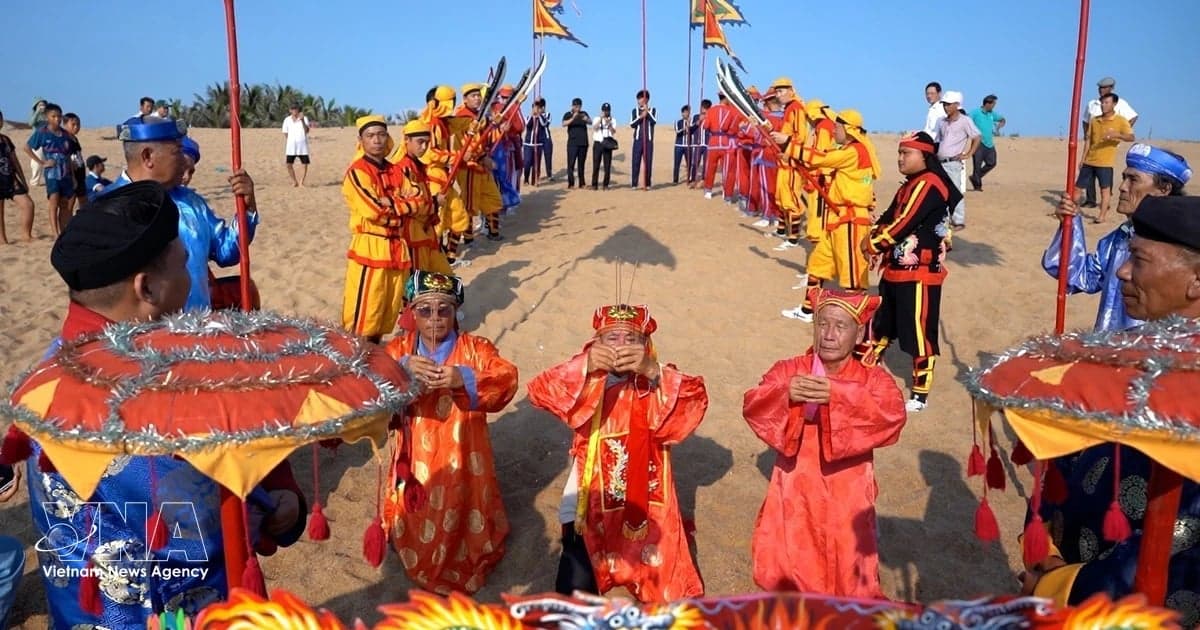
Home to 49 ethnic groups, the central province of Lam Dong connects highland heritage with coastal traditions. Provincial authorities and local communities are expanding traditional festivals and turning them into tourism programmes.
Expanding traditional festivals
Festivals in Lam Dong, from sacred rituals to community parades, are growing in scale and attracting more visitors.
Celebrated annually in October by the Cham community, the Kate Festival offers visitors a view of indigenous beliefs and customs. Alongside sacred ceremonies, tourists can visit traditional craft workshops, see textile weaving and hear folk music featuring the Saranai trumpet and Ginang drum.
At the Po-Sah-Inu Tower national monument complex in Phu Thuy ward, tourists continue to admire ancient artefacts dating from the 10th to the 18th century after the official festivities have ended.
Local authorities recently digitised the Po Nit Temple complex through dulichbacbinh.vn, allowing visitors planning trips through digital materials to explore the sacred site.
Coastal heritage is also central to the province’s identity. The Cau Ngu, or Whale Worshiping, Festival remains a sacred tradition and a living historical record of Vietnam’s maritime sovereignty.
This year’s festival included a lantern floating ceremony, an exhibition with more than 300 stalls, and a large stage programme featuring bai choi and hat boi performances, folk games and musical acts.
Huynh Giac, head of the Thuy Tu Temple management board, said whale worshiping rituals were once known only to local fishermen. Presenting these cultural practices on stage, he said, helps tourists learn more about coastal folk culture.
In September, the Mid-Autumn Festival became a provincial-scale event, strengthening Lam Dong’s appeal on the national tourism map.
During the celebrations at the Lam Dong Culture and Arts Exhibition Centre, 27 giant lanterns and more than 2,160 smaller hand-held lanterns from 19 localities paraded through major streets.
Preserving heritage
Expanding the festivals requires continuous work to preserve heritage.
Venerable Thich Thong Minh Toan, Vice Chairman of the provincial Brahmanical dignitaries’ council, said state-backed restoration had revitalised historical landmarks, including the Po Nit, Po Klaong Manai and Po Dam temples.
The Cham Cultural Exhibition Centre houses more than 1,500 artefacts and has become a major destination. Toan said the recent Kate Festival at the Po-Sah-Inu Tower complex drew more than 7,000 visitors, twice last year’s attendance.
Industry experts, however, said international outreach has not kept pace with Lam Dong’s potential.
To turn cultural assets into international tourist attractions, they advised local authorities to publish festival calendars well in advance. This would allow tour operators to design itineraries and organise familiarisation trips for foreign partners.
Nguyen Linh Vu, Deputy Director of the Lam Dong Investment, Trade and Tourism Promotion Centre, highlighted the value of experiential travel. He urged agencies to build seasonal programmes combining relic-site visits, folk arts, traditional cuisine and workshops where tourists can take part rather than only watch.
Ton Thien San, Director of the provincial Department of Culture, Sports and Tourism, said the department has continued supporting local heritage as part of the implementation of Politburo Resolution No. 80-NQ/TW on Vietnamese cultural development. He listed relic conservation, festival support, teaching folk traditions and preserving traditional crafts among the department’s work, linking them to sustainable tourism and improved local livelihoods.
He added that festivals are now widely promoted through modern channels, using digital technology and media platforms.
Lam Dong is developing tourism offerings based on its natural landscapes and living traditions. The province aims to preserve its cultural heritage while using it to support tourism and the local economy.
Sources: VietnamPlus / Vietnam News Agency

