
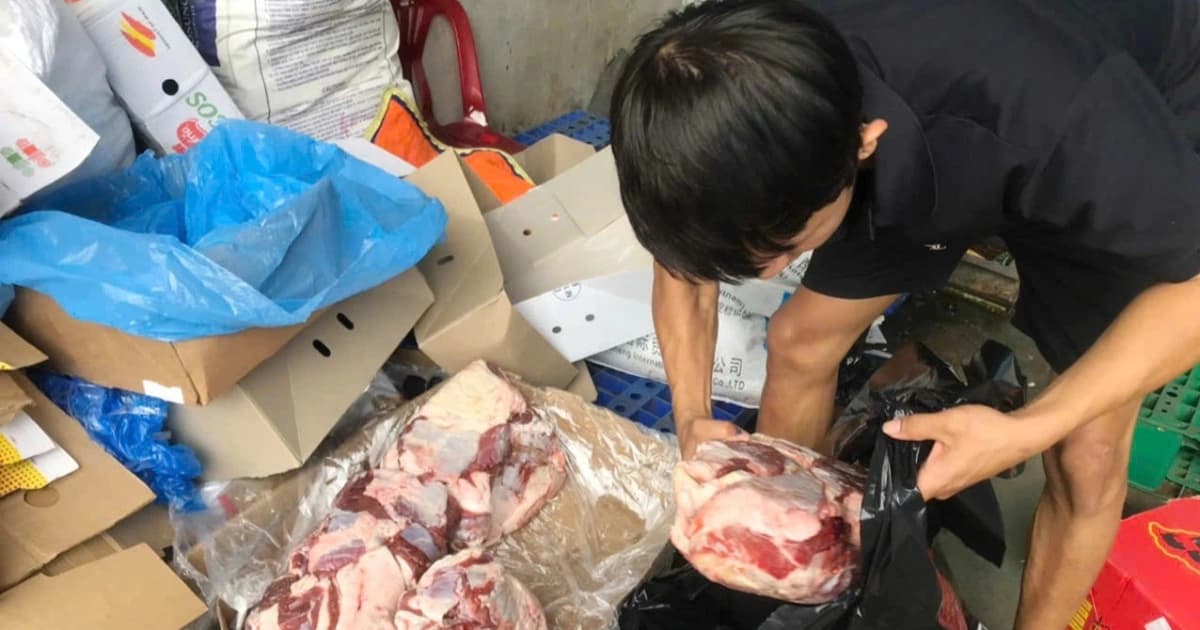
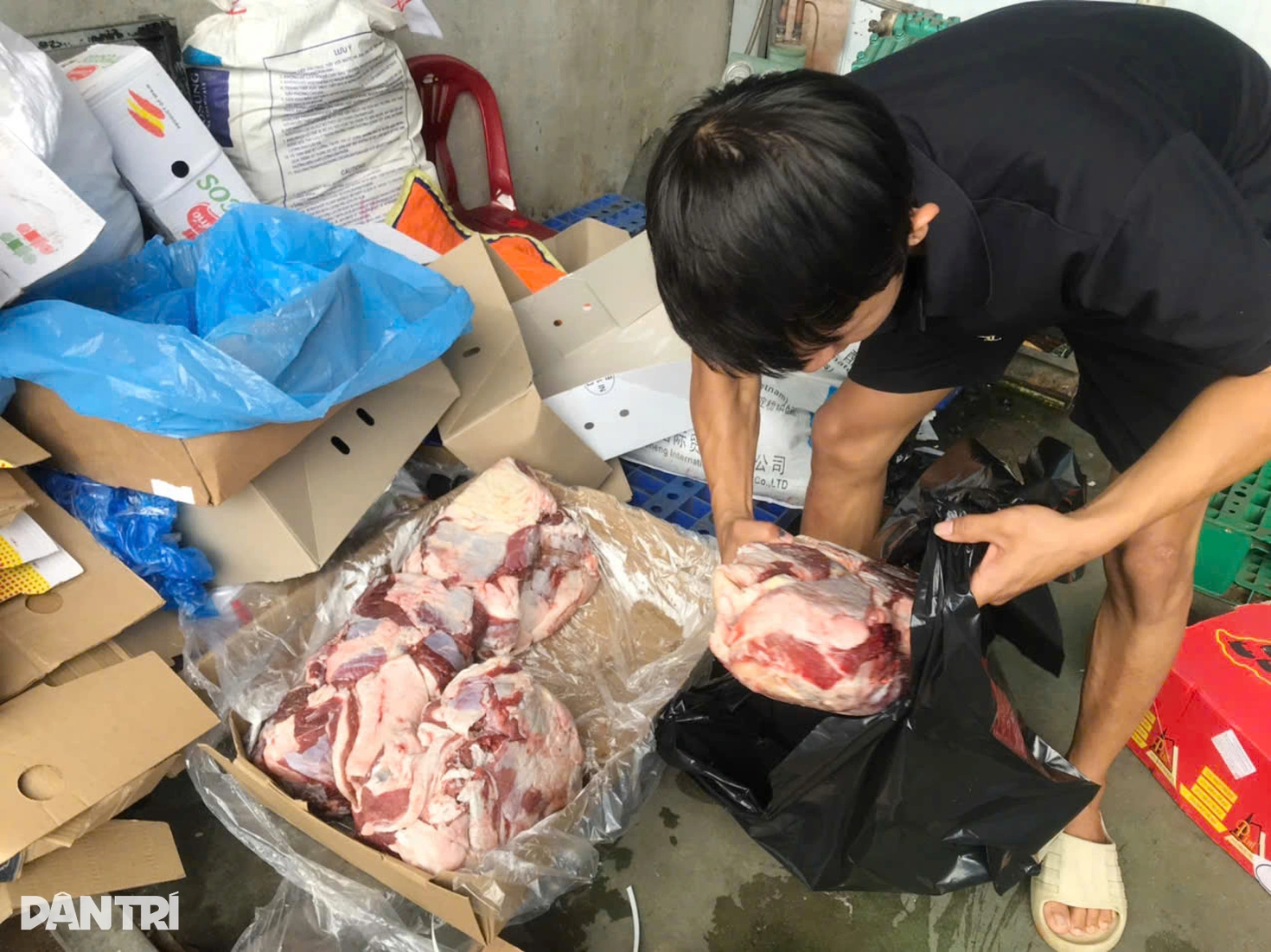
On the morning of October 5, a Dan Tri reporter visited a cold-storage warehouse on Tinh Lo 43 Street in Tam Binh Ward, Ho Chi Minh City, after being directed there by a meat seller at Thu Duc agricultural and food wholesale market. A company employee said the warehouse supplied imported meat at prices far below those of fresh domestic meat. Restaurants, eateries and institutional kitchens were among its regular customers.
The employee said the meat was imported directly, came with documents and had long expiry periods remaining. The price list showed bone-in pork belly from Russia at VND 80,000 per kilogram and pork belly from Spain, made by Litera, at VND 76,000. Boneless pork belly from Russian producer APK cost VND 103,800 including VAT.
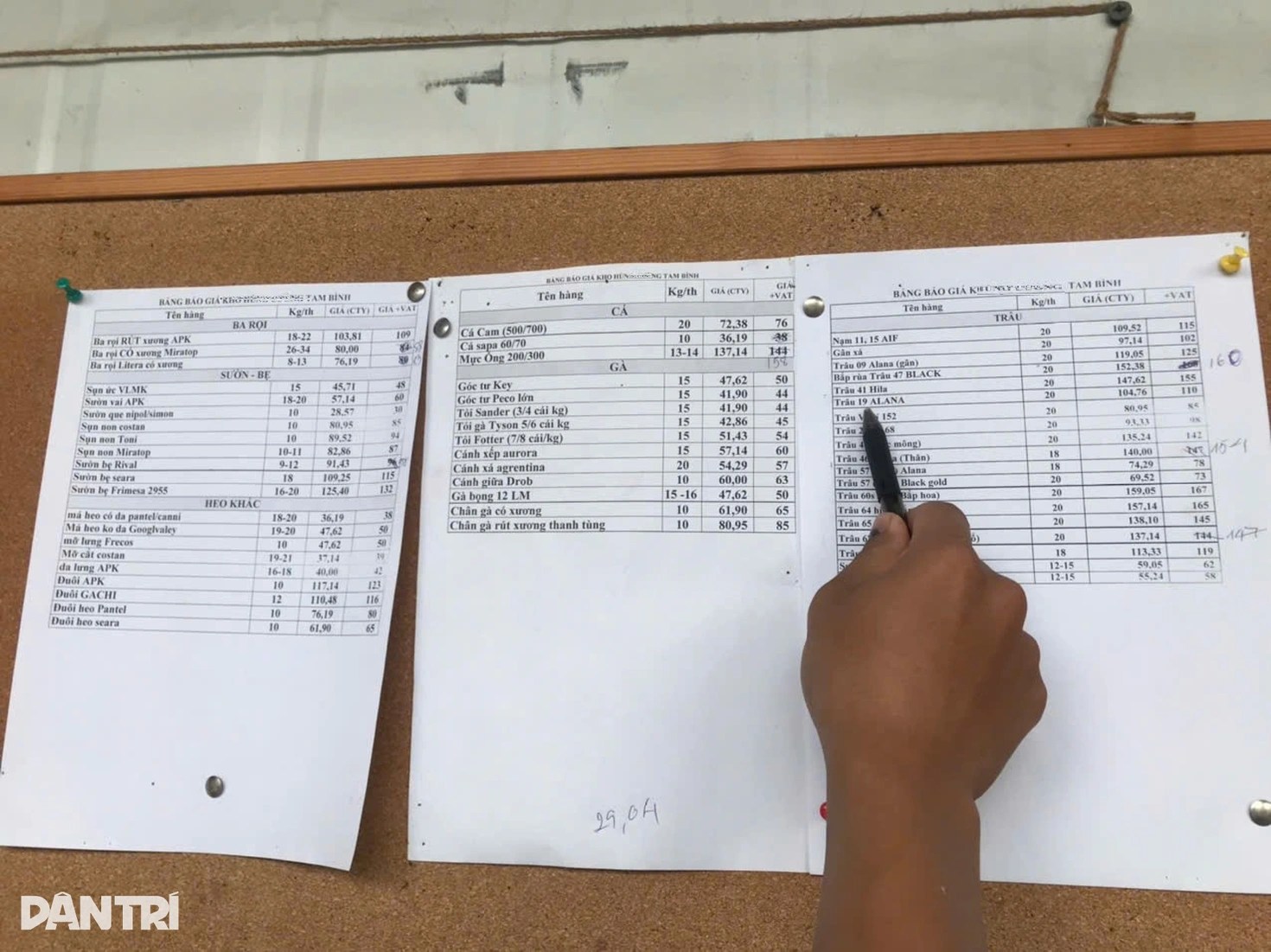
Imported pork ribs cost VND 28,000 per kilogram, breast cartilage VND 45,700, shoulder ribs VND 57,000, and baby back ribs VND 80,000-90,000 depending on the type. Pork cheek with skin cost VND 36,000. Meaty pork bones for soups cost VND 11,000 per kilogram, or VND 110,000 for a 10-kilogram box.
The employee said buffalo meat made up most of the products sold as beef. Bone-in beef ribs from Australia cost VND 59,000 per kilogram, while another Australian rib product cost VND 55,000. Sixteen buffalo-meat products ranged from VND 80,000 to VND 160,000: Indian buffalo trimmings cost VND 80,000, short ribs VND 113,000, rump VND 135,000 and the most expensive cut VND 159,000 per kilogram.
Imported chicken came from the United States, Argentina, Poland, Brazil and other countries. The cheapest products were U.S. chicken quarters and drumsticks, starting at VND 42,000 per kilogram. Brazilian layered wings cost VND 57,000, while middle sections from Poland cost VND 60,000.
Imported meat reaches shops and traditional markets
Dan Tri also found imported meat in most supermarkets and traditional markets in Ho Chi Minh City. At a grocery store on Tinh Lo 43 Street, Brazilian imported pork ribs cost VND 124,000 per kilogram, nearly VND 30,000 less than the previous month. Pork ribs from Germany and Russia cost VND 75,000, while boneless Russian pork belly cost VND 105,000. Customers had to buy at least 10 kilograms.
The Ministry of Industry and Trade's Import-Export Department, citing customs data, said Vietnam imported 658,700 tonnes of meat and meat products worth USD 1.91 billion in the first eight months of the year. Volume rose 5.6% and value 26.3% from the same period in 2025.
India remained the largest supplier, accounting for about 20.4% of total imports, or 134,200 tonnes worth USD 580.8 million. Imports from India rose 17% by volume and 43.8% by value year on year. Imports from the U.S., Brazil, Spain, Germany, Türkiye, Japan, New Zealand and Slovenia also increased, while imports from Russia, Canada, South Korea, Poland, the Netherlands, Italy, Iran, Hong Kong and Algeria declined.
Poultry meat and edible offal accounted for 36.33% of imported volume, followed by frozen buffalo meat at 18.9% and fresh, chilled or frozen pork at 18.85%. Vietnam imported 124,100 tonnes of pork worth USD 212.64 million in the first eight months. Volume rose 18.8%, while value fell 23.8% year on year.
A representative of an imported-food company on Street 7 in Binh Hung Hoa Ward said the market was growing quickly. Frozen meat was easier to sell than fresh domestic meat because it could be stored longer and sellers faced less pressure from spoilage.
A representative of the cold-storage warehouse said imported products arrived in boxes with labels and information. However, many traders removed the labels, thawed the meat and mixed it with fresh domestic meat. This can affect quality, cause cross-contamination and prevent consumers from knowing the product's true origin and value.
A customer buying meat for a student-meal business in Linh Xuan Ward said sellers sometimes avoided questions about the source. He said honestly identifying imported meat could make customers wary, while lying could lead to complaints, so some sellers changed the subject.
Sources: Dân Trí

