
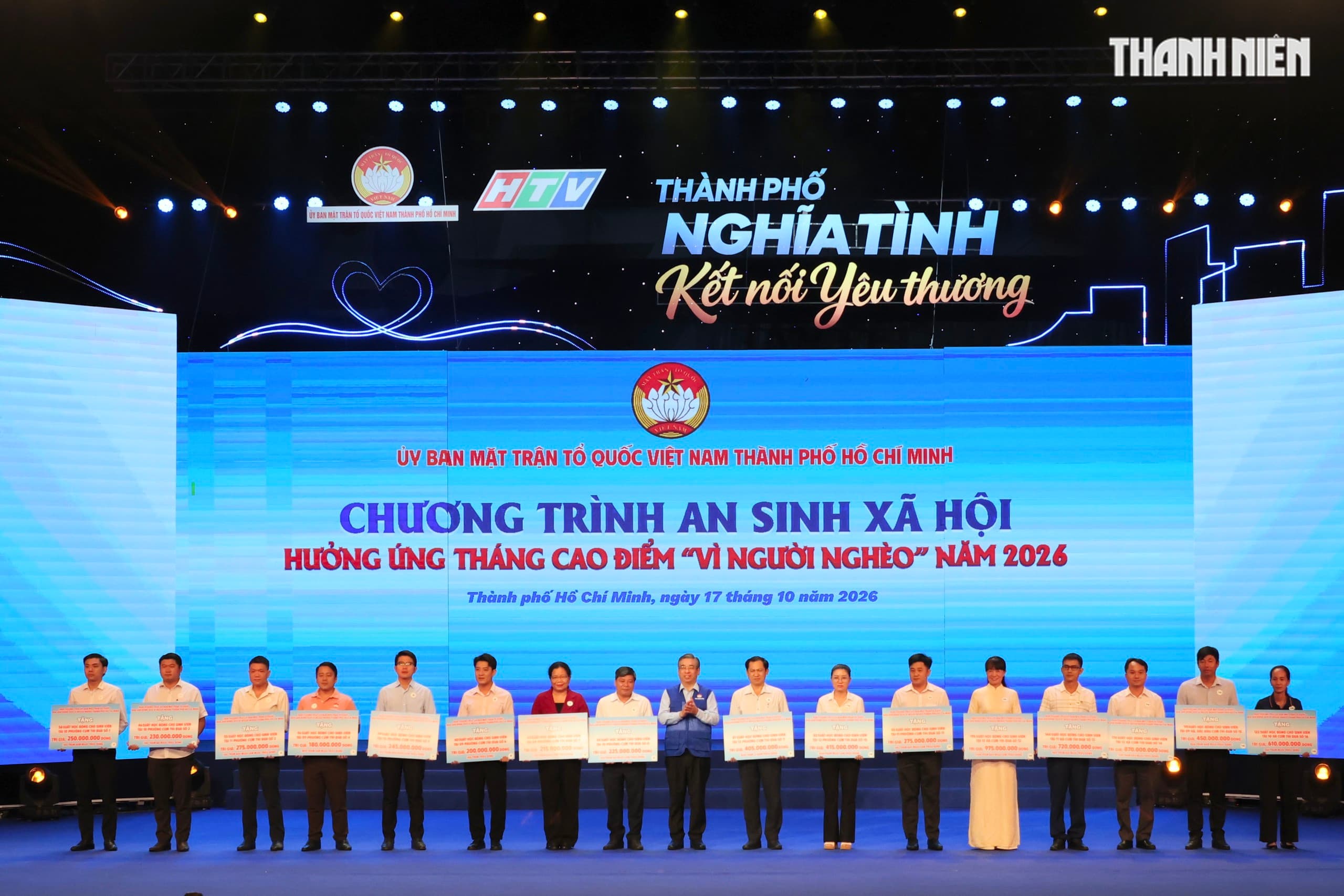
On the evening of October 17, the Ho Chi Minh City Committee of the Vietnam Fatherland Front held the 2026 social welfare program and artistic exchange “A Caring City: Connecting Love” at Hoa Binh Theatre.
The activities aim to mobilize social resources, support people facing hardship and contribute to sustainable poverty reduction.
Scholarships, health insurance and livelihoods
According to organizers, the program provides 1,500 Nguyen Huu Tho scholarships, study support for 13 students from ethnic minority groups and funding for 750 health insurance cards. The total value is VND 8.57 billion.
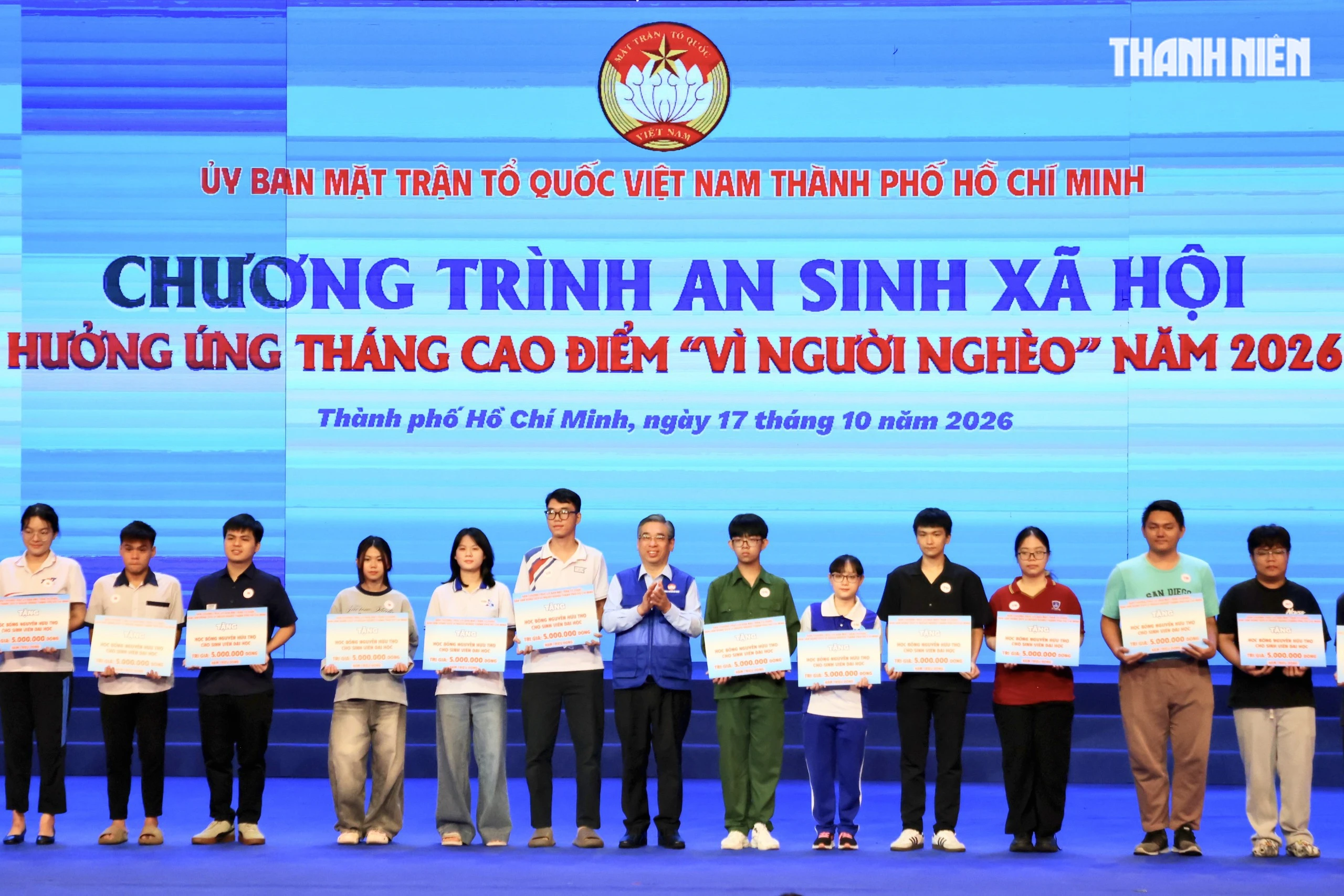
The Nguyen Huu Tho scholarship is for university students, with each award worth VND 5 million. The program directly presented 100 awards worth VND 500 million and gave symbolic scholarship funding certificates to representatives of 16 emulation clusters.
Local social insurance agencies and Fatherland Front committees will distribute 750 health insurance cards to people facing hardship, helping them access medical care.
Ho Chi Minh City Lottery Company provided VND 8.5 billion for scholarships and health insurance cards. Ba Thien Hau Temple and On Lang Assembly Hall added VND 70 million for 13 students from ethnic minority groups: 11 achieved excellent academic results in 2025-2026, while two received support for vocational training.
Pham Minh Tuan, deputy chairman of the Ho Chi Minh City Committee of the Vietnam Fatherland Front, said the programs aim to improve quality of life and access to essential services. Assistance should be linked to livelihood creation and educational support so residents can stabilize their lives.
The 2026 “For the Poor” campaign runs from October 17 to November 18. More than VND 92 billion is expected to fund 61 new solidarity houses, repairs to 283 houses, 13,700 scholarships, 450 livelihood tools and 3,550 health insurance cards. Other support activities are expected to be worth VND 36.1 billion.
Pooling resources for residents
The artistic exchange “A Caring City: Connecting Love” was organized to raise contributions to the “For the Poor” Fund, recognize support from organizations, businesses and individuals, and present the results of assistance programs.
The program focuses on changes in beneficiaries’ lives and on people who continued community activities after receiving support.
Teacher Hoang Le Bao Ngoc once received a scholarship during a difficult period. She later became a special education teacher. She now works with 15 other teachers to run three classes supporting more than 70 students in inclusive education.
Nguyen Van Tinh, 12, previously sold lottery tickets and helped provide food for his grandmother and four younger siblings. The local Fatherland Front committee studied his situation and provided timely assistance, reducing the family’s financial burden and helping the children stay in school.
The program also introduced veteran Nguyen Van Hanh, who supports vocational training and reduced driving-course fees for discharged soldiers and disadvantaged people, and businesswoman Luong Thi Ngoc Anh, who supports housing and bridge construction and cares for people with visual impairments.
Truong Thi Bich Hanh, standing deputy chairwoman of the Ho Chi Minh City Committee of the Vietnam Fatherland Front, said the city’s development should be reflected in quality of life, social welfare and tangible benefits for residents.
The committee pledged to organize practical assistance, use resources openly, transparently and effectively, and continue calling on agencies, organizations, businesses and residents to support the “For the Poor” Fund.
Sources: Thanh Niên

