
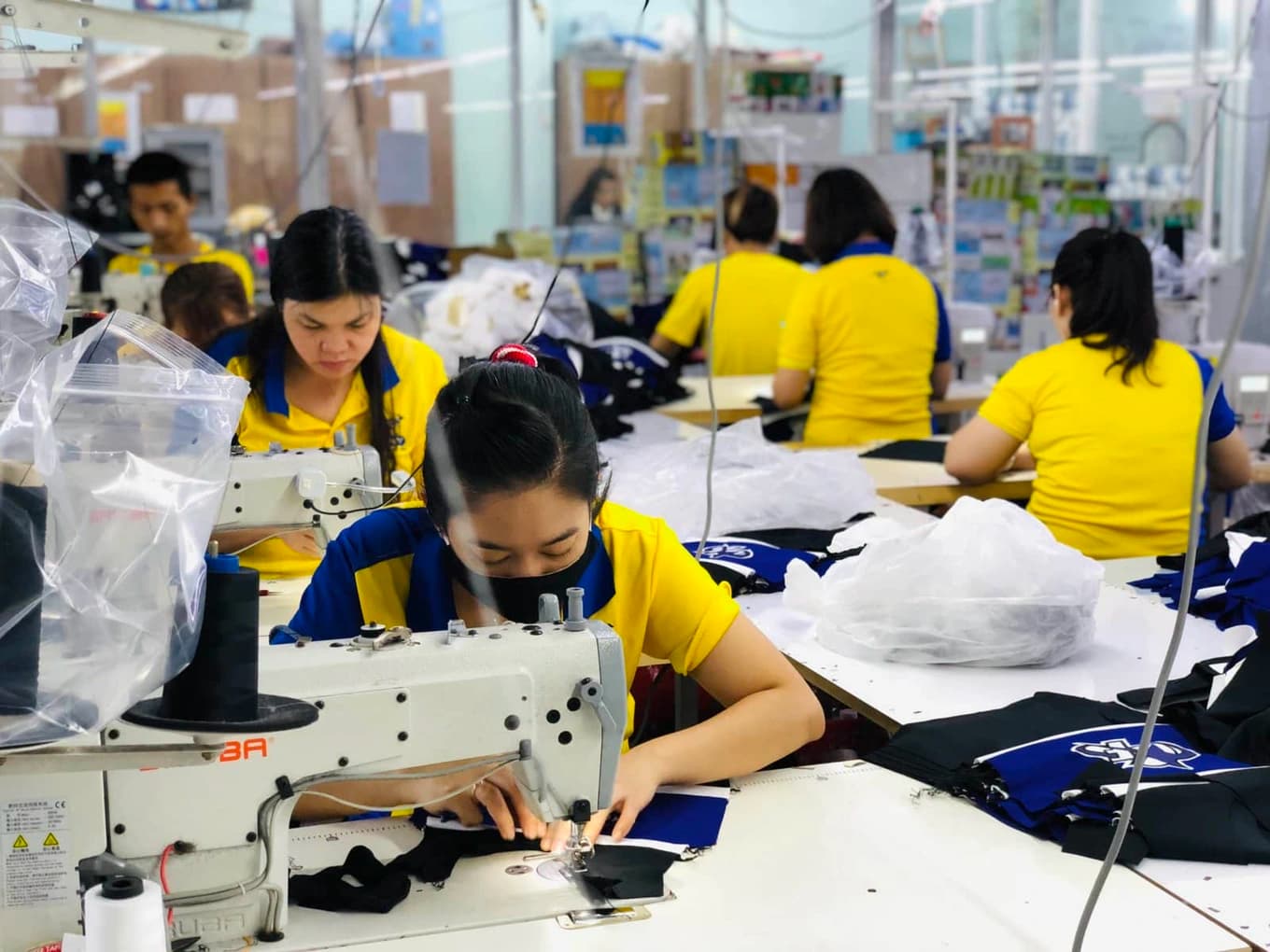
At a National Assembly group discussion on the socio-economic situation, Ho Chi Minh City Party Committee Secretary Tran Luu Quang said the city encouraged companies to pay Tet bonuses earlier, in November or December. The aim is to give workers money to shop when prices are more manageable than just before the Lunar New Year.

Ho Chi Minh City also plans to stimulate year-end consumption through e-commerce, e-wallets and buy-now-pay-later services.
The proposal is one of the city’s demand-support measures as it faces pressure to meet its growth targets. Ho Chi Minh City grew 9.06% in the first nine months, while its full-year target is 10.2%.
Representatives of several companies supported the idea of paying bonuses early. They said the timing should remain flexible and reflect each organization’s finances, operations and any support from the city.
Proposal to advance bonus funds
Pham Quang Anh, director of Dony Garment, said early Tet bonuses could help workers plan their purchases before prices rise during the year-end peak.
He said the approach needs careful consideration in garment production and other sectors that employ many general workers.
The end of the year is a busy period for orders. Many companies keep operating until about the 26th day of the last lunar month. If bonuses are paid too early, some workers may leave before orders are completed, putting pressure on production schedules and deliveries.
For that reason, many companies usually pay bonuses close to the holiday break. Some also hold back part of the payment until after Tet to encourage workers to return.
Companies also have to manage cash flow. Wage and bonus plans usually follow a financial cycle, while customers are not required to pay for orders earlier simply because a company changes its payment date.
For manufacturers, especially small and medium-sized businesses that must keep working capital moving, changing the payment schedule can add financial pressure.
To make early bonuses possible, Pham Quang Anh proposed that the city guarantee or advance the bonus funds, with companies repaying the money when the planned payment date arrives.
He said this would give workers money earlier, reduce cash-flow pressure and lower the risk of employees leaving before year-end orders are completed.
Luu Kim Hong, chairman of the trade union at Nidec Vietnam, said Tet bonuses are usually based on a company’s full-year business results. In companies with thousands of workers, the plan goes through several review stages and may require approval from a parent company or group.
He said the company had recently received a document from the Ho Chi Minh City trade union asking businesses to consider paying Tet bonuses early in November or December. For large companies, however, planning a payment in November or December in the middle of October is very difficult.
He said the demand effect would depend on the coordination of product supply, promotions and the timing of household shopping. November and early December are not yet the period when many families begin spending heavily on Tet.
Timing depends on each company’s financial position
Le Trung Tinh, vice chairman of the Ho Chi Minh City Transport Association, supported the city’s proposal. He said early bonuses could give workers more opportunity to shop and prepare for Tet.
At the same time, he said the interests of bonus recipients must be weighed against what companies can afford. Businesses with strong results may find it easier to change their payment plans. Companies facing cash-flow difficulties should be allowed to support the demand measure gradually while maintaining operations.
Tinh said the scale of implementation could be based on each company’s financial position. Large businesses with sufficient resources could adjust their bonus plans. Small and medium-sized companies unable to pay the full amount early could split the payment into two rounds, paying part early and the rest under the original plan. Companies in serious difficulty should be able to keep their existing schedule.
“The important thing is for each company to choose an approach that fits its conditions, supporting the city’s policy without putting extra pressure on production and business operations,” Tinh said.
He also cited Ho Chi Minh City’s free-bus policy. When it was introduced, the policy drew mixed views, but the city set aside more than VND600 billion. Tinh said investment in and support for public transport could encourage people to change their travel habits, and the share of public-transport users had increased noticeably.
Based on that example, Tinh said demand-support policies may require proactive government action, but implementation must match real conditions to produce lasting results.

To support early Tet shopping, the Ho Chi Minh City Federation of Labour plans to give Tet gifts to about 350,000–400,000 workers on November 15. Each person will receive VND1 million by direct bank transfer. According to information released by the federation, the program’s projected budget is VND350–400 billion. The gifts are provided by the trade union organization and are separate from Tet bonuses paid by employers.
The Ho Chi Minh City Federation of Labour said early gifts would allow workers to shop for Tet when prices are more manageable than just before the Lunar New Year, while also supporting consumption and the city’s development.
Sources: Dân Trí

