
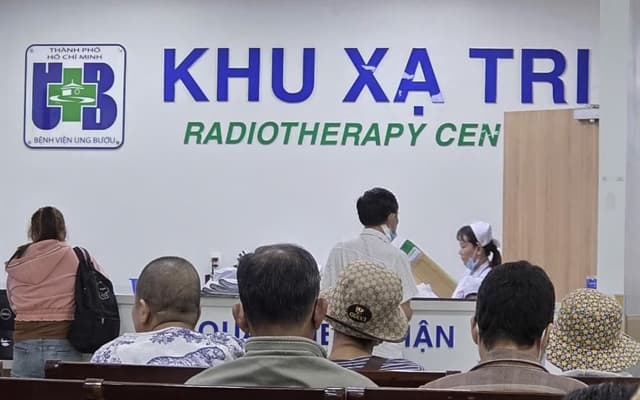
Ho Chi Minh City plans to allocate more than VNĐ5 trillion (US$193.3 million) for five key projects at the city’s Oncology Hospital between 2026 and 2030. The funding is intended to ease overcrowding, shorten long waits for radiotherapy and strengthen advanced diagnostic capabilities.
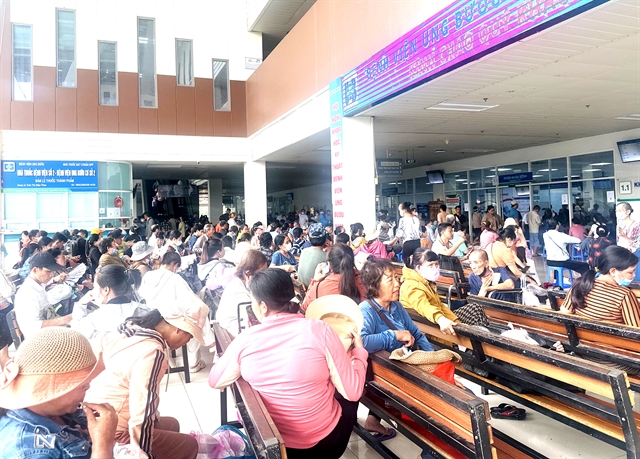
Dr Diệp Bảo Tuấn, the hospital’s director, said it receives 4,800 to 5,000 patients daily. More than 75 per cent of patients travel from neighbouring provinces and cities.
The hospital currently has 10 linear accelerators operating continuously in three daily shifts from 5am to 11pm.
To ensure the first session starts on time at 5am, technical staff arrive as early as 3am to carry out mandatory quality assurance checks and calibrate the equipment.
Operating at full capacity, the hospital completes around 700 treatment sessions a day. A further 800 to 1,000 patients remain on waiting lists.
Average waiting times for radiotherapy range from four to six weeks, after which patients wait another hour for their session, Tuấn said.
To streamline workflow and save time changing auxiliary equipment between procedures, the hospital groups patients with similar medical conditions together, he added.
To address the problem, the municipal Department of Health plans to build a new high-tech cancer screening centre and an auxiliary facility for patient support, upgrade specialised medical equipment, and buy a proton radiotherapy centre, a cyclotron system and a single-energy medical linear accelerator system.
Once operational, the cyclotron will support local production of radiopharmaceuticals for PET/CT scanners. This is intended to resolve critical shortages of the radioisotope 18F-FDG at the hospital and in neighbouring southern provinces, while adding radiation therapy capacity.
Assoc Prof Dr Tăng Chí Thường, director of the Department of Health, said the specialised equipment procurement had received in-principle approval from the city People’s Committee. Bids from suppliers are expected no later than the first quarter of 2027.
The remaining projects are being finalised and will be sent to the competent authorities for approval in 2026–27.
Health authorities are also pursuing a “multi-tiered, multi-polar, multi-centre” strategy to bring specialised healthcare to local communities. They recognise that expanding existing facilities alone cannot meet the needs of a growing population.
The city is advancing public-private partnership proposals for a 700-bed Oncology Hospital branch in Bà Rịa-Vũng Tàu, along with high-tech screening and diagnostic centres at the Tân Kiên and Thủ Đức medical clusters.
Construction of an Oncology Hospital branch in Bình Dương has been proposed for inclusion in the 2026–30 development plan.
While awaiting full project implementation, the hospital has introduced hypofractionated radiotherapy protocols to shorten treatment schedules in certain cases and prioritised emergency radiation treatments.
To cope with temporary shortages of 18F-FDG radioisotopes, clinicians are using alternative diagnostic methods such as CT, MRI and bone scans to keep treatment uninterrupted.
Sources: Viet Nam News

