
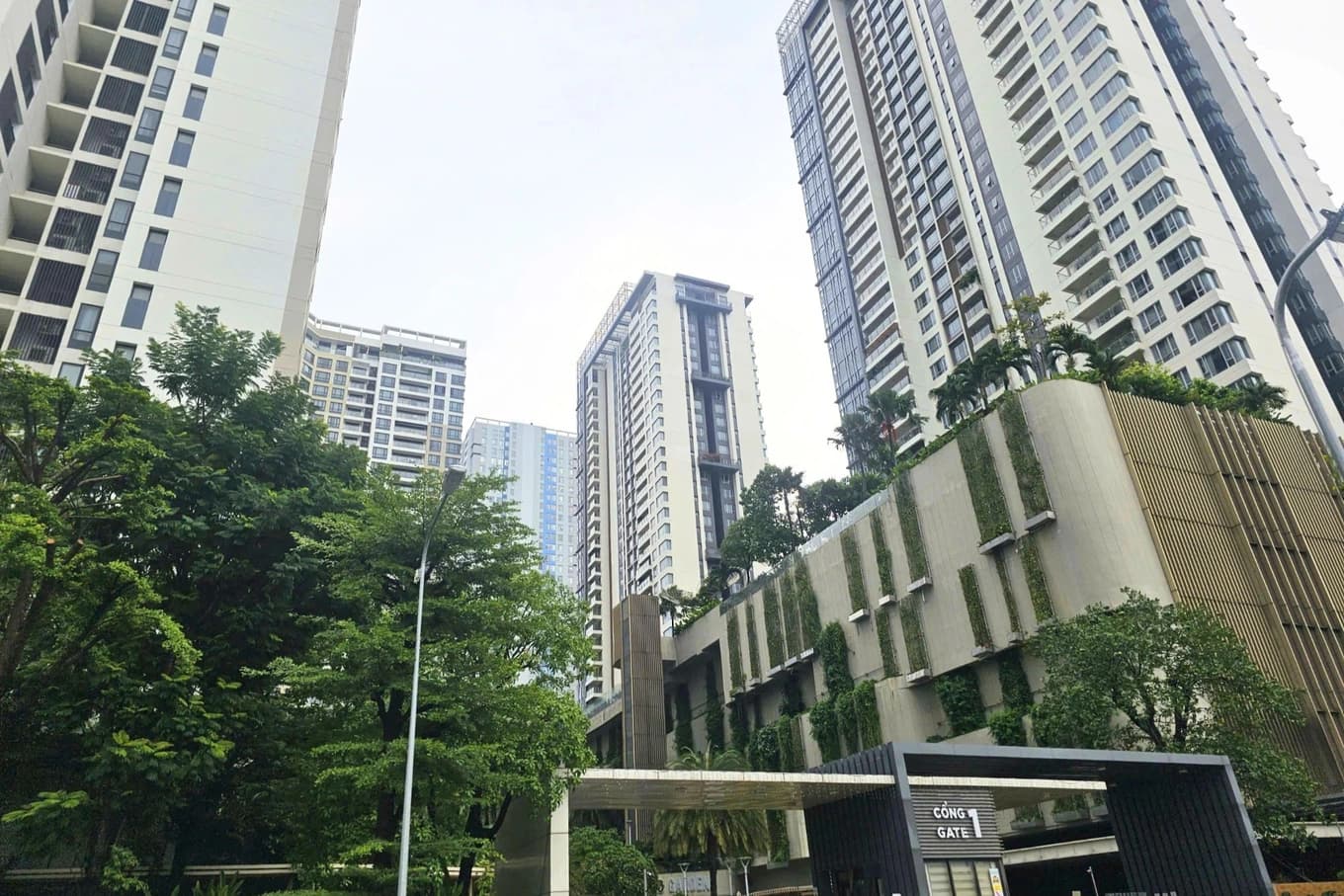
In the first nine months of the year, Ho Chi Minh City approved investment policies and investors for 30 real estate projects covering 527 hectares with total investment of VND170 trillion. The city also confirmed that 71 projects, involving about 46,000 apartments, were eligible to raise capital, issued 32,000 certificates, and granted construction permits for 78 projects with a total scale of 119,000 apartments, or 15 million square meters.
At the same time, Ho Chi Minh City fully resolved obstacles affecting 136 of 189 troubled housing projects. This unlocked about VND139 trillion in registered capital across 4,626 hectares. For the remaining 53 projects, the city has identified solutions and aims to complete the work this year.
Improving supply without a matching increase in demand is putting pressure on apartment prices. According to CBRE Vietnam, only 45% of new supply was absorbed in the third quarter. That was 24 percentage points lower than in the previous quarter and 2 points below the same period in 2025.
As a result, the average primary-market apartment price fell 2.3% quarter on quarter to about VND75 million per square meter of net floor area, excluding VAT and maintenance fees. The price was still 1% higher than a year earlier. With interest rates rising and demand weakening, many developers increased interest support, extended payment schedules, and offered other financial incentives. These measures reduced buyers' actual costs compared with listed prices and improved access to housing.
The adjustment was clearer in the secondary market. Average apartment prices fell 4% quarter on quarter to about VND60 million per square meter of net floor area, matching the level a year earlier. Some projects with large supply, strong competition, and a high share of investor buyers recorded declines of more than 10%.
By contrast, completed projects with stable resident communities and good management quality held their prices better. The market shows that apartment prices are not falling evenly. Location, project quality, competing supply, and the buyer mix all matter.
New supply is expected to remain limited in the fourth quarter as some developers delay launch plans while waiting for more positive market signals. In the former Ho Chi Minh City area, future supply is expected to concentrate in the east, south, and north, mainly in large urban developments and areas benefiting from major transport infrastructure.
The former Binh Duong province remains a major source of new apartment supply. Projects are concentrated along National Highway 13 and in areas that will benefit directly from metro lines under construction. The expansion of supply into these areas also matches buyers' shifting preferences as central prices continue to rise.
Duong Thuy Dung, executive director of CBRE Vietnam, said the market remains under pressure from high interest rates, low liquidity, and cautious sentiment. End-user demand continues to dominate, pushing developers to adjust product mix, apartment sizes, and sales policies to better match buyers' ability to pay.
"Projects with complete legal documentation, reasonable prices, and direct benefits from infrastructure development are expected to have an advantage in the near term," Dung said.
Data from Batdongsan.com.vn also shows that asking prices for apartments in Ho Chi Minh City have started to adjust. In the third quarter, advertised condominium prices fell 1% from the previous quarter.
Demand is notably shifting toward satellite markets. The share of real estate searches for the former Binh Duong province rose from 9% in the first quarter to 30% in the third. For apartments in the area, the search share increased from 31% to 38%. The former Long An and Dong Nai provinces also saw the share of apartment searches rise from 3% to 8%.
Transport infrastructure continues to have a clear effect on apartment prices.
According to Batdongsan.com.vn, asking prices for apartments within 1 km of Metro Line 1 and Hanoi Highway rose from VND30.6 million per square meter in 2016 to VND72.9 million in 2026, nearly 2.4 times higher. In 2025 alone, after Metro Line 1 began operating, asking prices in the area rose about 30% from the previous year.
Experts say Ho Chi Minh City's apartment market is entering a clearer adjustment phase after a long period of price increases. Unblocking supply gives buyers more choice, but absorption will still depend largely on prices, interest rates, and payment policies.
Sources: Dân Trí

