
The city's education sector has divided the transition into three stages: Foundational, Integrated and Bilingual Ecosystem. The framework is intended to move language learning from formal lessons towards practical use.
From 2027 to 2030, the authorities plan to train core teaching staff. The target is for at least 20 per cent of educational institutions to offer selected subjects in English.
For 2031 to 2035, the plan sets out common English proficiency requirements for all teachers and English-medium curricula for specialised subjects. From 2036 to 2045, the city aims to modernise its language environment and establish a sustainable bilingual system.
As preparation, local authorities recently assessed the English proficiency of more than 45,700 public school teachers. The results will be used to shape training programmes and staff allocation.
Preschool pilot
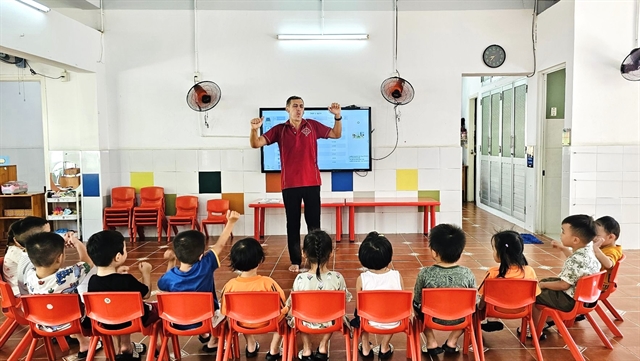
The Ho Chi Minh City Department of Education and Training has issued a plan for an English pilot in public kindergartens during the 2026–27, 2027–28 and 2028–29 school years. It will cover children aged three to five at eligible public kindergartens and integrated preschools.
Participation requires parental consent and must not place undue academic pressure on children. The programme will be funded entirely by non-state sources, run on a non-profit basis and provide parents with transparent information about fees.
Children who do not take part will retain their rights to standard learning and daily activities. The materials must follow national frameworks and vetted resources for integrated preschool English.
Lessons will use child-centred, project-based and play-based methods. English will be included in daily routines, basic mathematics and activities about the world around the children. Programme managers and coordinators must have at least B1 English proficiency and specialised pedagogical training.
English beyond the classroom
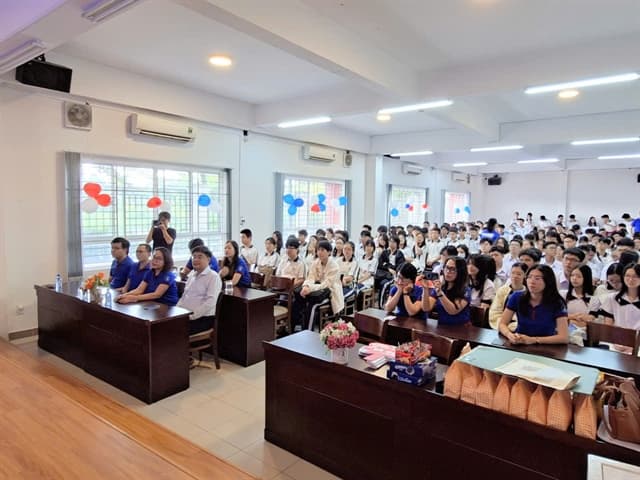
Schools in the city are already using English beyond regular lessons. At Tran Dai Nghia Secondary and High School, interdisciplinary lessons, career orientation programmes and cross-cultural projects are increasingly conducted in English. Principal Tran Thi Hong Thuy said students need regular opportunities to use the language in practice, not simply more lessons.
Marie Curie High School uses English in STEM projects, scientific research, official communications and demonstration lessons in chemistry, biology, history and physical education. All teachers in its English faculty meet Level 4 proficiency standards or higher.
The current initiative builds on programmes developed in the city over several decades. In the 2025–26 academic year, nearly 50 per cent of preschool children, about 206,800 pupils, were introduced to English in 67.4 per cent of public kindergartens. More than 90 per cent of public schools offer intensive English or bilingual programmes.
Sources: Viet Nam News

