
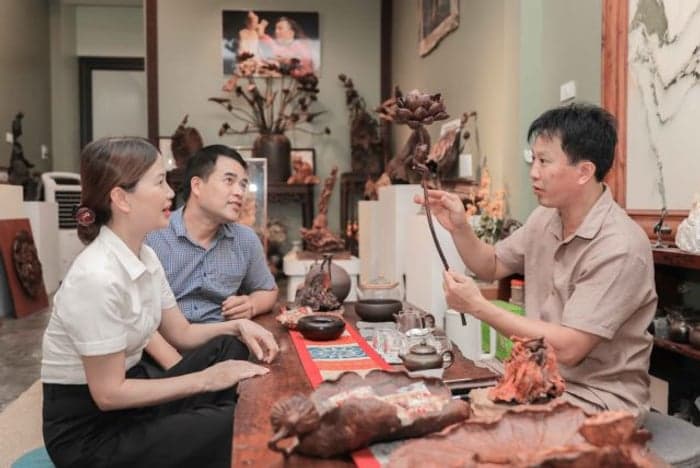
Hà Văn Đạm came to the one stop administrative centre in Thư Lâm, a rural commune outside Hà Nội, to complete paperwork after buying land. He had assumed his tax records would be updated after the sale, but learned that another procedure was required. An official explained the declaration and set a return date. “The staff were really helpful. They walked me through it using the guidance sheet,” Đạm said.
Trần Thanh Hải visited the centre for her son, who had applied online for a certificate of marital status but could not leave work. Staff handled the request quickly. She hopes people will not be sent between counters because procedures overlap.
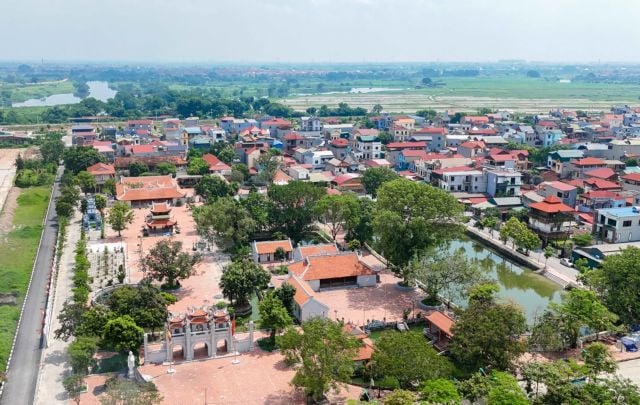
Thư Lâm and Phúc Thịnh were chosen to pilot Hà Nội’s “socialist commune” model. The city launched the experiment in July. Nguyễn Xuân Lưu, vice chairman of the municipal People’s Committee, said location, cultural traditions, officials’ capacity and community cohesion were considered.
The model is intended to test governance closest to residents before wider rollout. It has 54 criteria scored out of 100, covering governance, infrastructure, culture, security and digital transformation. The targets include 9.5 out of 10 on a resident happiness index and overall satisfaction of at least 95 per cent.
Targets, not results
These are targets, not results already achieved, said Trần Đức Thắng, secretary of the city’s Communist Party Committee. In Phúc Thịnh, the happiness index is treated as the measure linking the other areas. The commune is working on jobs, incomes, welfare, culture and community ties, digitising welfare records and strengthening health services.
In Thư Lâm, every task has an owner, deadline and result. The pilot calls for at least 98 per cent of procedures to be completed on time. A “No Come Back Day” means applications that can be settled on the spot should be finished immediately; otherwise staff must explain the delay and give a result date.
In Hà Lâm, local groups took on jobs during a 100 day campaign for people’s happiness. The women’s union planted flowers, veterans worked on ponds, farmers maintained a road section and young people created a digital community hall. The work was completed on schedule, and residents shared responsibility for maintaining it.
Listening and acting
Nguyễn Đức Nhân, who grew up in Lỗ Giao village, said he was proud of the pilot and wanted life to improve. The hardest questions concern land. Roads and urban projects are changing Thư Lâm’s countryside, while affected families want to know about compensation, support and future livelihoods.
Commune secretary Nguyễn Thị Thanh Tâm described cases where one family’s land fell inside two projects with different rules and payments. Outreach teams explain the rules and forums collect residents’ views. Listening is only the start: people need to see which petitions were resolved, which remain pending and who is responsible.
The pilot aims to resolve at least 95 per cent of petitions locally and involve 90 per cent of families in policy consultations. Phúc Thịnh has created a discussion council of village and community representatives. Its members serve two year terms and take part in discussions on public projects, planning and officials’ assessments. Hà Nội plans reviews in 2030 and 2035, but residents will look for progress sooner.
Sources: Viet Nam News

