
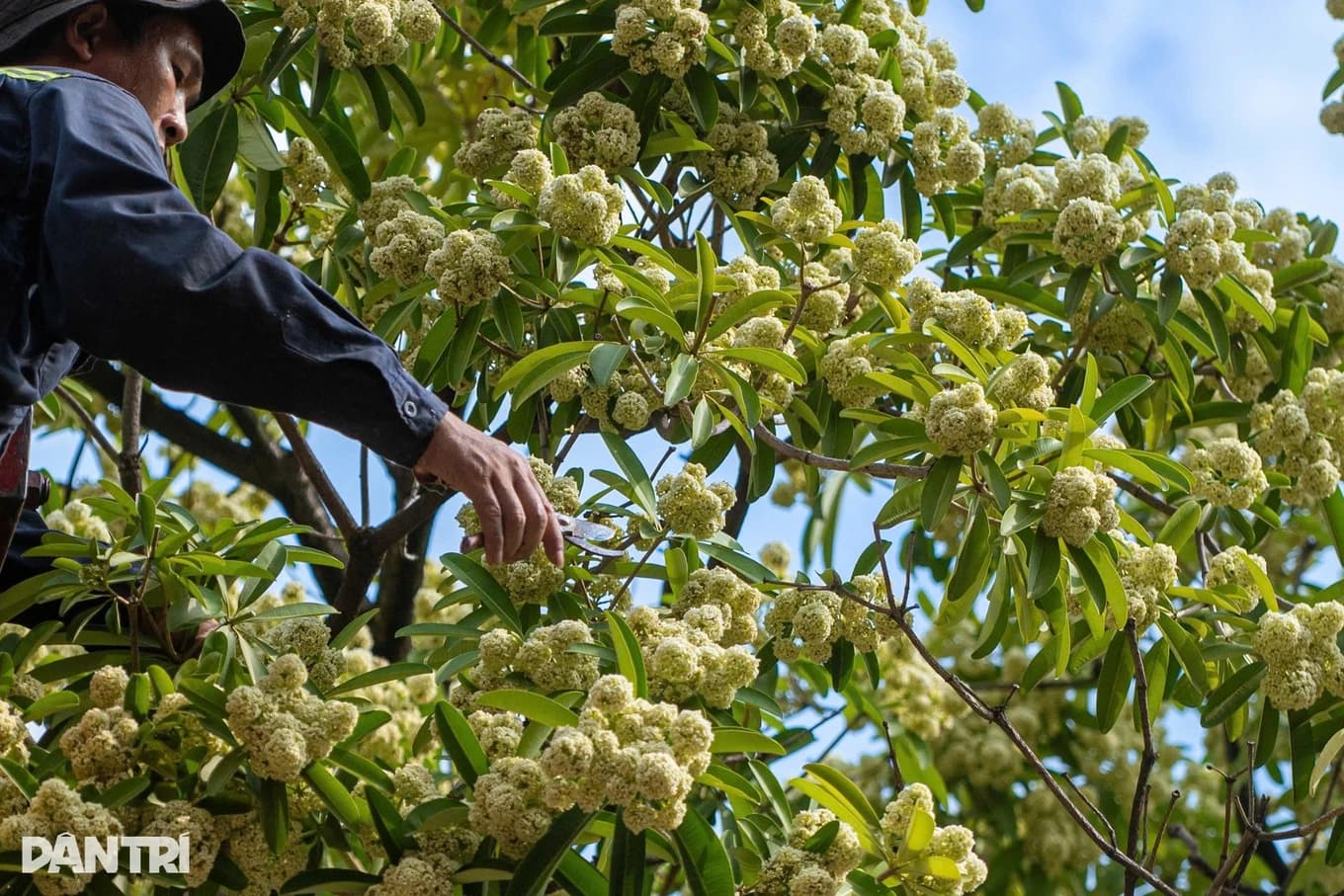
The Hanoi Technical Infrastructure Management Centre under the municipal Department of Construction has asked local authorities and the management boards of high-tech and industrial zones to survey streets with dense milk tree plantings and collect residents’ views on pruning, adjusting planting density and transplanting trees.
The survey should focus on areas near homes, schools and hospitals and places where residents have complained about the smell. Officials should record the street and section, each tree’s location or identification number, the number and condition of trees, the level of impact and priority locations.
A tree should not be proposed for transplanting solely because it is a milk tree. Its condition and landscape value must also be considered. Authorities should announce the survey area and purpose, distribute forms or hold meetings with affected households, agencies and organisations.
The survey will cover the impact of the smell, selective pruning of flower clusters or flowering branches, and views on leaving trees in place, maintaining them, transplanting some of them or planting suitable replacements. Officials should record agreement, disagreement and other proposals; failure to respond is not consent.
Tran Anh Tuan, deputy director of the centre, said services would first identify locations where the impact is clear, especially densely populated areas and places near homes, schools and hospitals. Selective pruning is planned there to reduce the amount of flowers and the spread of the smell. The work must meet technical requirements: workers must not cut off the top of a tree, prune excessively or affect its vitality, shape or safety.
In the longer term, local authorities, residential groups and tree maintenance services will survey each street and tree and consult affected households. Specialists will study options to retain and maintain trees, adjust planting density or selectively transplant them, with suitable replacement planting under the approved urban greenery plan. Results should be sent to the Department of Construction and the infrastructure centre by October 26.
“Transplanting, cutting down or replacing trees may only be carried out after a plan, the required procedures and approval from the competent authority are in place. The consultation document does not replace permission,” Tuan said.
Hanoi has not replaced milk trees on Nguyen Du Street with black ironwood
Social media posts recently claimed that Hanoi would replace the milk trees on Nguyen Du Street with black ironwood. A Department of Construction representative said authorities had only pruned branches in densely planted areas affecting residents; no replacement had been carried out. Authorities will consult residents before any transplanting or replacement, and no mass replacement is planned.
Tuan said a tree should not be proposed for transplanting simply because it is a milk tree. Its condition and landscape value must be considered. Hanoi currently has no decision or specific plan to replace the milk trees on Nguyen Du Street with black ironwood, or to replace milk trees across the city’s streets. The policy is to listen to residents, address problems where necessary and preserve as much as possible the tree rows associated with the capital’s identity.
Milk trees are one of the features of Hanoi’s autumn and part of the capital’s urban character. On some streets, dense planting produces a strong smell during the flowering season, affecting residents’ daily lives and the quality of the living environment. Statistics show there are about 14,400 milk trees across Hanoi’s streets and urban areas.
Sources: Dân Trí

