
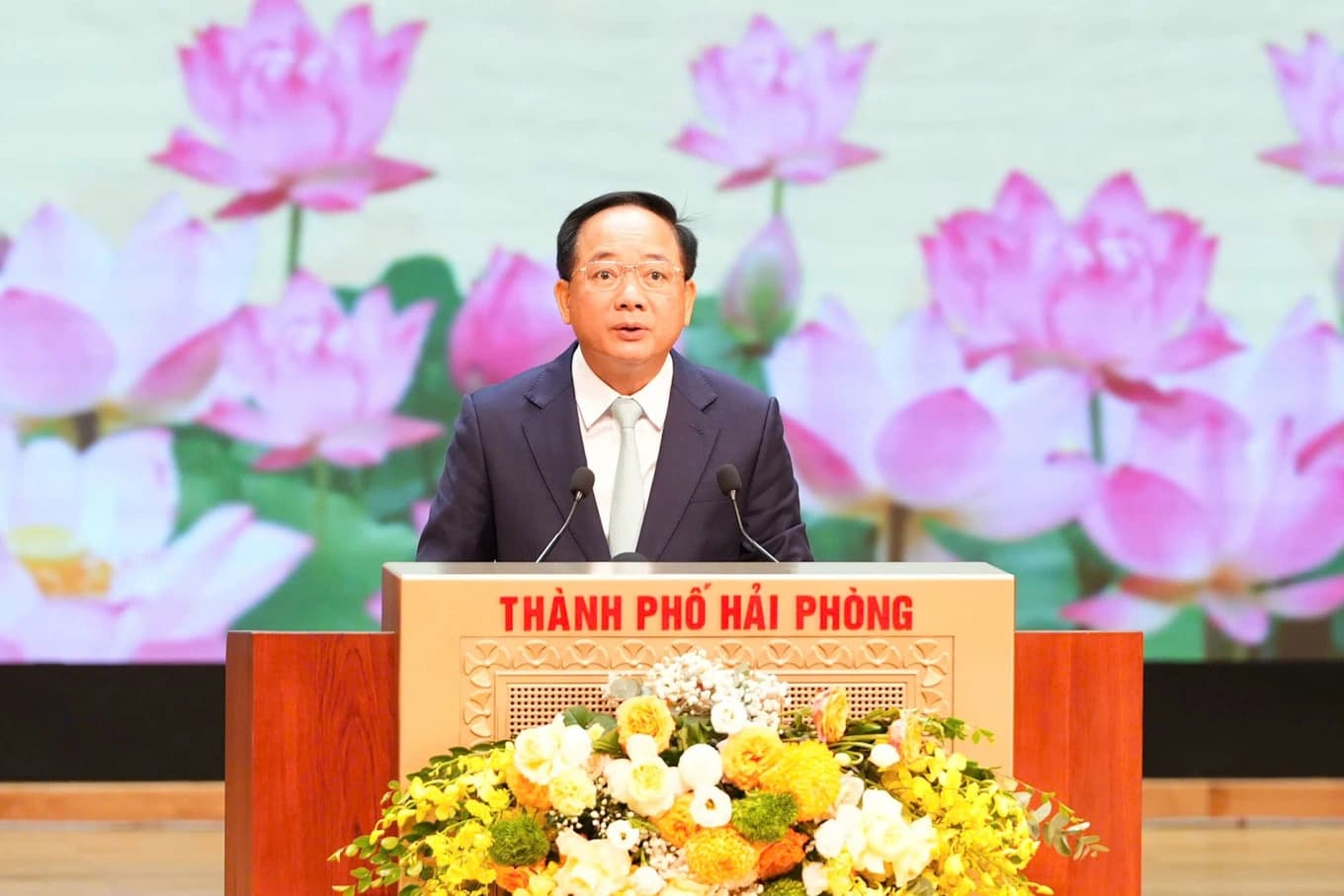
On October 20, the Hai Phong Party Committee held a ceremony marking the 80th anniversary of President Ho Chi Minh's first visit to the city on October 20 and 21, 1946.
The ceremony was attended by Trinh Van Quyet; Le Tien Chau, a member of the Party Central Committee and Deputy Prime Minister; Le Ngoc Chau, Secretary of the Hai Phong Party Committee; and leaders from central agencies and the city.
Speaking at the ceremony, Trinh Van Quyet, a member of the Politburo, Secretary of the Party Central Committee and head of the Central Propaganda Department, said the merger of Hai Phong and Hai Duong had opened new development space by connecting the advantages of the sea, the delta, seaports and industry. With three economic zones, a free-trade zone and 50 industrial parks, Hai Phong has the conditions to become a growth center and a leading economic hub of the country.
The central authorities set Hai Phong a target of average annual growth of 13–14% from 2026 to 2030. “If the whole country wants double-digit growth, the leading economic hub must move faster, more strongly and more persistently,” Quyet said.
He said this was both a vote of confidence in the city and its historic responsibility. Hai Phong needs to maintain sustainable double-digit growth while linking its development rate to productivity, quality, efficiency and environmental protection.
Quyet urged the city to focus on removing bottlenecks, including slow site clearance, a shortage of highly skilled workers, and digital and processing-manufacturing sectors whose shares remain below the city's potential.
The head of the Central Propaganda Department also called on Hai Phong to use effectively the special mechanisms and policies under National Assembly Resolution No. 226/2025/QH15; renew its growth model through science, technology, innovation and digital transformation; develop a modern maritime economy; and attract and retain talented people.
Alongside economic development, the city needs to connect the areas brought together by the merger, ensure that residents benefit from development, and build a disciplined, civilized and compassionate society. Quyet also stressed the need to build a strong Party organization, create a government that is close to and serves the people, and ensure that the two-level local administration operates smoothly and effectively across 114 communes, wards and special administrative zones.
At the ceremony, Hai Phong Party Committee Secretary Le Ngoc Chau launched an emulation movement titled “Hai Phong follows Uncle Ho's example: united effort, proactive implementation, stronger drivers and breakthrough growth.” The movement aims to meet the city's socio-economic development targets for 2026 and 2026–2030.
According to a report presented at the ceremony, Hai Phong's economy grew 12.08% in the first nine months of 2026, the third-highest rate in the country. Growth reached 13.09% in the third quarter. Hai Phong's port cluster ranked 13th in the 2025 global container port performance index, rising 17 places.
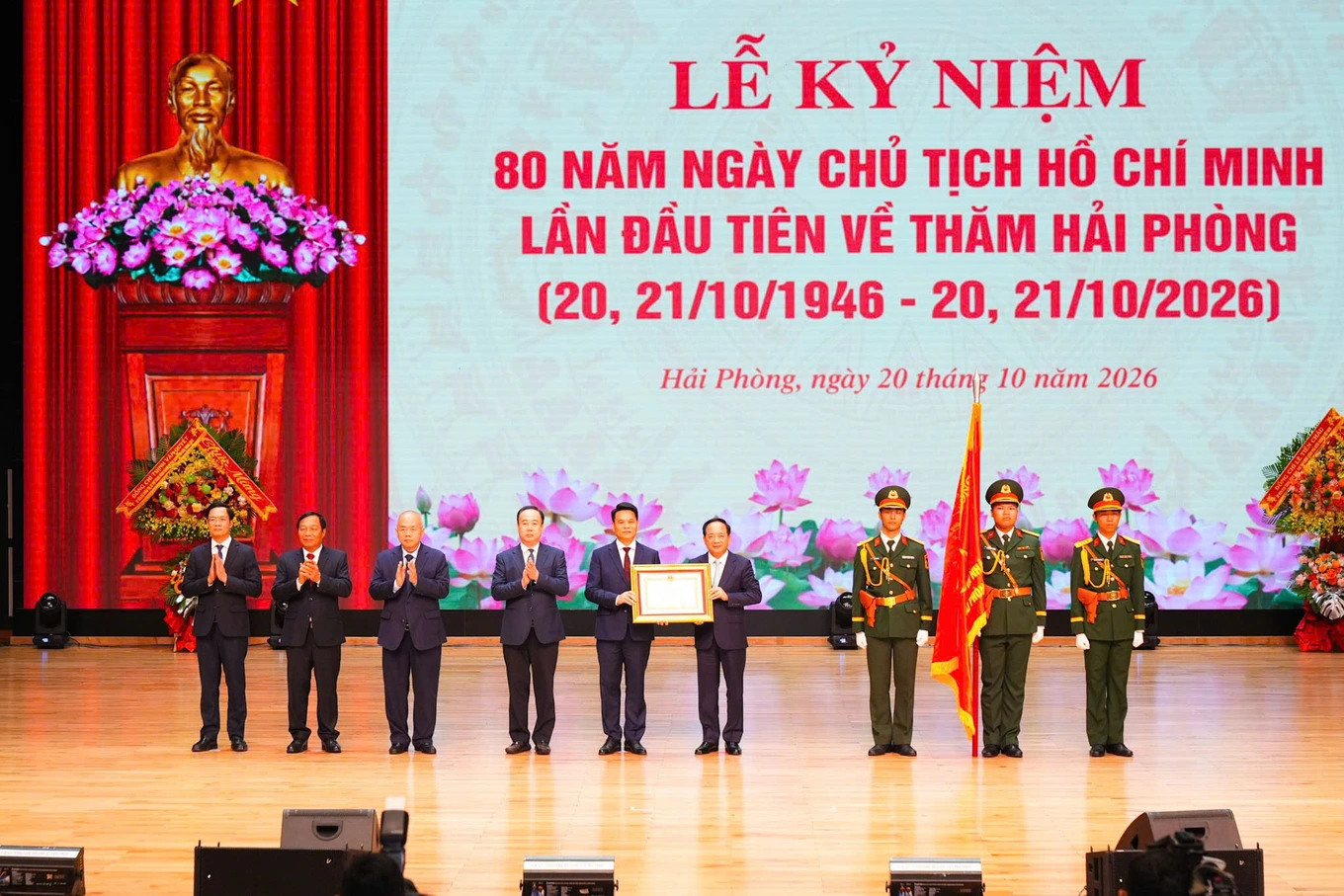
On the occasion, the President of Vietnam awarded the First-Class Labor Medal to the Party organization, authorities and people of Hai Phong, and the Third-Class Labor Medal to the Party organization of Hong Bang Secondary School. The Prime Minister awarded certificates of merit to Quang Trung Primary School and Ha Canh Duong, Secretary of the Party Committee and Chairman of the People's Council of Hong Chau Commune, for outstanding achievements in studying and following Ho Chi Minh's ideology, morality and style from 2016 to 2026.
Sources: Dân Trí

