
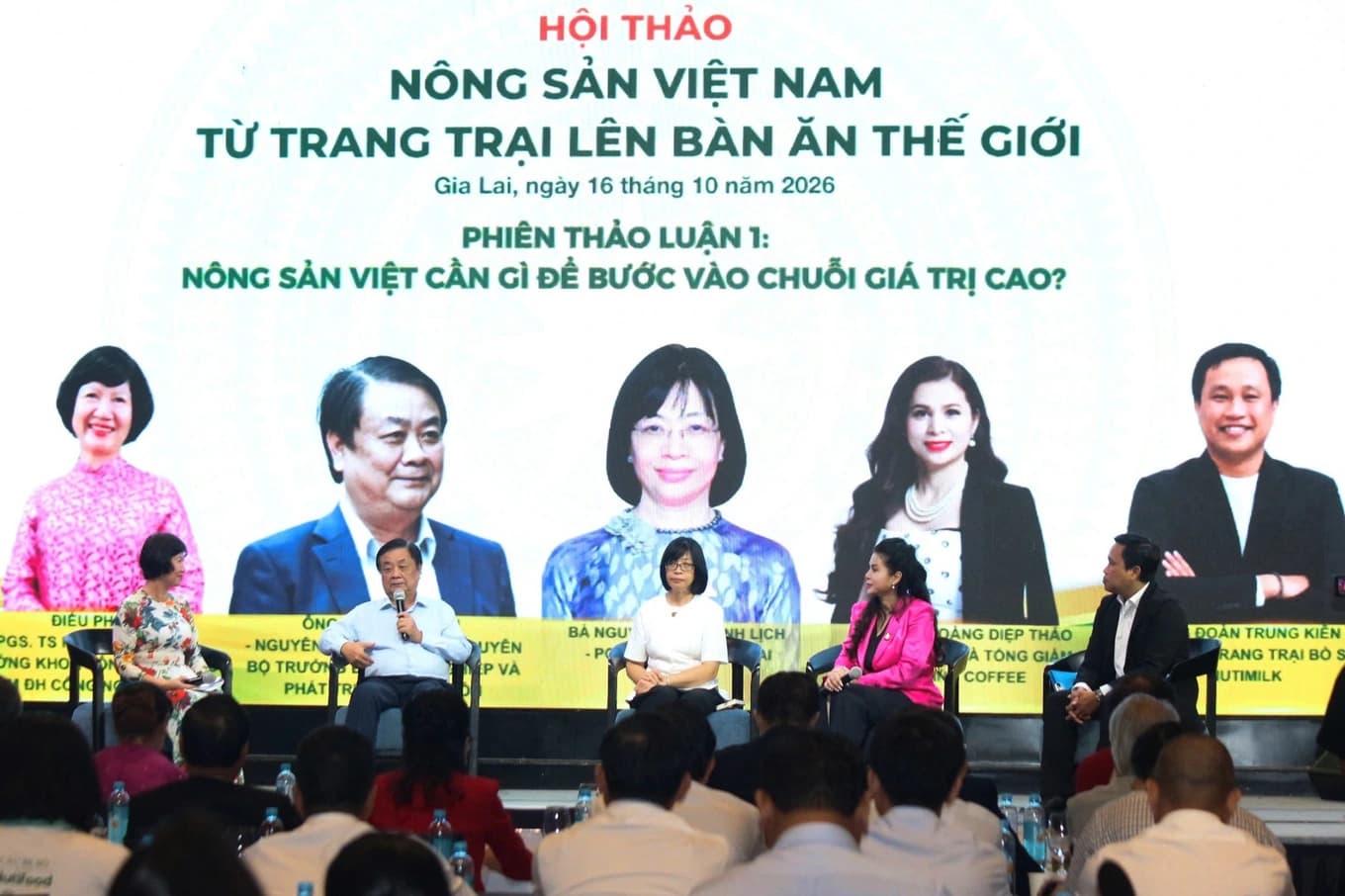
On October 16 and 17, the Vietnam Culinary Culture Association and the Gia Lai provincial People's Committee held a series of seminars as part of the 2026 National Tourism Year.
The program aims to raise the value of farm products through cuisine, brand building, and creative work in film, television and digital content. It is intended to promote Vietnamese identity, attract visitors and create livelihoods for local communities.
At the October 16 seminar, "Vietnamese farm products: From the farm to the world's table," former National Assembly Vice Chairman and former agriculture minister Le Minh Hoan proposed linking products with local culture and visitor experiences.
He said a dish's appeal comes not only from its ingredients and preparation, but also from the landscape, memories, way of life and feelings of the people where it originated. Visitors may remember the story of the land and its producers, as well as the experiences they had there, alongside the flavor.
Hoan said the value of a harvest should be measured by jobs created, new services and the ability to maintain customer relationships, rather than only by output and price. Passion fruit, for example, can be sold fresh or turned into drinks, desserts and gifts. A farm can also become a place for visitors, school lessons about nature and new culinary experiments.
This gives farmers more opportunities to work in tourism, explain cultivation methods and tell the story of their products. Visitors can better understand where farm products come from, build trust and continue buying them after their trip.
Hoan stressed, however, that an appealing story cannot replace quality. Traceability is meaningful only when the information is transparent and reliable. Consistent quality and trust are what keep customers over time.
Raising the value of farm products through cuisine, culture and tourism
Gia Lai's varied landscapes, culture and livelihoods create conditions for farm-based visitor routes running from growing areas and processing facilities to meals at destinations.
Linking places does not mean packing as many attractions as possible into one itinerary. Visitors need time to meet residents and learn about local life. Communities should also decide which cultural values they want to share, how to present them and what benefits they receive from tourism.
Drawing on Thailand's experience, Hoan suggested studying the idea that every family has its own creative ability. Older people can use their experience in choosing varieties, caring for crops and cooking traditional dishes, while younger people can handle photography, video, online sales and visitor experiences.
Authorities, cooperatives, schools and businesses can work together to teach skills, test products and connect producers with buyers. Training alone is not enough: residents also need capital, markets and chances to cooperate. Artisans who pass on their knowledge should receive recognition and fair pay.
To avoid spreading efforts too thinly, Hoan proposed choosing one growing area, a group of products and several households, cooperatives and businesses for a 90-day pilot. The first stage would assess demand and find partners, followed by developing dishes, gifts and visitor experiences, then testing them, collecting feedback and making adjustments.
"The market needs to enter at the beginning of the harvest season, rather than waiting until the end to look for buyers," Hoan said.
He said results should be measured by residents' income, the number of renewed contracts, the share of returning visitors, opportunities for young people and the ability to preserve local identity. A model that raises revenue while leaving most of the risk with the community is unlikely to be sustainable.
According to Le Minh Hoan, the new Gia Lai after its merger with Binh Dinh can connect highland growing areas and gong culture with craft villages, fishing-village culture and the martial-arts heritage of the region. This could support tourism and food products linked to farm products and local knowledge.
Sources: Dân Trí

