
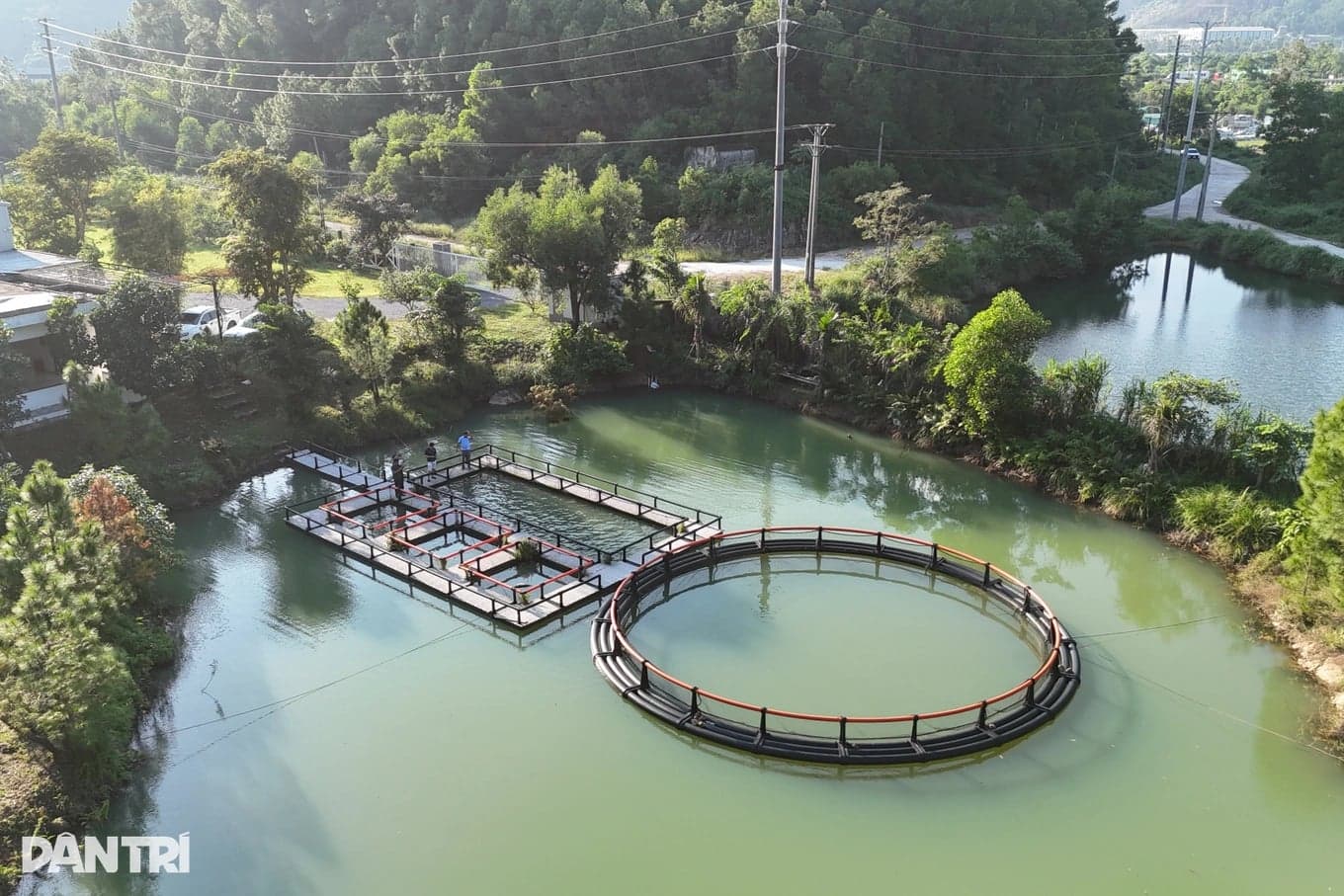
After six years of researching and producing HDPE plastic cages, Hoang Van Hoi decided to leave his job at Vinh University and focus on developing a product with a lifespan of up to 40 years.
Hoang Van Hoi, born in 1983, lives in Vinh Loc ward, Nghe An. He was a researcher and university lecturer before deciding to make aquaculture cages from a new material.
Before entering cage production, Hoi worked at the Institute for Fisheries Research I, where he built up professional knowledge. He later moved to teaching at Vinh University.
While teaching, Hoi connected theory with practice. That process gradually led him to the idea of making fish cages from HDPE, or high-density polyethylene, a material that can replace traditional options.
In 2008, Hoi began researching and producing HDPE cages alongside his teaching. In 2014, he officially left the university to focus full-time on developing the product and expanding production.
Residents had mainly used wooden and bamboo cages because those materials were easy to find and required less upfront investment. They deteriorate quickly, however, when regularly exposed to seawater and waves, which raises repair and replacement costs.
Hoi chose HDPE because the plastic resists corrosion in seawater and is highly durable. It is used for the cage frame and floats, together with mesh bags, anchoring systems and connecting fittings.
“After years of use, people found that the plastic cage system maintained its quality and remained relatively stable. That practical result persuaded many households to switch from wooden cages to plastic ones,” Hoi said.
The main differences between HDPE and traditional cages are their investment cost, lifespan and ability to withstand marine weather. Hoi said a small HDPE cage costs 20% more than a wooden cage of the same size. For large systems, however, HDPE costs less than traditional materials.
HDPE cages last 30–40 years, while wooden cages can be used for only 3–5 years. Their resistance to corrosion and waves helps farmers reduce repair and replacement costs throughout the service life.
“The initial investment can be higher for small cages, but considering service life, weather resistance and long-term efficiency, plastic cages offer more benefits to farmers,” Hoi said.
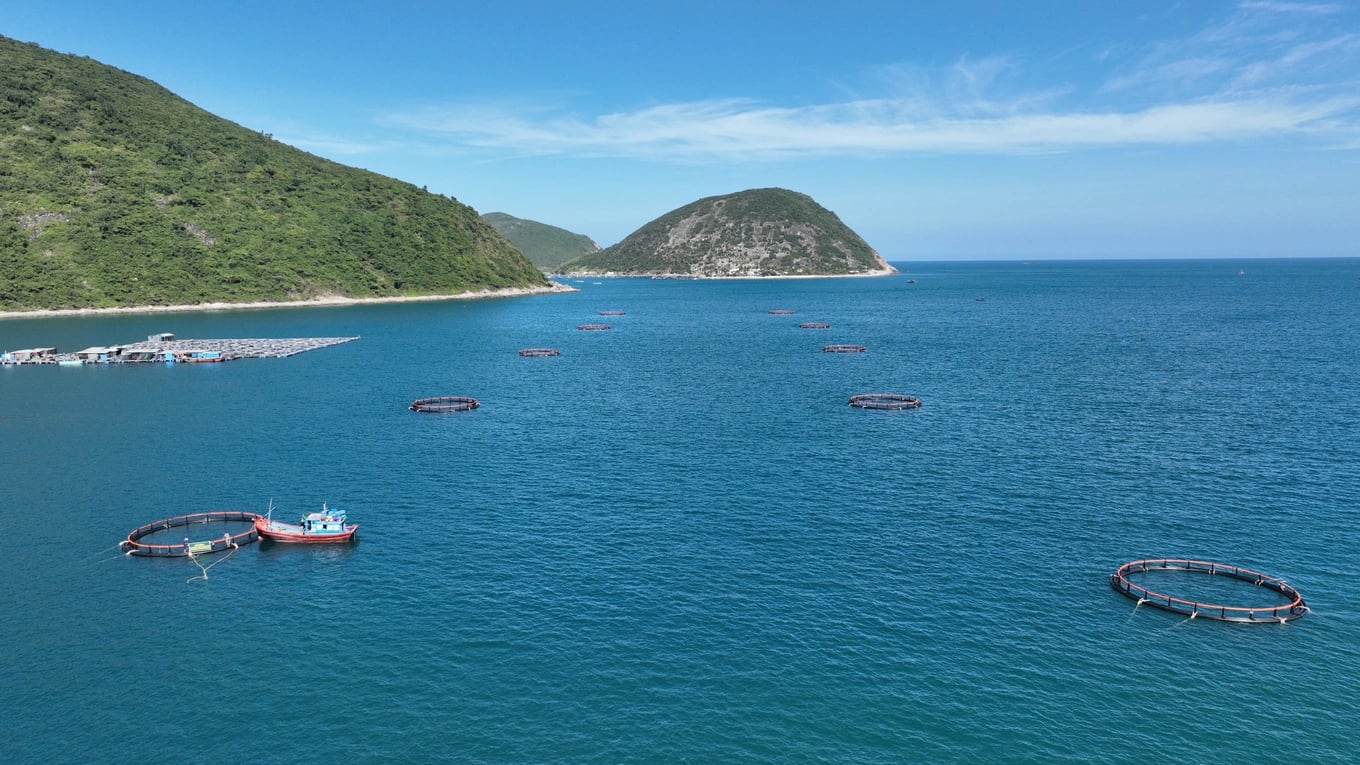
Hoi’s facility also develops cage systems for industrial-scale marine aquaculture. It can make cages ranging from 5 cubic metres to several thousand cubic metres.
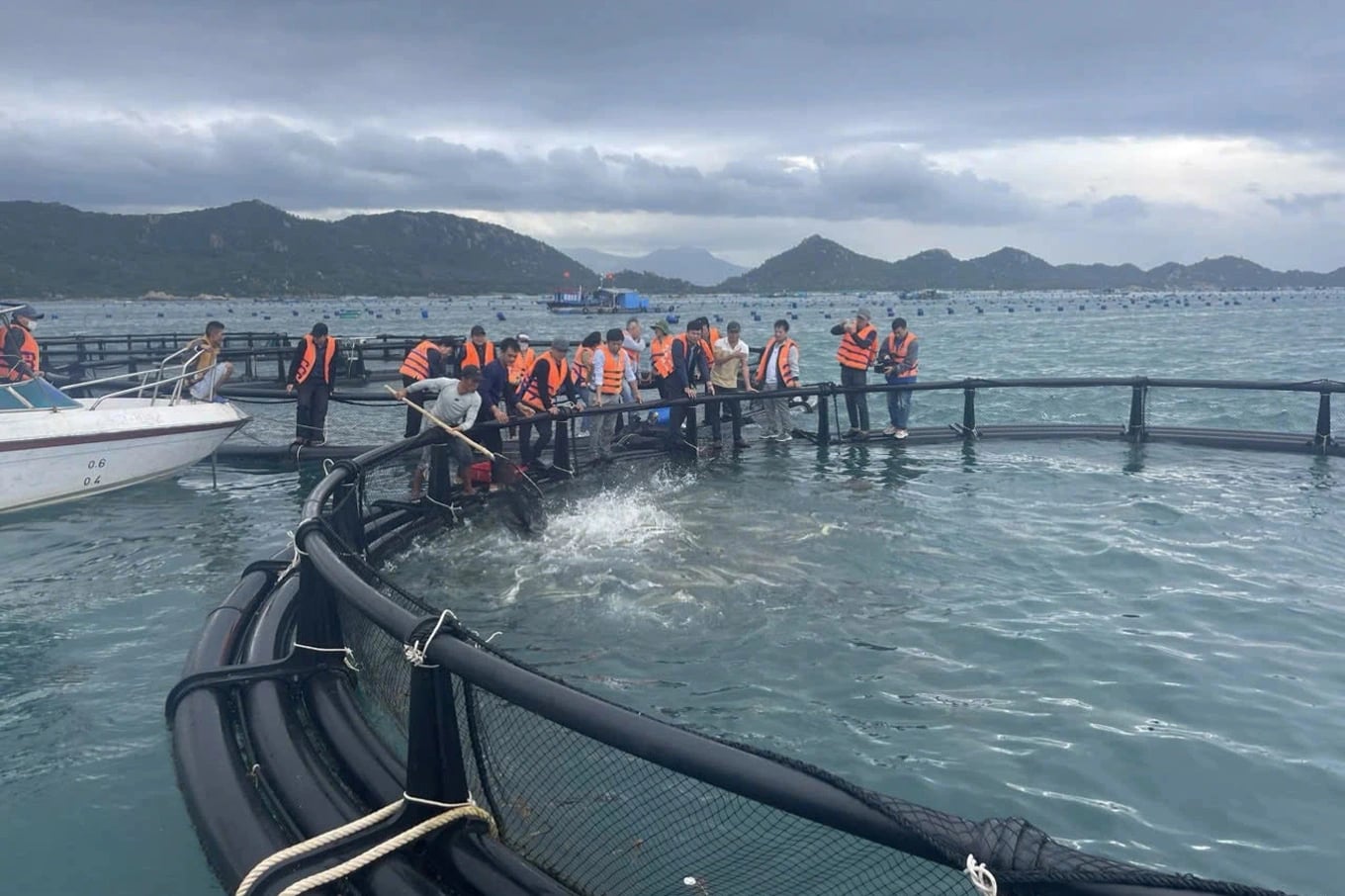
Hoi’s facility has supplied thousands of cages to households and aquaculture operations across the country. It has also created stable jobs for hundreds of local workers, especially women and older people, through tasks such as winding thread, weaving nets and other support work.
Nguyen Viet Hung, chairman of the Nghe An Farmers’ Union, praised Hoi’s creativity and his ability to apply technical advances. Hung said plastic cages help bring new technology to aquaculture in rivers, lakes and the sea, support larger-scale production, improve economic efficiency, create new occupations and raise rural incomes.
For his contributions to research and technical applications, Hoang Van Hoi received the “Farmer’s Scientist” title from the Central Executive Committee of the Vietnam Farmers’ Union in 2026. His HDPE fish cage project also won third prize in the farmers’ science and technology innovation awards that year.
Sources: Dân Trí

