
Hanoi. Logistics has become a factor in national economic competitiveness as global trade is restructured, supply chains shift and competition intensifies.
Logistics costs are estimated at 16–17% of Vietnam's GDP. The country needs to move goods to markets faster and at lower cost while meeting stricter international trade standards.
Road transport accounts for 80–90% of logistics costs
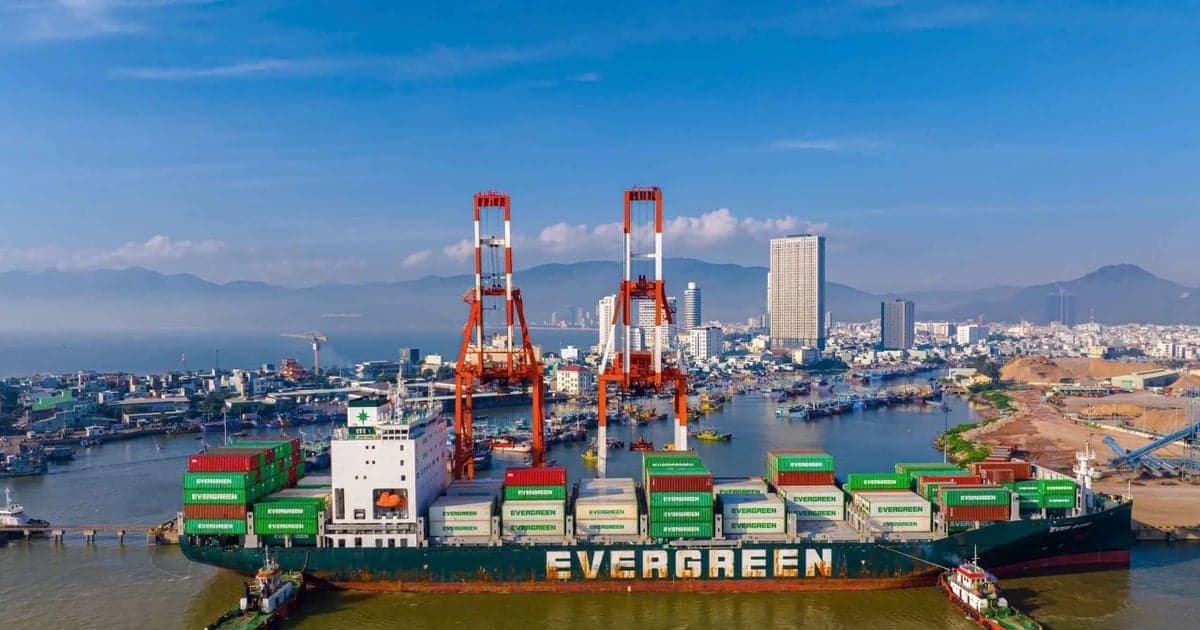
Vietnam has expanded expressways, deep-water ports, transport hubs, warehouses and distribution centres. Projects in Lang Son, Bac Ninh and Hue connect several transport modes and economic regions.
The Viettel Logistics Park in Lang Son covers 143.7 hectares, costs nearly 3.3 trillion VND, or 127.7 million USD, and can handle customs clearance for 1,500 vehicles a day. The Bac Giang International Logistics Centre in Bac Ninh covers 67 hectares and represents nearly 4.2 trillion VND in investment. Construction of the Chan May Logistics Centre in Hue began in March 2025 with investment of more than 1.5 trillion VND.
The Vietnam Logistics Report 2025 puts logistics costs at 16–17% of GDP, above the global average of 10.6–11.6%, Singapore's 8.5% and Malaysia's 13%. Experts said poor connectivity and coordination remain bottlenecks, while road transport accounts for around 80–90% of costs.
Coordinated planning can improve efficiency
Experts say lower costs require coordinated planning, investment, operations and data sharing. Logistics should be organised as a national network, with better last-mile links between industrial parks, warehouses, cargo collection points and major centres.
The Ministry of Industry and Trade is developing a nationwide logistics centre network. The strategy approved in October 2025 targets at least five international logistics service centres by 2030, focusing on Hanoi, Ho Chi Minh City, Hai Phong and Da Nang, with possible expansion to Dong Nai, Bac Ninh and Quang Ninh.
Authorities, investors, transport operators and cargo owners will need to coordinate investment with actual cargo flows, use each transport mode's strengths and improve regional networks to reduce costs.
Sources: VietnamPlus / Vietnam News Agency

