

Gaps in regulations on new tobacco products, the effectiveness of package health warnings and the rise of digital tobacco marketing were discussed at a Hanoi seminar on October 27.
The forum, titled 'A Young Vietnamese Generation Says No to Tobacco', was organised by Nhân Dân Newspaper and brought together health experts, National Assembly representatives and delegates from Vietnamese and international organisations.
Experts said Việt Nam had made progress in raising awareness, reducing tobacco demand and creating smoke-free environments in more than 13 years since the tobacco-control law took effect. New tobacco products and varied promotion methods now challenge the protection of children and adolescents.

WHO Representative in Việt Nam Angela Pratt said new nicotine and tobacco products are unsafe. They contain addictive nicotine and toxins linked to cancer, cardiovascular disease and respiratory illness. She said nicotine is particularly harmful to children, adolescents, pregnant women and their babies, and young e-cigarette users are more likely to move on to conventional cigarettes.
Pratt said she had seen watermelon, cotton candy and lemon tart flavours in Việt Nam, with colourful packaging attractive to children. WHO supports Việt Nam's ban on e-cigarettes and heated tobacco products and recommends health-worker advice, quit lines, behavioural support and approved medicines for smokers who want to quit.
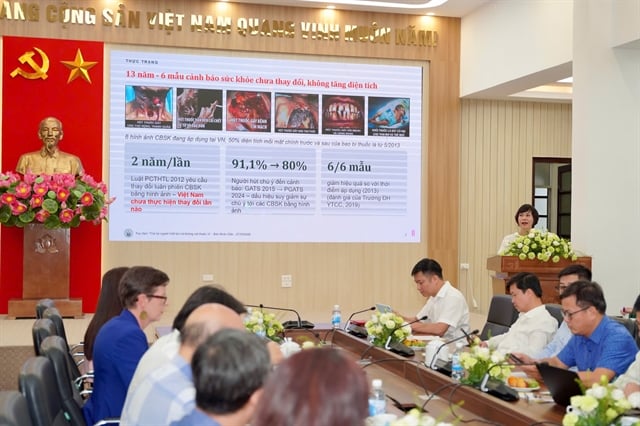
Associate Professor Lê Thị Thanh Hương said Việt Nam's pictorial package warnings had changed little in 13 years. Six images have been used since May 2013 and cover 50 per cent of the front and back of packs, although the 2012 law requires updates every two years.
The share of smokers who pay attention to warnings fell from 91.1 per cent in 2015 to 80 per cent in 2024. Hương proposed warnings covering 85 per cent of packages, regular image updates, a free cessation hotline number and a roadmap for standardised plain packaging.
Đặng Hoa Nam called for earlier risk prevention, greater platform responsibility for blocking prohibited content, monitoring online tobacco sales and teaching children to identify covert advertising and misinformation. Experts also called for stronger enforcement and coordination among authorities, families, schools, platforms and social organisations.
Sources: Viet Nam News

