
Every year, when the flood season arrives, Tram Chim and the vast Dong Thap Muoi land take on a distinctive character. Floodwaters move through canals and waterways, carrying alluvial deposits and creating favourable habitats for fish, shrimp and eels.
For generations, local residents have adapted their lives to the seasonal rise in water and used traditional fishing tools to earn a living. Today, these practices have become part of ecotourism activities rooted in the spirit of the Mekong Delta. Residents of four communes in the buffer zone of Tram Chim National Park are also being trained to tell visitors about local culture.
Bringing traditional livelihoods to visitors
People in Tram Chim and Dong Thap Muoi have organised their lives around the seasonal rise and fall of the waters for years. During the dry season, they grow rice and vegetables and raise livestock. When floodwaters arrive, they fish with traditional traps, nets and eel-catching devices.
As economic development and urbanisation accelerate, many young people are seeking other livelihoods, leaving traditional occupations increasingly concentrated among older residents. Fishing tools once familiar throughout the riverine region have also become unfamiliar to many urban dwellers.
Pham Duc Hoa, director of Tram Chim Tourist Site, said modern life and economic pressures were causing traditional cultural values to be overlooked. Each fishing tool reflects a particular technique and generations of knowledge about living with seasonal waters. Preserving the tools only as exhibits risks allowing the stories and local practices behind them to fade, he said.
The tourist site is drawing on Tram Chim National Park’s natural assets, including its status as the world’s 2,000th Ramsar site, and the region’s cultural heritage to include traditional fishing practices in visitor activities.
Local residents introduce fish traps, shrimp traps, eel-catching devices, nets and fishing rods. They explain their origins, construction and use according to different aquatic species and water conditions.
Ly Thi Thu On, manager of Tram Chim Farmstay, said visitors could enjoy the quiet natural surroundings of the park’s buffer zone and learn about local agricultural life and culture. Activities include setting fishing traps, harvesting fish, feeding fish, cycling around the farm and taking early-morning walks.
Experiencing the flood season
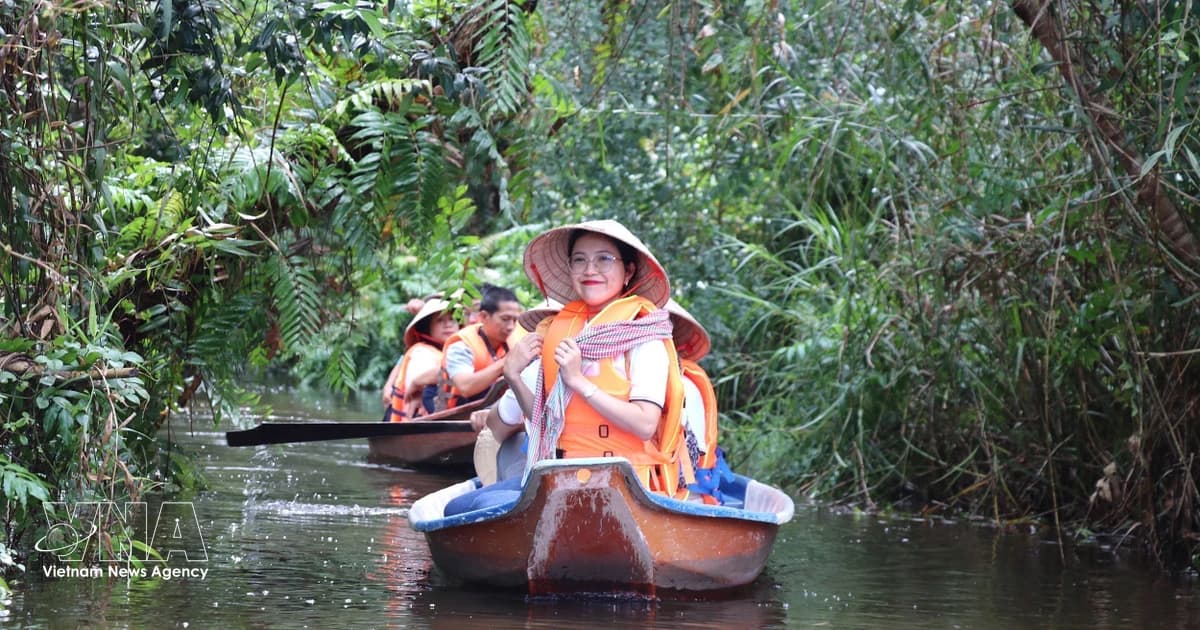
Visitors to Tram Chim can travel by boat along canals and waterways and try traditional activities such as fishing and setting traps under the guidance of local residents.
The flood season also brings bright yellow sesbania flowers and linh fish, a seasonal delicacy of the Mekong Delta. Along the waterways, visitors can observe fish and birds, learn to retrieve traps and gain first-hand insight into traditional fishing practices and the daily lives of people in the buffer zone.
Nguyen Thi Thuy Trinh, a visitor from Ho Chi Minh City, said the activities helped her learn more about fishing techniques and harvesting vegetables for local dishes. She planned to recommend Tram Chim to her family and friends so they could experience the flood season together.
According to Hoa, the flood-season Tram Chim programme includes nine activities designed to connect nature, local communities and seasonal livelihoods. Residents take part directly by telling stories and guiding visitors, creating opportunities to earn additional income from their local knowledge and skills.
Tram Chim is turning traditional fishing practices into a tourism activity. By involving buffer-zone communities in tourism development, the programme helps preserve local cultural heritage, create new livelihoods and bring the stories of the park and its people closer to visitors.
Sources: VietnamPlus / Vietnam News Agency

