
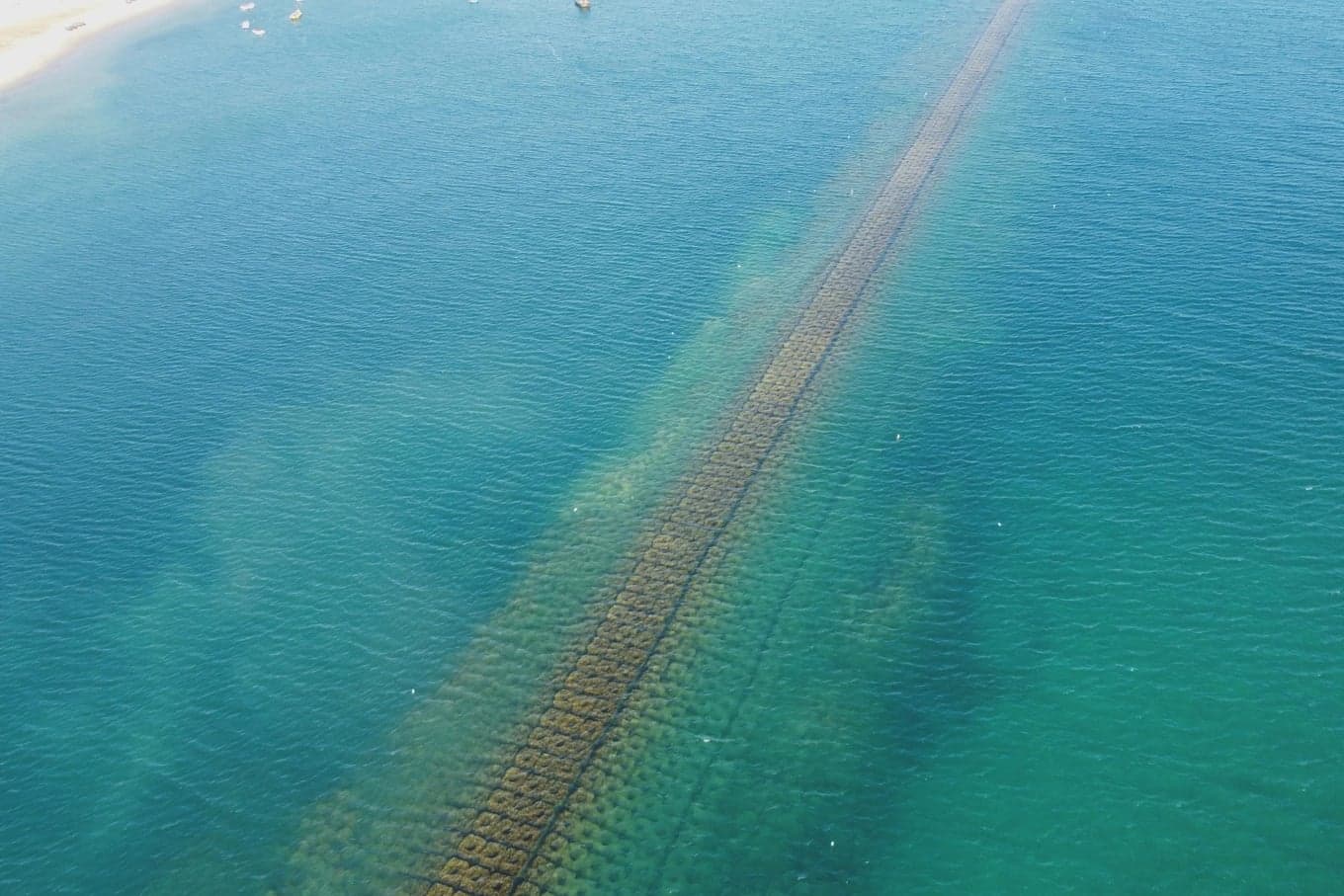
Cua Dai beach in Hoi An has been restored after years of erosion. Underwater breakwaters stretching almost 4.4 km were built 250–300 m offshore to reduce wave energy and retain sand. The beach was previously named among Asia's 25 most beautiful beaches.
Underwater breakwaters stretch almost 4.4 km
Erosion began along Cua Dai beach after 2013 and grew more severe, narrowing the sandy shore. The former Quang Nam province, now part of Da Nang city, introduced several measures to protect the coastline.
From 2019 to 2023, the former Quang Nam People's Committee invested in an almost 2.3 km underwater breakwater and beach replenishment with pumped sand to protect the Cua Dai and Hoi An coast.
In March 2025, a project to combat erosion and protect the Hoi An coastline began. It has a total investment of nearly VND 1 trillion, funded by a loan from the French Development Agency (AFD) and local counterpart funds. The works run from the river-mouth area near the pier toward the Victoria hotel.
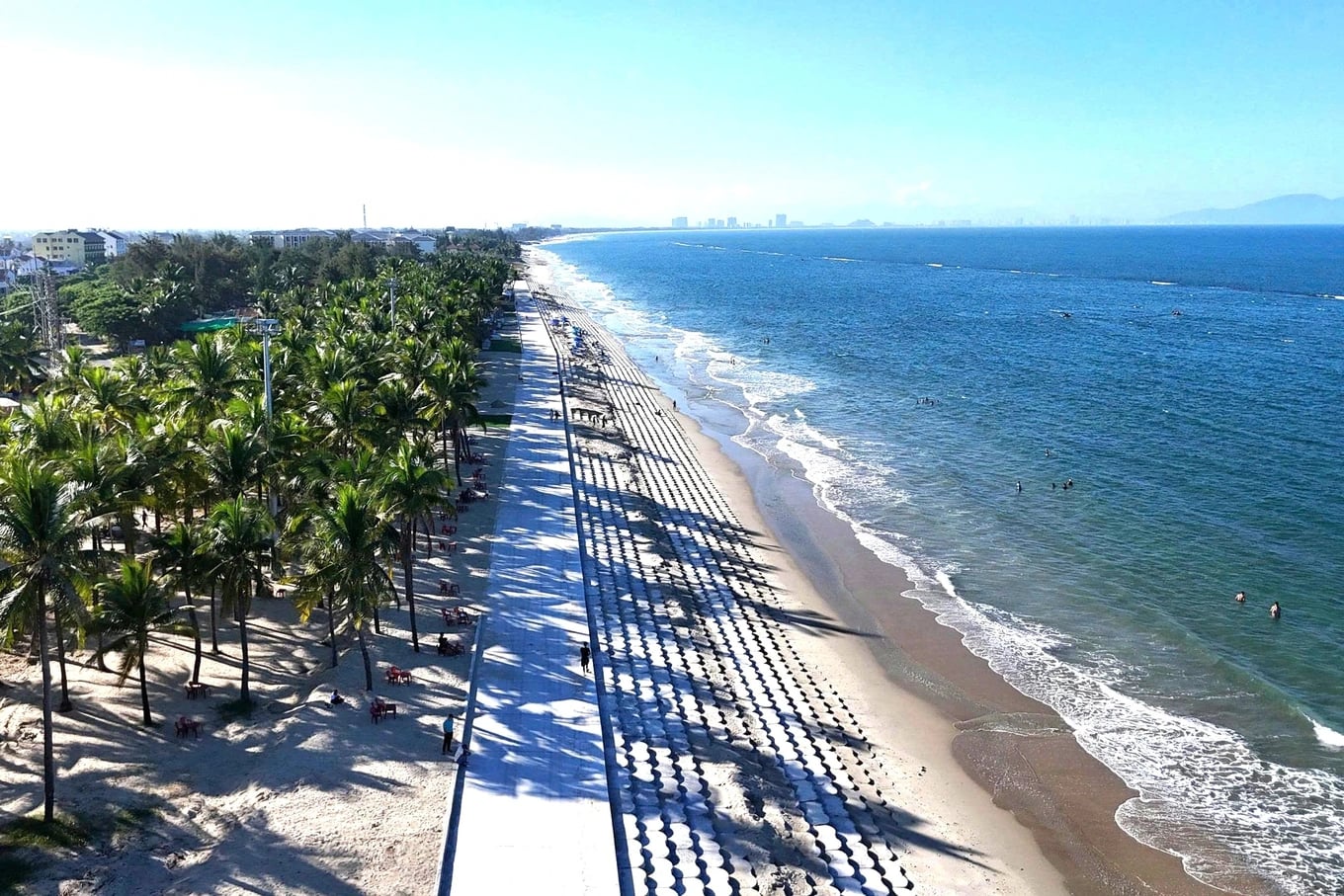
The project included seven underwater wave-reduction breakwaters with a combined length of more than 2 km, placed parallel to the shore 250–300 m offshore. It also included five soft groynes and one hard groyne. The soft groynes use geotextile sand tubes filled by pumping sand from the shore to the breakwater base.
The underwater breakwaters were built from stone and covered with prefabricated concrete blocks weighing 6 tonnes. The groynes use stone and concrete with sand pumped inside. The system is designed to reduce wave energy, hold the beach in place and limit sand loss.
A contractor's representative said the project was 100% complete on 31 October. The relevant authorities inspected it before handover and operation.
In April, Da Nang also launched a project worth more than VND 220 billion to repair erosion along the Hoi An coast. It focuses on reinforcing Cua Dai, Tan Thanh and An Bang beaches in Hoi An Dong and Hoi An Tay.
The works include Larsen sheet piling, concrete structures, stone erosion protection, concrete locking beams at the pile heads and concrete blocks at the base to strengthen the coastline against waves.
Nguyen Van Doan, construction commander at Thanh An 96 Construction, said the project was 100% complete. Workers were cleaning the site and returning the grounds so tourism businesses could resume operations.
Nguyen Ngoc Tan, deputy director of Da Nang's project management board for transport and agricultural works and a representative of the investor, said the entire project would be completed before 30 November, with acceptance and handover before 31 December.
The beach returns
Le Van Trong, 37, who owns a restaurant on Cua Dai beach in Hoi An Dong, has been connected to the beach for more than 15 years and has watched it change.
He said that more than 10 years ago the beach was a source of pride and income for Hoi An residents. Strong erosion then damaged the shore and property, and fewer tourists came. Each year, he spent tens of millions of dong on sand and geotextile bags to fight erosion.
Cua Dai is now better equipped, and tourists have returned to walk and swim. Trong said he was pleased.
“The restaurants are being refurbished and buying more tables and chairs to prepare for returning visitors. We are very happy to have a chance to restore our businesses and hope to welcome many tourists soon,” he said.
Dinh Van Dung, 56, from Hoi An Dong, brought his family to the beach. He expressed his happiness and thanked the authorities for their continued efforts to protect it.
“I come here to look at the sea every weekend. Seeing Cua Dai go from devastation to recovery is genuinely moving,” he said.
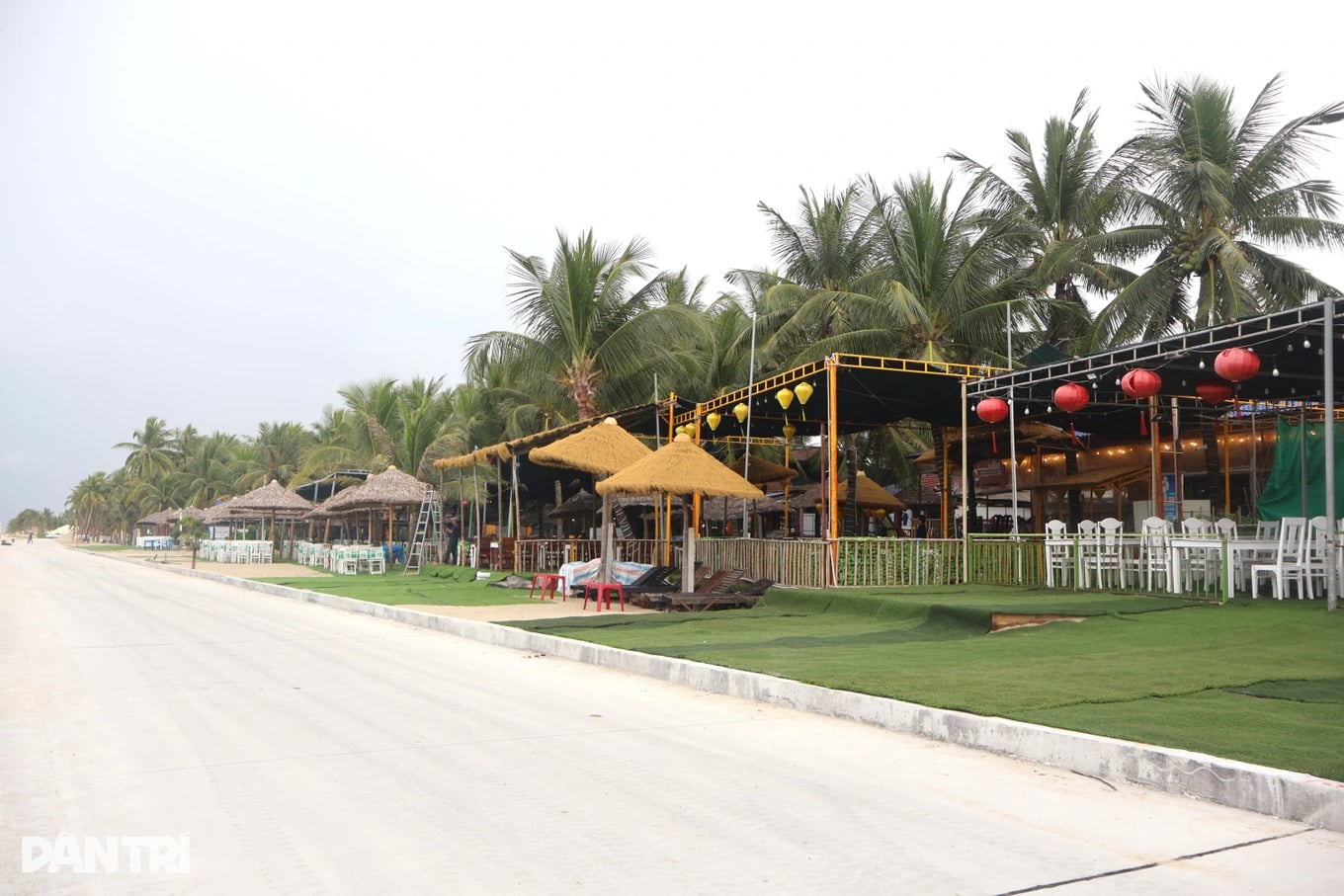
Restaurant owners and drink sellers along Cua Dai beach are also pleased to see tourists return. On sunny days, residents and visitors arrive early to sunbathe and swim.
Tran Man Vy, 42, a tourist from Hanoi, has visited Hoi An many times. She said that five years ago, when she came with colleagues, she saw severe erosion and a badly damaged Cua Dai beach.
“The beach looks completely different this time. I greatly admire the efforts of the authorities and local residents. I took many photos and posted them on social media so people could learn that Cua Dai's coastline has recovered,” she said.
Sources: Dân Trí

