
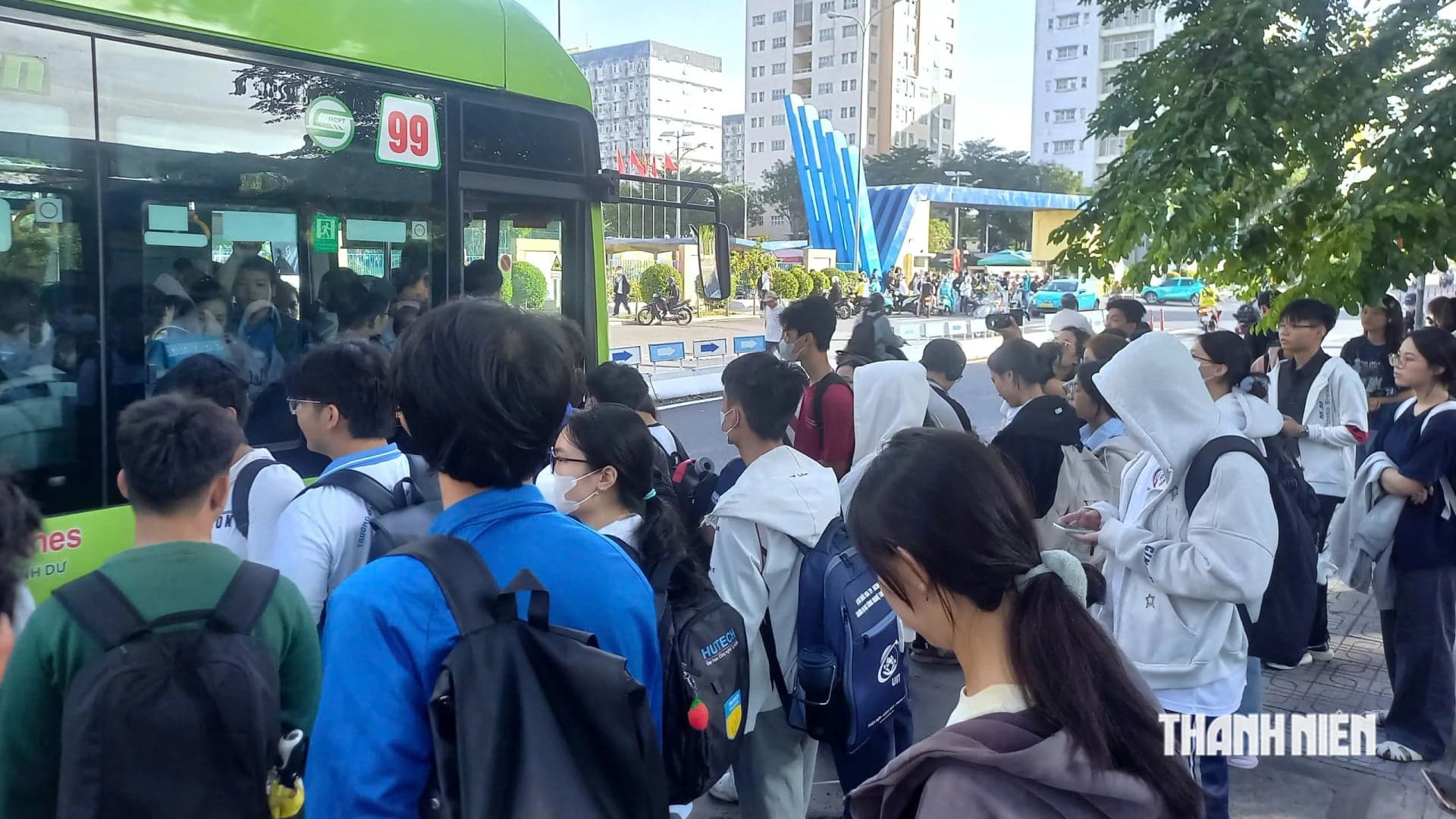
Petrol currently costs 24,000–25,000 dong per litre, while many young people earn about 25,000 dong an hour or less. Rising costs are forcing many of them to reduce their travel spending.
Many young people receive only the minimum wage or a modest allowance during internships. Their limited income makes it difficult to cover daily expenses, especially transport, as one litre of petrol now costs almost as much as one hour of work.
Pham Le Phi Long, 21, who lives in Long Binh Ward in Ho Chi Minh City, said: “The distance from my home to work is as much as 20 km. If I ride a motorbike, I spend more than 100,000 dong a week on petrol, and one refill costs 50,000–60,000 dong. At my current part-time job, I earn only about 25,000 dong an hour.”
Cao Nguyen Thu, 22, who lives in Cho Quan Ward in Ho Chi Minh City, said a 50,000-dong refill lasts only about two days because she often travels to event venues. “The expense seems small, but it becomes a burden each month because my internship allowance is only 4 million dong,” Thu said.
Dang Nam Anh, 21, who lives in Bien Hoa Ward in Dong Nai Province, faces a similar problem because the workplace is nearly 30 km from home. With an internship allowance of 2 million dong a month, Nam Anh can barely cover petrol and a few other small expenses.
Under this pressure, Nam Anh and Phi Long chose public transport to save money and travel time. Phi Long takes the bus every day and uses Ho Chi Minh City’s free-fare policy. “Since the beginning of 2026, I have taken more than 600 bus trips,” Long said.
Nam Anh chose the metro as his main way to get to work. Each day, he rides a motorbike from Bien Hoa to the Suoi Tien Bus Station metro station, parks it there and continues into central Ho Chi Minh City by metro. “I still have to use a motorbike, but I only travel less than 10 km instead of the full 30 km. That has also cut my petrol costs considerably,” Nam Anh said.
Some other young people choose to walk or cycle to save money while also improving their health.
After repeatedly struggling to balance her expenses, Nguyen Thu decided to switch to a bicycle. “The places I usually visit each day are not too far from home, so I decided to cycle. I use a motorbike only when I need to go somewhere too far to reach by bicycle,” Thu said. After more than two months, she had not only reduced her travel costs but also improved her health.
Truong Minh Tam, 20, who lives in Thanh My Tay Ward in Ho Chi Minh City, walks every day to save on travel costs. He walks to school in Sai Gon Ward, then goes to a drink shop where he works part-time before returning home. His total walking distance each day is nearly 4 km.
“At first I was tired because I was not used to it. But gradually I realised that it suited me because it is good for my health and saves money on petrol,” Tam said.
Sources: Thanh Niên

