
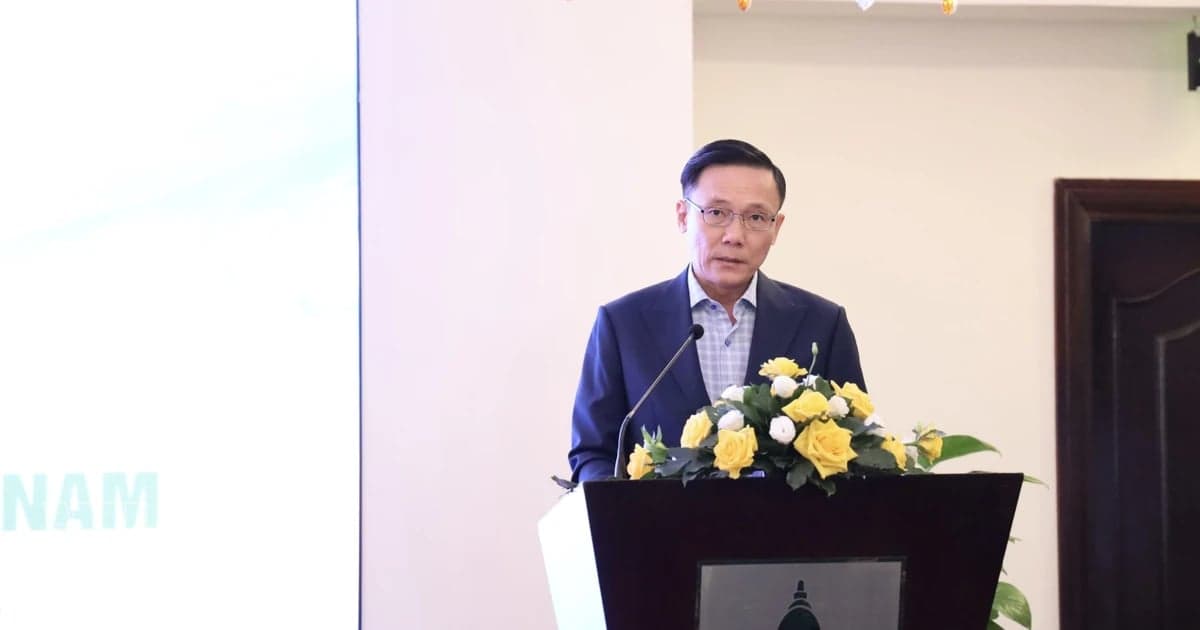
The Comprehensive Economic Partnership Agreement (CEPA) between Vietnam and the United Arab Emirates (UAE) is expected to boost Vietnamese exports to the UAE and help local businesses reach wider markets across the Middle East and Africa. Experts made the remarks at a seminar in Ho Chi Minh City.
The seminar on the CEPA and the export potential of Vietnamese businesses in the Middle East and Africa was held on October 23 by the Ho Chi Minh City Investment and Trade Promotion Centre (ITPC) and the Ministry of Industry and Trade’s Agency of Foreign Trade.
Le Anh Hoang, ITPC Deputy Director, described the UAE as a promising market and a strategic hub for trade, logistics and transhipment in the Gulf Cooperation Council, the Middle East and Africa.
The CEPA took effect on February 3, 2026. Under the agreement, the UAE committed to eliminating tariffs on 74.2% of product lines. The figure is expected to rise to 89.2% after five years of implementation. Le Anh Hoang said the commitments give Vietnamese goods a significant competitive advantage.
Businesses must understand the agreement’s provisions and meet market requirements to turn tariff preferences into actual export orders. These requirements include rules of origin, certificates of origin, quality standards and professional distribution channels.
Pham Binh An, former Deputy Director of the Ho Chi Minh City Institute for Development Studies, said the UAE’s gross domestic product reached 517.7 billion USD in 2025 and real economic growth stood at 6.2%.
The country has diversified its economy beyond oil. Non-oil sectors account for 77% of GDP, or about 398 billion USD. Finance, logistics, retail and high technology are among the UAE’s main economic sectors.
Foreign nationals account for 88.5% of the UAE’s population, while agricultural land covers less than 1% of its territory. The country therefore relies heavily on food imports, with overseas supplies estimated to meet 85-90% of daily food demand. This creates opportunities for Vietnamese exporters, particularly suppliers of agricultural products and processed foods.
Although the CEPA took effect only in February 2026, bilateral trade had already grown in previous years. Vietnam’s exports to the UAE rose steadily from 2021 to 2025, reaching 5.91 billion USD last year. Major export groups included iron and steel, cashew nuts, transport vehicles, fruit and vegetables.
Pham Binh An said the agreement established a framework for bilateral economic cooperation. He added that it could encourage investment in Vietnam from major UAE financial funds, particularly in infrastructure, clean energy and digital transformation.
However, lower tariffs do not automatically mean easier customs clearance. The UAE continues to apply strict technical barriers to trade, sanitary and phytosanitary measures, and food safety requirements.
Halal certification is particularly important for products intended for Muslim consumers. Businesses must comply throughout the supply chain, from raw-material sourcing to production, storage and transportation, to prevent cross-contamination. Products need certification officially recognised by the relevant UAE authorities under the National Halal Mark system to enter the market.
Truong Xuan Trung, Head of the Vietnam Trade Office in the UAE, urged companies to view the UAE not only as a consumer market but also as a modern logistics and distribution centre for neighbouring markets in the Middle East and Africa.
He recommended that Vietnamese companies first use the UAE market to test products, assess consumer demand and build recognition for major Vietnamese exports, including fresh agricultural produce, processed foods, textiles and garments, footwear and furniture.
Companies could then expand into GCC countries by using the bloc’s customs union and harmonised intra-regional customs arrangements. The wider Middle East and Africa contain highly diverse markets, so companies should adopt targeted strategies for geographic clusters and industries. Trung also recommended working with reliable local partners rather than spreading resources too thinly.
He urged exporters to diversify distribution channels by combining direct exports with partnerships with intermediaries in the UAE and gradually developing local warehousing and logistics facilities. Instead of pursuing individual buyers, companies should build long-term relationships with specialised importers, regional retail chains, warehouse operators in free trade zones and cross-border e-commerce platforms.
Sources: VietnamPlus / Vietnam News Agency

