
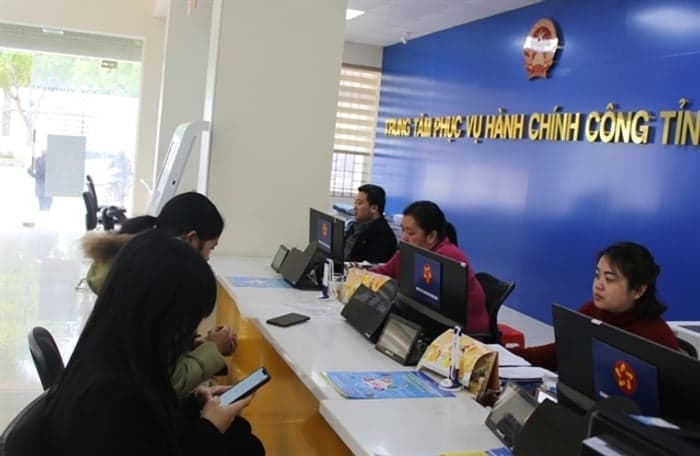
The northern mountainous province of Cao Bang achieved several positive results in the first nine months after implementing Politburo Resolution 57-NQ/TW on breakthroughs in science and technology, innovation and national digital transformation.
The province completed 168 of the 172 tasks assigned by the central government. Mobile network coverage reached 99 per cent, with 288 5G base stations deployed.
Authorities processed more than 107,000 administrative procedure applications. Online submissions accounted for 75.8 per cent, while 94.6 per cent of applications were resolved on or ahead of schedule.
In addition, all products under the local OCOP (One Commune, One Product) programme now have QR codes for tracing their origins.
Scientific and technological research has been linked to the production and development of local specialty products.
The province is still facing obstacles in digital transformation and scientific and technological development.
Local authorities need to move from simply identifying problems to resolving the main bottlenecks in order to create conditions for economic growth.
Cao Bang is a border mountainous province with complex terrain and limited resources, so its digital transformation faces infrastructure barriers.
There are still 33 hamlets without mobile network coverage, while more than 8,800 households have no access to the national power grid or are using electricity that does not meet requirements.
More than 56 per cent of land has not yet been added to the database. The capital disbursement rate for digital transformation remains low at about 13 per cent. In 2025, the digital economy was estimated to account for 7.98 per cent of the province's gross regional domestic product, well below the 20 per cent target set for 2030.
The commercialisation of scientific and technological research outcomes in the province also faces numerous obstacles.
A review found that only four of 29 completed scientific and technological projects, whose products had commercial potential, generated measurable economic value.
A significant gap remains between research findings on paper and their practical application in developing local specialty products, medicinal materials, crops and livestock.
These barriers directly affect the goal of narrowing the digital gap and expanding access to online public services in remote and mountainous areas.
Alongside infrastructure, the building and standardisation of shared data, which underpins the digital transition, is also progressing slowly.
After assessing the implementation of the resolution and the 100-day action plan to address digital transformation bottlenecks, provincial leaders identified five main areas: institutions, infrastructure, data, human resources and funding.
Phan Thang An, secretary of the provincial Party Committee and chairman of the provincial People's Committee, said a border mountainous province with limited resources such as Cao Bang could not pursue science, technology and digital transformation in a scattered manner or merely as a trend.
He said the province must carefully select its priorities, address the most pressing practical problems and measure success by tangible results. Every digital transformation initiative must generate substantive value and contribute directly to economic growth and better living conditions.
To remove the barriers, Cao Bang authorities have identified a series of solutions intended to bring significant changes in the coming period.
"Cao Bang must complete the shared database and clean and connect land data and other essential information," An said.
He added that the province would accelerate administrative simplification, improve online public services, speed up capital disbursement and train digital human resources.
Cao Bang should also prepare a list of tasks for 2027 in advance and secure sufficient resources for rapid and sustainable development, An said.
Sources: Viet Nam News

